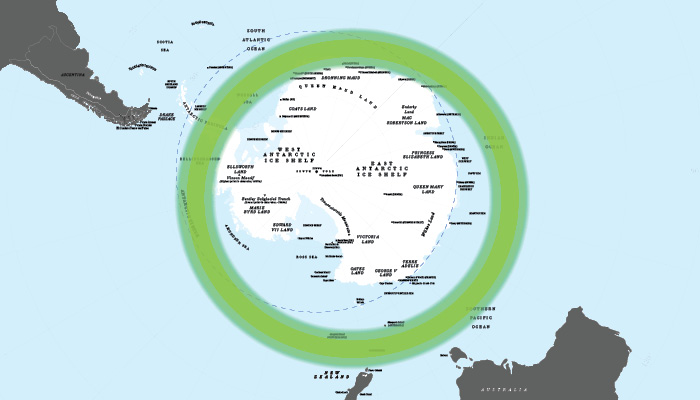
Aurora is one of nature’s most incredible phenomena that’s visible closer to the earth’s magnetic poles. It is also one of the seven natural wonders of the world. The Northern Lights (Aurora Borealis) occur closer to land and have generally been more accessible to tourists. The Southern lights (Aurora Australis) occur in Antarctica and in the Southern ocean around it. It is commonly said that more penguins witness these lights than humans. Until recently, witnessing the Southern Lights up close has largely been inaccessible to most people.
What is an Aurora?
The Sun creates something called the “solar wind”, this is different to the light and the heat that we get from the Sun. This solar wind drifts away from the Sun through space, carrying tiny charged particles: protons and electrons. Sometimes the solar wind is strong, and sometimes it is weak. We can only see the auroras at times when the solar wind is strong enough. When the solar wind reaches the Earth, the Earth’s magnetic field forces the solar wind away, and makes it travel around the Earth instead.

The magnetic field interacts with the solar wind and guides the protons and electrons down towards Earth along the magnetic field, away from the middle of the planet and toward the north and south poles. When the solar wind gets past the magnetic field and travels towards the Earth, it runs into the atmosphere. As the protons and electrons from the solar wind hit the gases in the Earth’s atmosphere, they release energy (photons) resulting in beautiful displays of light in the sky.
Different types of particles in the atmosphere make different colours – oxygen makes red and green light, and nitrogen makes blue light. Our eyes see green best out of all the colours, so we see green the brightest when we look at the northern lights.
Our previous experience with Auroras
Our first experience with these lights was when we visited Iceland in 2018. We spent around 10 days circling Iceland and every night we used to have a quick look after our dinner trying to check if we could spot any light in the sky. That was when we realized how tough it was to spot these lights, there are several factors that impact its visibility – cloud cover, Kp Index, time of the night and light pollution. Although this happens almost every day, this is clearly visible when there is a good amount of solar flare (measured by Kp Index), without cloud cover in the sky, in places away from the light pollution and it can happen any time of the night, mostly seen around midnight.
We used to be very tired at the end of the day that we never could stay up late to watch these lights. One fine day, we could spot these lights in the northern most part of Iceland just outside our stay. It was a cloudy day and we could see some color in the sky moving between the clouds. It was fascinating to watch the lights moving and that gave us sense of how they look to naked eye. We didn’t carry our SLR on the trip, so the photographs from mobile weren’t very clear, though they could capture some color.
Viewing the Auroras
Our eyes have two types of photo sensor cells: the “Rods” and the “Cones”. Rods are exceptionally sensitive to light, but they are relatively low resolution and can see only in black and white. The cones, on the other hand, can perceive full color and are highly concentrated in the central retina. They produce high resolution color perception, but they are less sensitive than rods so require a brighter light source to be activated. Dim auroral displays which are only capable of triggering the rods will only be perceived in black and white – the aurora appears as a whitish or grey cloud of constantly changing light. Brighter displays have a greater chance of triggering the cones and result in some color perception. Colors usually appear dull to eyes in comparison to the photos, a camera is needed to experience the full range of colors on display within an aurora.
Planning
While checking for Antarctica scenic flight last year, I found the Southern lights by flight organised by Chimu adventures, planned once a year around the time of Equinox (March end), when the solar activity is at its maximum. We realized that viewing Southern lights by flight is the best possible option, as it is tough to view these lights from the land (inaccessible areas) and also viewing these lights from the flight has its own benefits.
We will be flying at the best possible time of the year, needn’t worry about cloud cover and light pollution at the flight’s cruising altitude. This will give us the best possible chance(around 95%) to view the lights as the pilot can navigate us into the best Auroral zone on that day. I couldn’t think of any other possible way for the best viewing experience of the Southern lights.
Itinerary
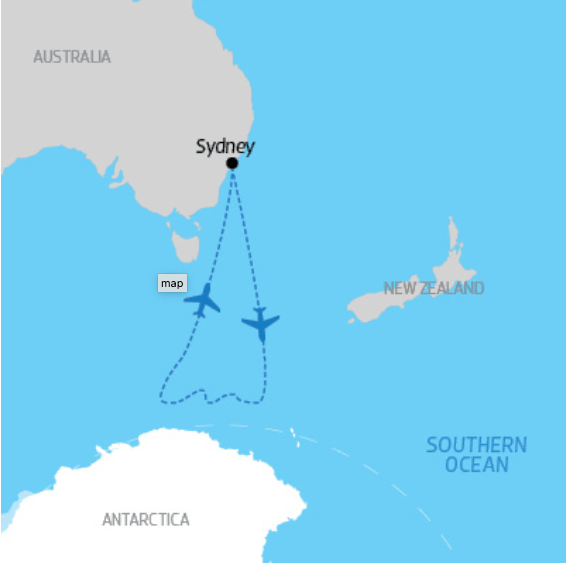
The duration of the flight is around 10 hours, of which it takes three hours to reach the auroral zone, four hours of viewing and around three hours back to Sydney (9pm-7am). The tricky part was to stay awake from 12am to 4am in the morning. The flight was on a Saturday night, so had the complete Sunday to sleep 🙂
Since it is a scenic flight, most of the passengers will be interested in the window seat. In-order to optimize that, the operator came up with a concept of seat swap, which means we get to sit in aisle/window seat for the first half of the flight and change the seat in the second half of the flight, so that everyone gets an equal chance of viewing.
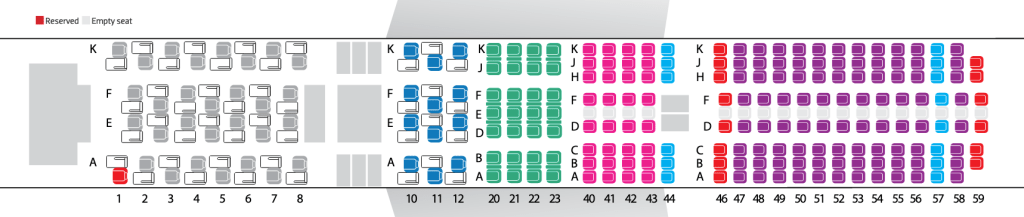
There are also different classes of seating such as Economy with limited view (Light Blue), Economy Wing (Pink), Economy No Wing (Violet), Premium Economy (Green), Business Class (Blue), Premium Business class (Grey).
All the previous Antarctica scenic flight travelers got an additional discount on this flight and we chose Economy No Wing seat as I didn’t want the wing to cut out my view.
Journey
We received a pre-departure video from the team which explained all the details about the trip and how to photograph an aurora. I had an interesting challenge on this trip with night photography. Night time photography generally needs a long exposure and a stable base – its relatively easier to manage this part on the land, as we can attach the camera to a tripod and that will ensure the camera remains steady. On the flight, the tougher part will be to carefully hold it for few seconds without shaking, till the frame is captured well. I bought a silicone lens hood to my SLR to avoid reflections from the light around. While I was not confident about my night photography skills, I wanted to try my best at it and not worry much about photos, as an official photographer from the Chimu team will be sending us the pictures after the trip anyway.

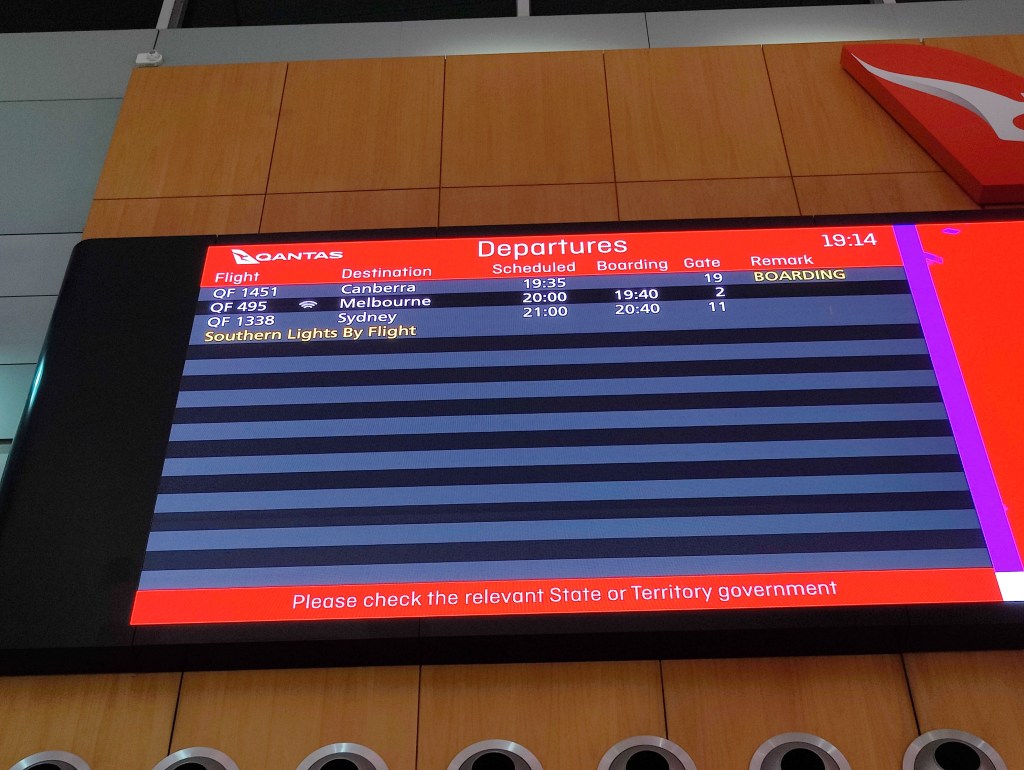
The flight departed from the domestic terminal and the boarding process happened at the gates directly. I loved the way the name of the flight was written on the display boards everywhere 🙂
We got our boarding passes at the gate and a stamp on the passport, we got the window seat for the second half of the flight. After Antarctica flight experience, I really didn’t have anything to worry about the time at the window. My learning was that two hours is a really long time for viewing and most people get tired in the first half and they tend to not look out much in the second half of the viewing. In a way, it was good for us as we will have the window seats completely to us in the second half without a need to share the view with anyone else. Everyone boarding the flight looked very happy and excited at this unique flight.
We got a detailed brochure with all the interesting information about auroras!
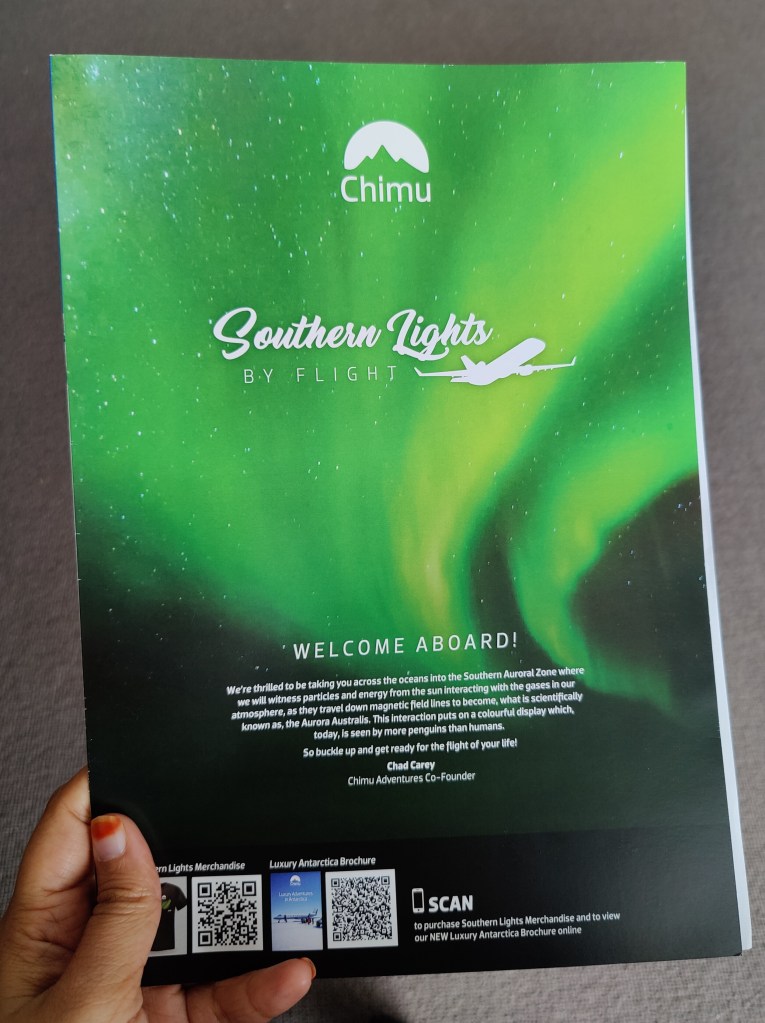
We were completely excited about this trip and eagerly waited to see how the lights look like and how long we will be able to view those. It is truly an expedition, where we don’t know what kind of Auroral display we are about to witness today.
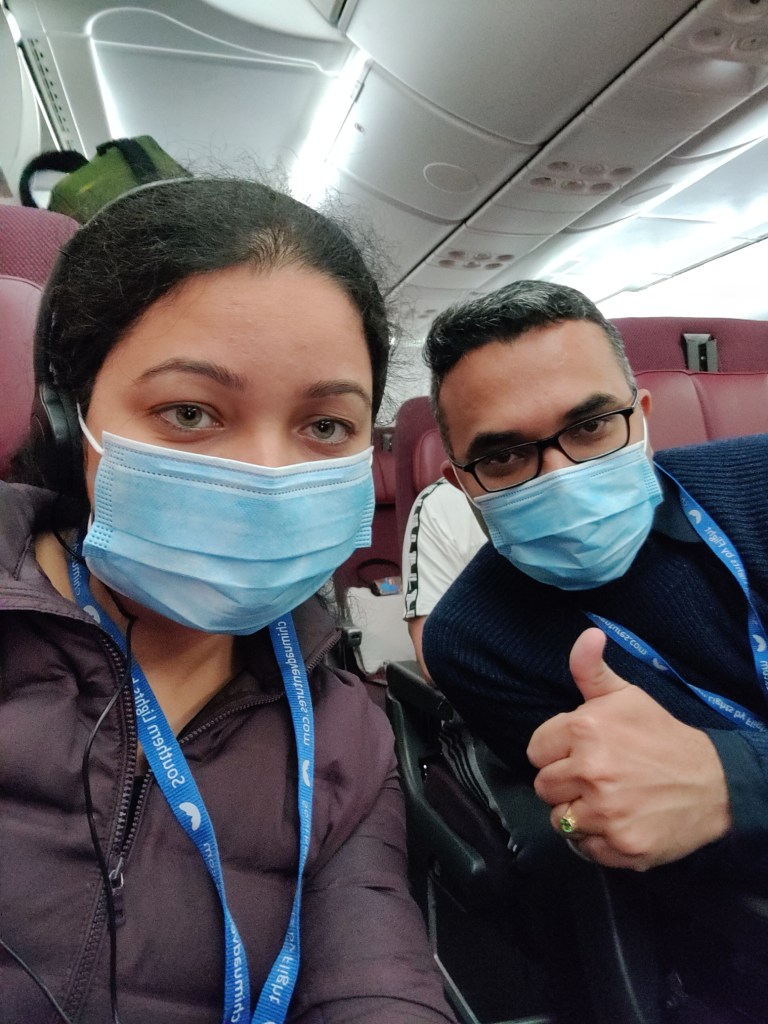
We got a good dinner immediately after the take-off, tried hard not to fall asleep eating too much 🙂

On our way to the Auroral zone, an expert astronomer onboard provided us interesting information on the route and about how an Aurora is created. South magnetic pole is currently around 64″S and we will be heading to latitudes around 45″S-55″S where the auroras are usually the brightest.
After around 2.5 hrs of flight journey, the lights in the cabin were switched off to get our eyes fully adjusted to the darkness. We were advised to adjust the brightness of the displays on our electronic devices as well. The outside lights on the flight were also switched off and the flight operated in stealth mode. This was possible due to no flights in our direction, its tough to operate flights like these in the northern hemisphere due to heavy flight traffic there.
All the passengers on the flight curiously started looking out of the window in an attempt to spot the lights. It started as a faint grey color light initially, that people struggled to identify if what they were looking at was an aurora. We tried hard to peek out from our aisle seats, but since it was pretty dark outside, it was tough to see the faint light from a distance. Only the window and the seat beside the window passengers could spot the lights clearly. There was a slight sense of disappointment, but we were hopeful that we could see them clearly during the second half of the flight when we get window seats and patiently waited along.
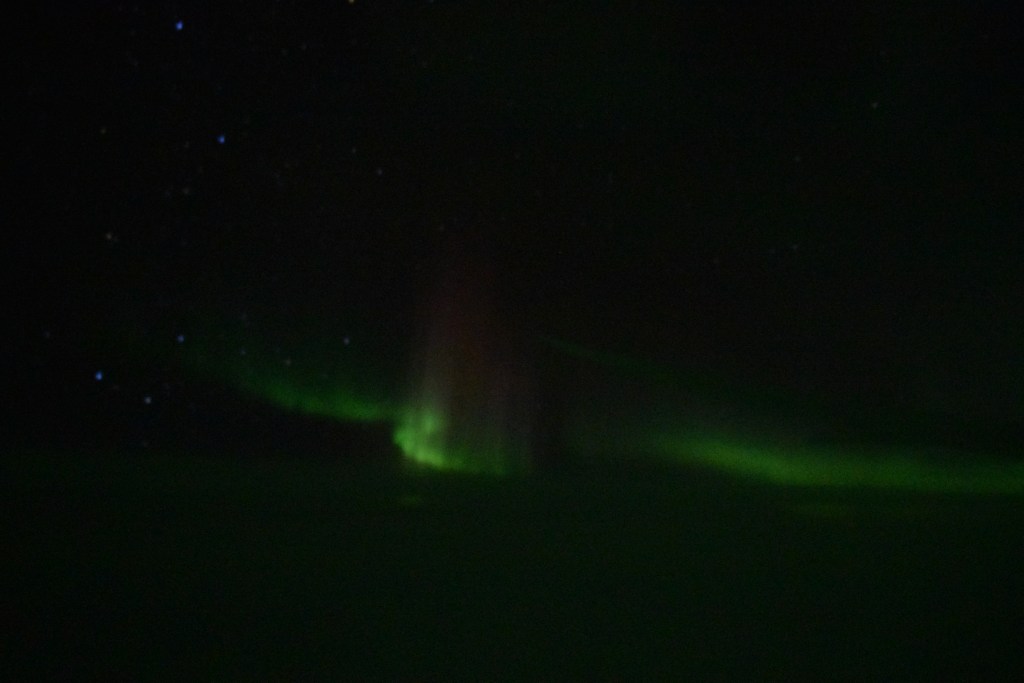
After 30-40 minutes, the lights turned bright and we could also see the lights from our seats in light green shade. The lights moved slowly along the sky, as if it was a fountain show and the formations looked simply spectacular.
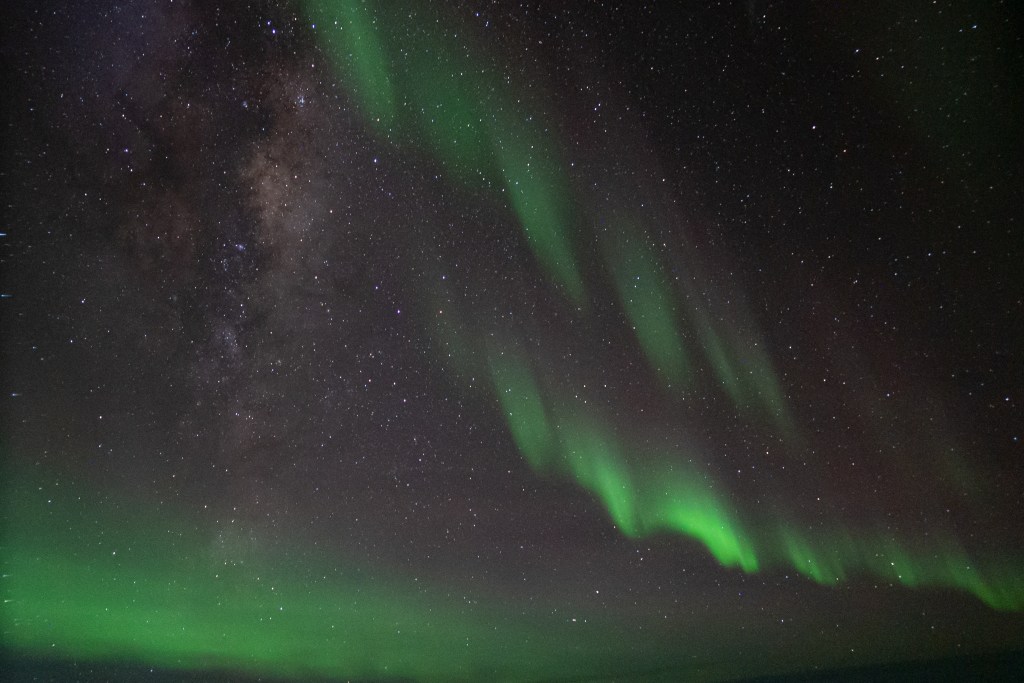
Slowly, the displays were very colorful and we could see the lights coming up from the sky that they felt like heavenly lights.

At this point, we got our seats swapped to window seats and it took some time to adjust our eyes back to darkness due to lights switched off in the cabin for this adjustment. I took out my SLR with all the exposure settings and tried to capture the auroras to the best of my abilities 🙂
From the window seat, they looked very clear and it was an exciting ride to chase them along the journey. The lights played hide and seek with us, with faint display followed by periods of brighter displays amidst a large set of stars in the sky.
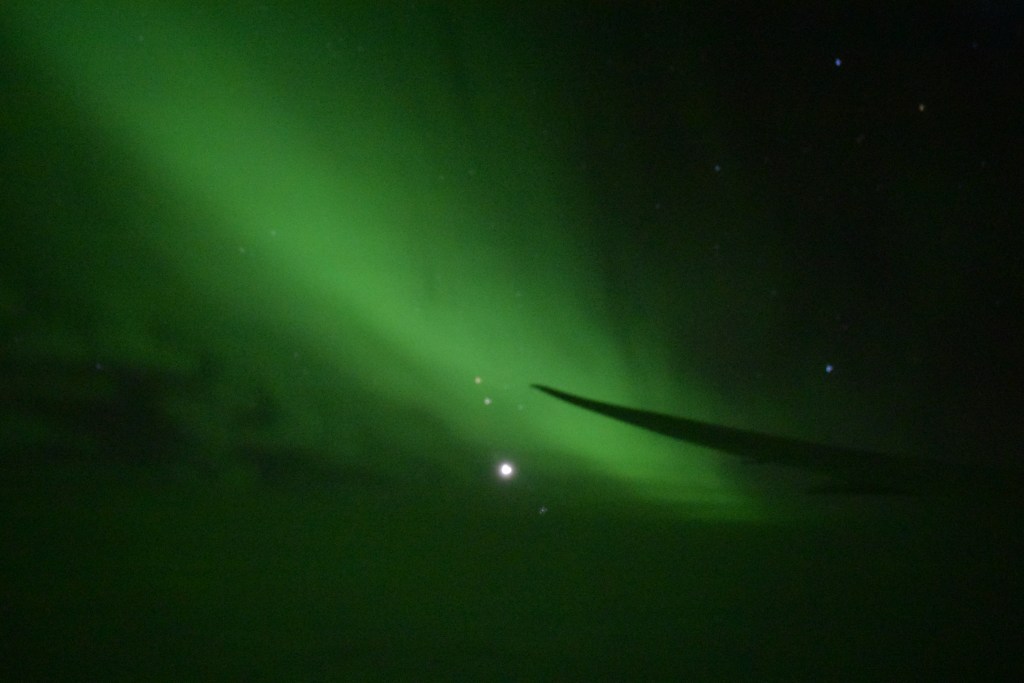
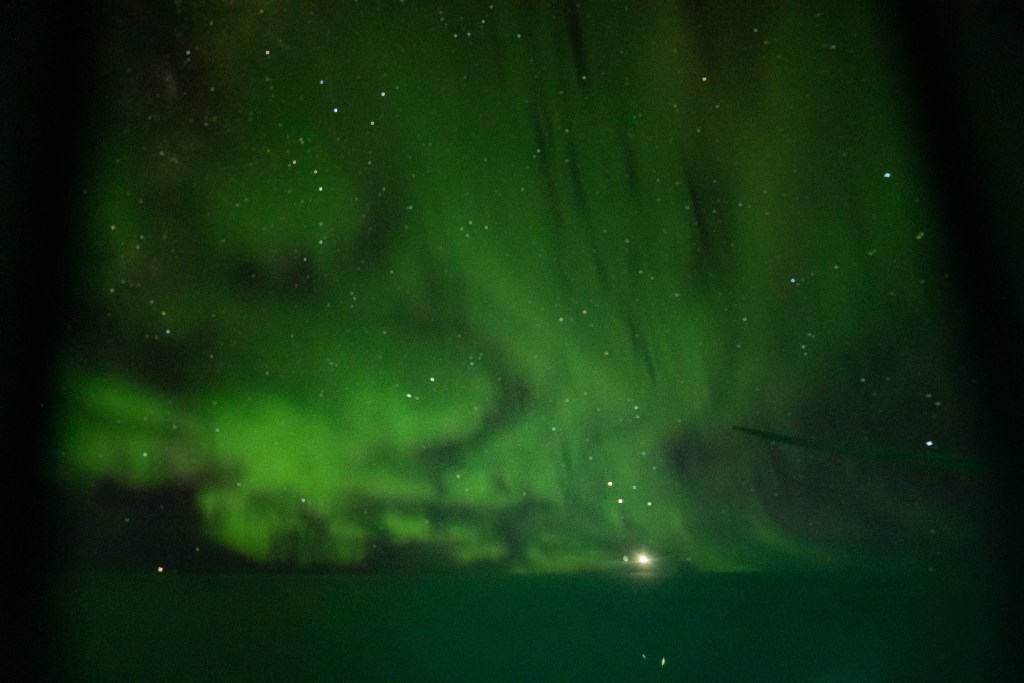
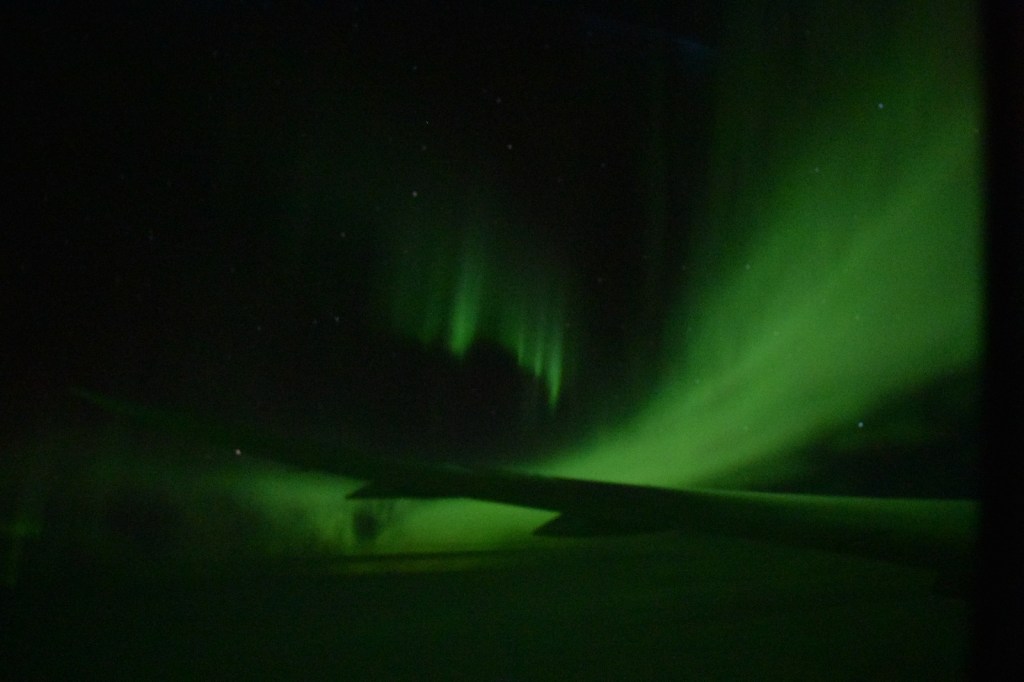
After around 30mins, there was no going back for these lights and they kept on growing brighter and beautiful that our onboard commentator informed us that the sudden bright display was due to a strong solar flare that happened 2-3 days back. We felt lucky to be at the right time at the window 🙂
While others on the flight almost dozed to sleep, I couldn’t resist looking out and clicking photos. I could capture the color well, but it felt tough to capture the formations clearly from a moving flight. At around 4am, the pilot announced that our stealth mode was going to end, but the auroras were still very bright that I didn’t want them to turn on the lights outside. To my surprise, we could see the displays well even with the navigation lights of the flights on.

The lights continued for an hour after that and I tried hard to control my sleep till the auroras were out of my sight.
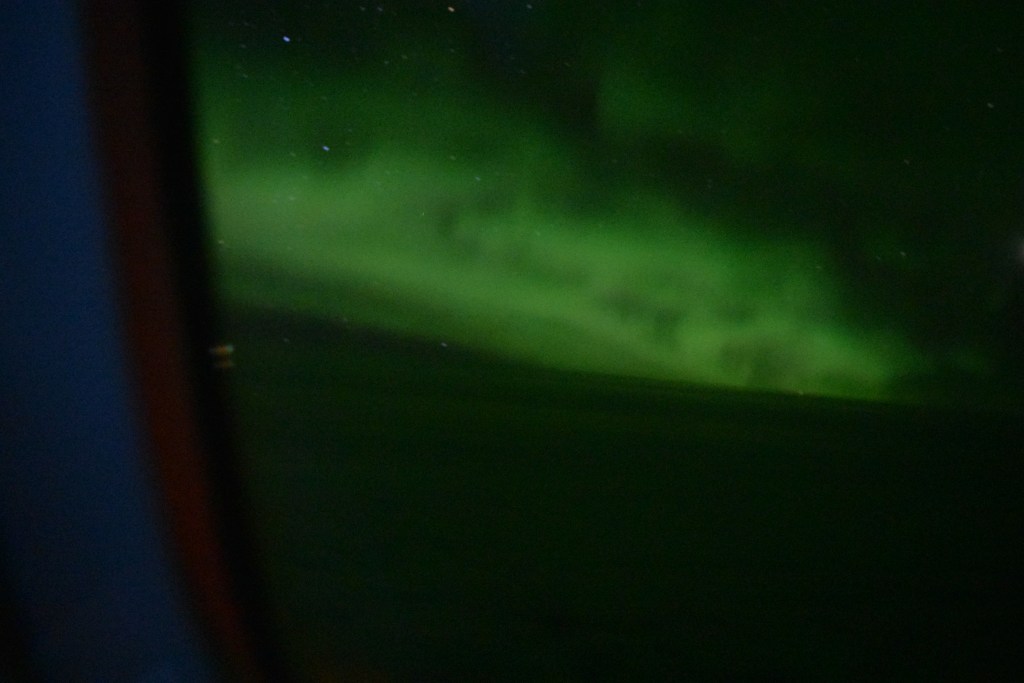
While I thought the auroras would end first, the cabin lights were switched on before that around 5am, after which the reflections on the window made it harder to look at lights and I dozed off to sleep after a final good bye to them. It was a fantastic 5 hour display of lights in their various formations!
See you again 🙂 (may be on the opposite pole next time)
I couldn’t sleep for long as we were provided with breakfast before our landing at 7am, making it a 10hr trip in total.

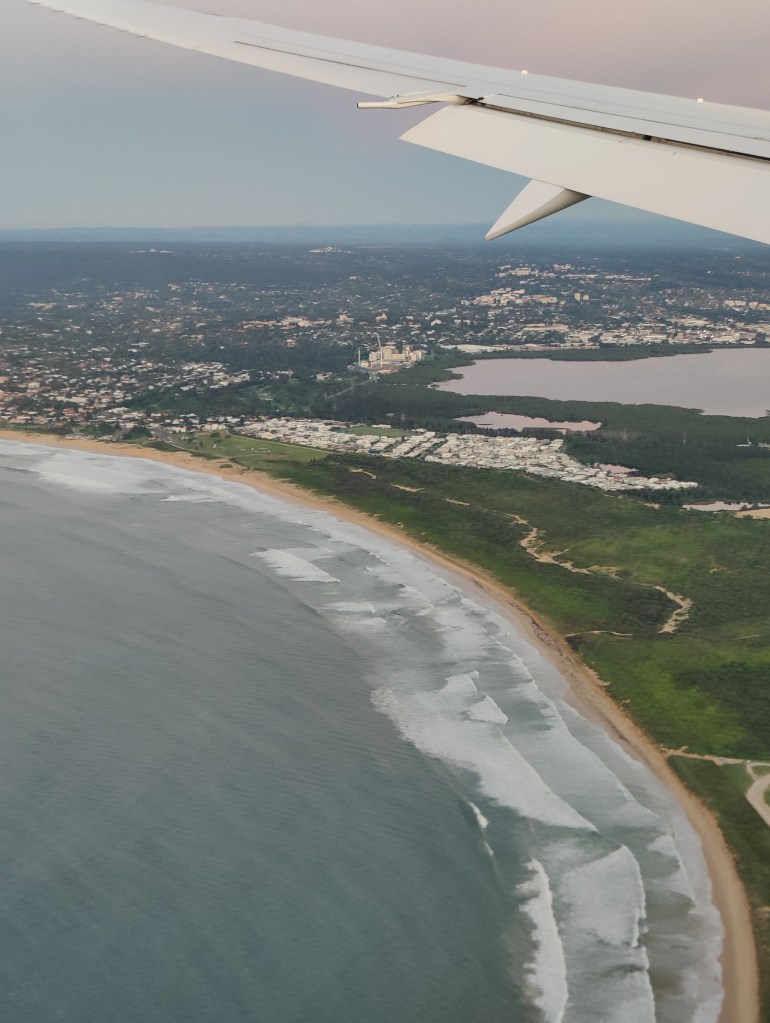
As the scientist onboard rightly said, it was a rare chance to look at the earth’s magnetic field in the form of these lights. It felt like a perfect science expedition tour and once in a life-time experience. I had a deep sense of satisfaction at the end of the trip that I could watch the spectacular nature’s display at its fullest 🙂 Even today two weeks later, I get a huge rush of emotion just thinking about it and sometimes when I close my eyes at night before sleep, all I could see is the colorful display of aurora.
Note: It was a tough post for me to write and recreate the experience as the photographs I captured do not do justice to what I saw with my naked eye. I have also used some photographs from our official photographer with credits.
 Life Travel Fantasy