The first thing that’s mentioned in the travel books and blogs about Australia is Uluru. I initially wondered why it is so famous and slowly got curious about this place and wanted to explore it. We planned our trip to Uluru in May 2020, however things didn’t materialize and it took us over one year to finally visit Uluru. This time we planned the trip along with our friends here in Sydney, who are equally excited to visit the place. Though we booked our flights two months before, I was not completely confident if this trip will take off due to the inter-state restrictions because of COVID. I was just praying for zero cases in NSW so that we can take a flight to Uluru in the Northern Territory.
The feeling that we are about to visit Uluru sunk in just a week before the trip. I was so excited that I planned to write a blog post on what I am expecting from the place and why I want to visit it. Well, I had to contain the excitement within myself till the trip day, due to hectic work at my workplace in that week.
Finally the D-day arrived and we packed everything required – all season clothes as it’s Autumn along with covid essentials. We had to carry some food and a rice cooker along with us as restaurant food is extremely expensive there. Apparently, Uluru is the most expensive place in Australia and third most expensive place in the world :O
Day 1: Sydney -> Uluru, Uluru Sunset
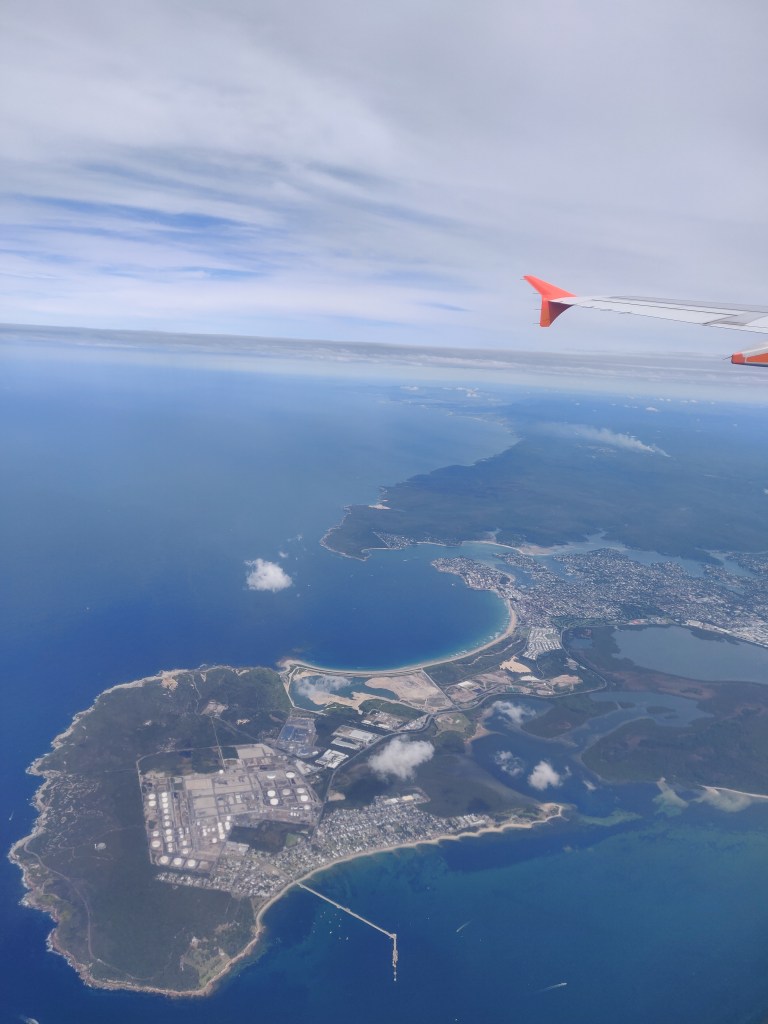
The first thing I love about taking a flight from Sydney is its beautiful takeoff views. Typically, we go either north or south along the coast, but this time it’s special as we are going towards the center of Australia.
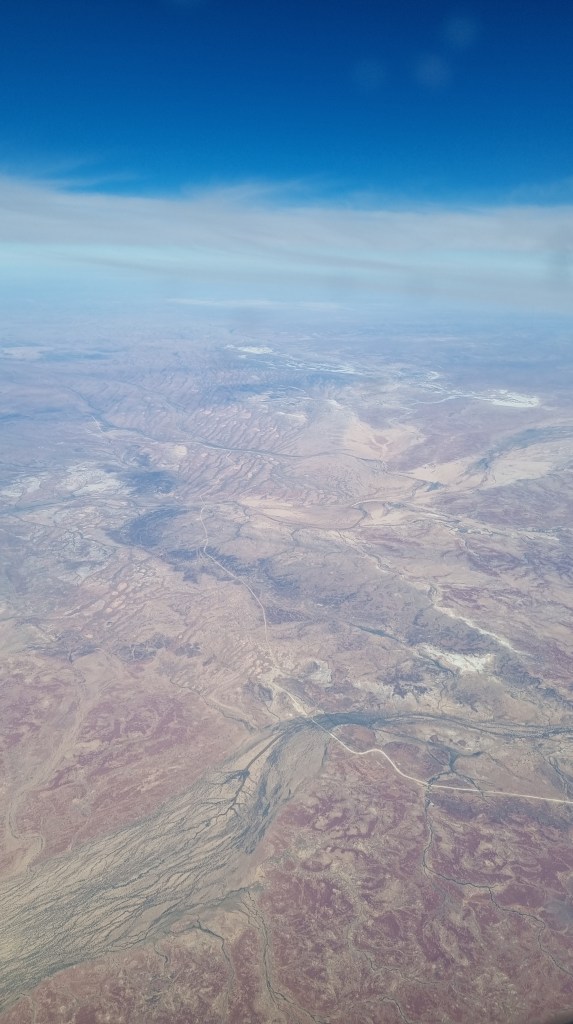
After an hour of flight journey, the landscape dramatically changed to barren and red desert type land.
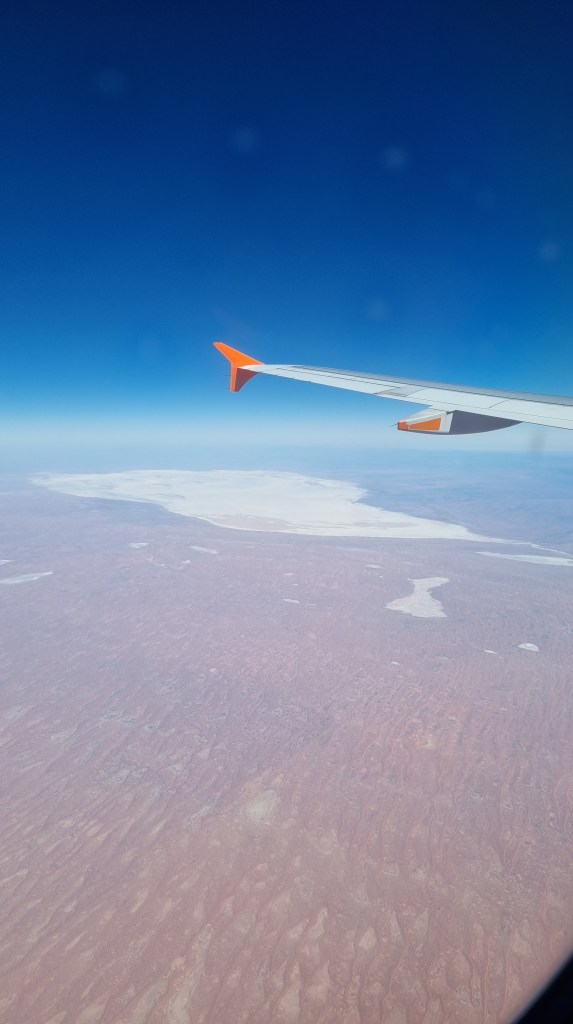
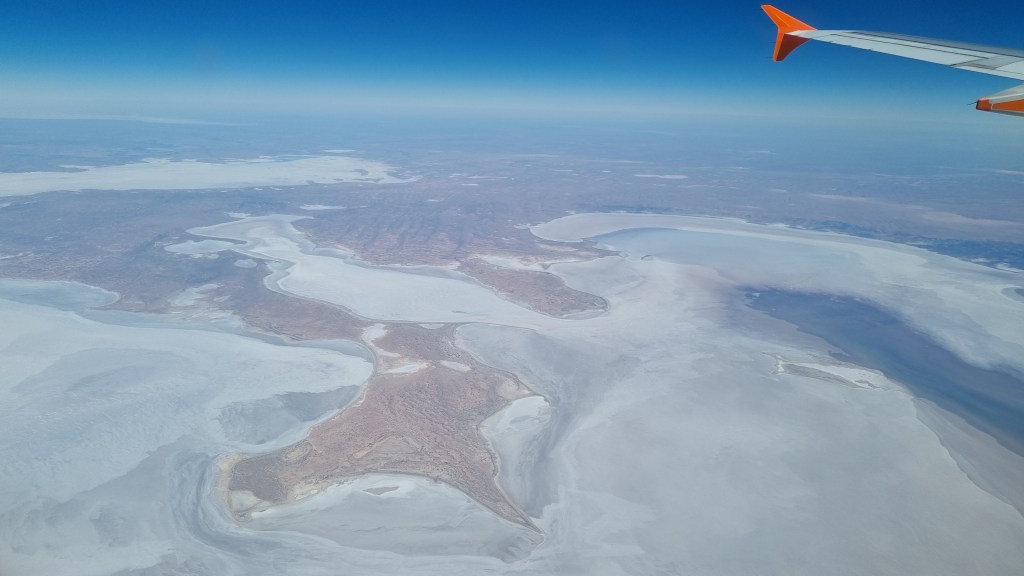
Our pilot announced that we are passing over the largest salt lake in Australia, Lake Eyre, which is 9m below sea level and it is so huge that we could see it for around 15mins from our flight. It is mostly dried up, except for a small area.
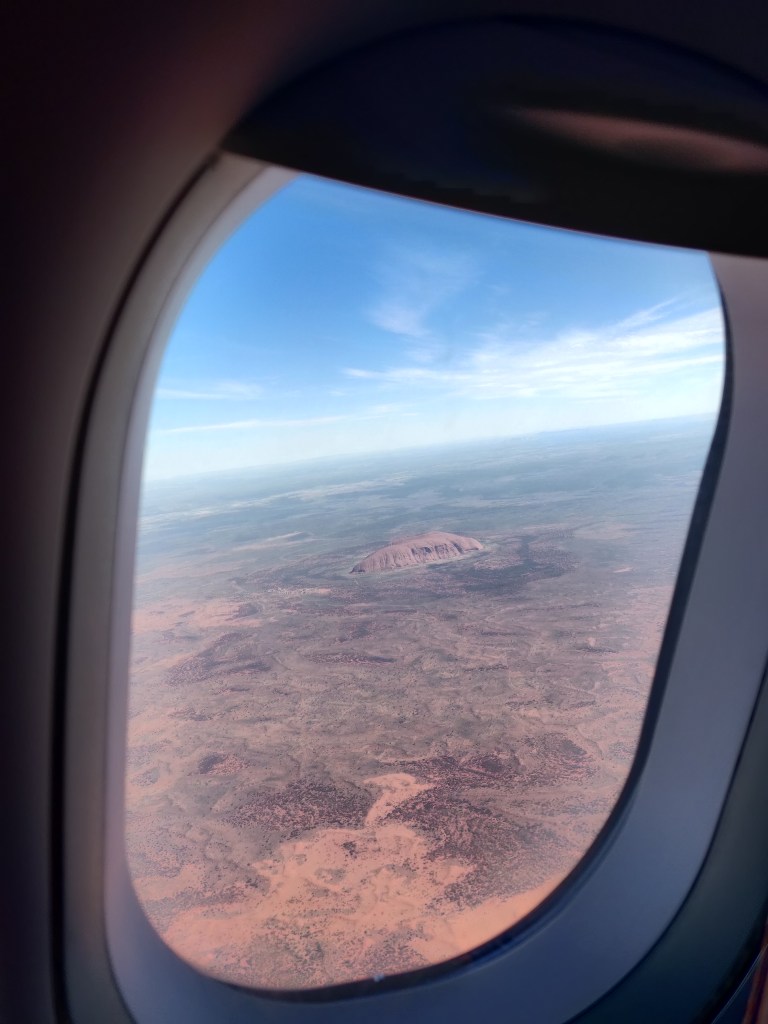
Now, it is the landing time and all those who sat on the left side of the plane got to see the view of Uluru and the Olgas, rocky structures part of Kata-Tjuta National park. Luckily, we were on the left side and got the aerial views of these rocks.
Tip: Anyone planning a trip from Sydney to Uluru, choose left side of the flight (A,B,C seats) to enjoy aerial views of Uluru and choose right side (D,E,F) for return journey. I could sense the disappointment in those who got seated on the other side, so a quick and easy tip will make you happy 🙂
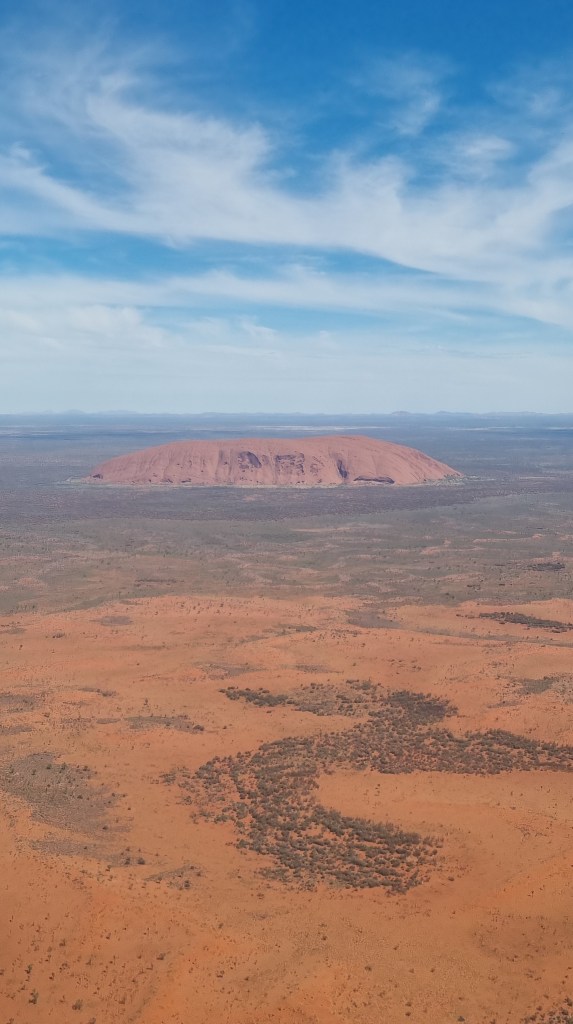
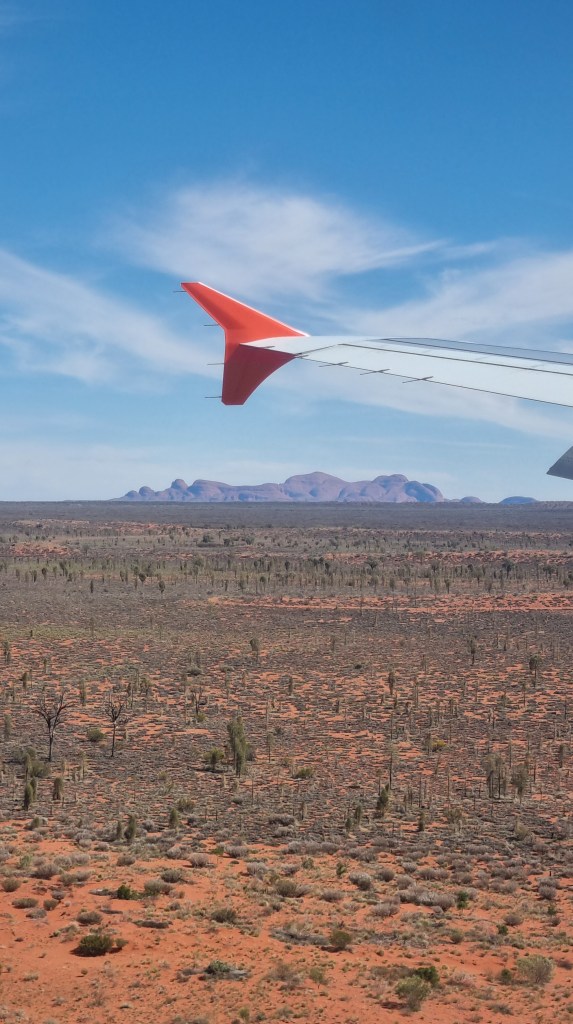
We drove to Ayers Rock Resort in a rental car for our stay at Emu Walk Apartments. There is no other accommodation in this place apart from this resort and it is purely a tourist destination with no locals residing any close to this place. All restaurants are managed by the same resort making it an expensive place. There is only one supermarket to shop groceries with no fast food chains. The resort was a quick 15min drive from the airport.
Uluru Sunset viewing area
After some grocery shopping, we headed to Uluru Sunset viewing area. We heard that there is limited parking in the sunset viewing area which usually gets full 30mins before the sunset. So, we reached the place 1 hour before to observe various colors of the rock during sunset.
This is our first close look at the rock. It looked huge and visible from almost everywhere outside Ayers rock resort. The area surrounding this rock is almost barren, covered with small shrubs and red sand for many kilometers, that kept us wondering on how this rock emerged. It is 863 metres high and has a circumference of 9.4 kilometres. It is so large you can see it from space.
As per geologists, this area was covered in a sea around 500 million years ago and this rock is the sea-bed that rose up as the sea disappeared 400 million years ago. Over the last 300 million years, the softer rocks eroded away, leaving the spectacular forms of Uluru and Kata Tjuta behind. Uluru and Kata Tjuta are only the tips of huge rock slabs that continue underground for up to 6 km! I couldn’t believe the fact that there could be a sea here and also that this rock stretches up to 6km underneath the ground! Wow, Nature can be unbelievably mystical and beautiful!
https://parksaustralia.gov.au/uluru/discover/nature/geology/
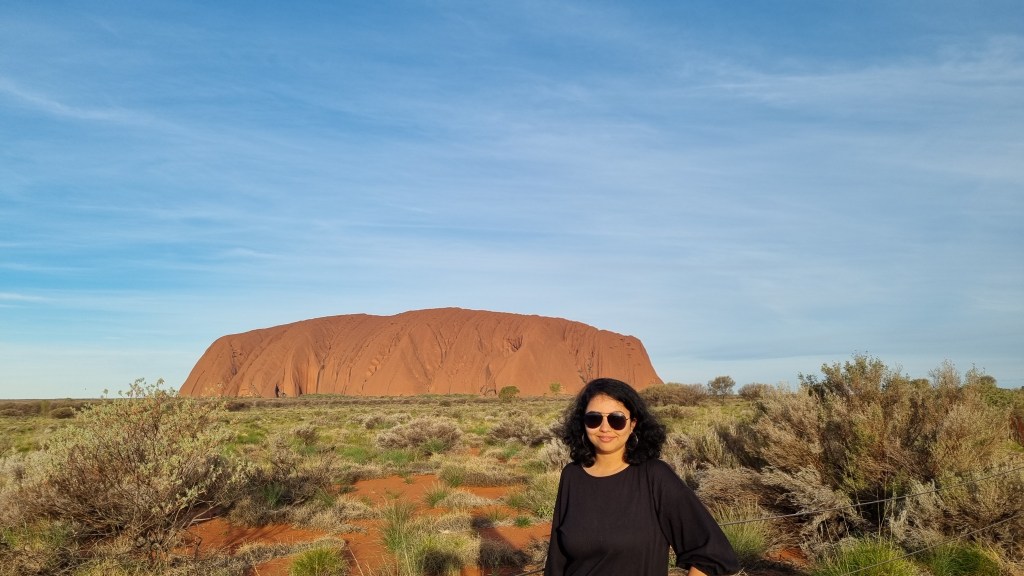
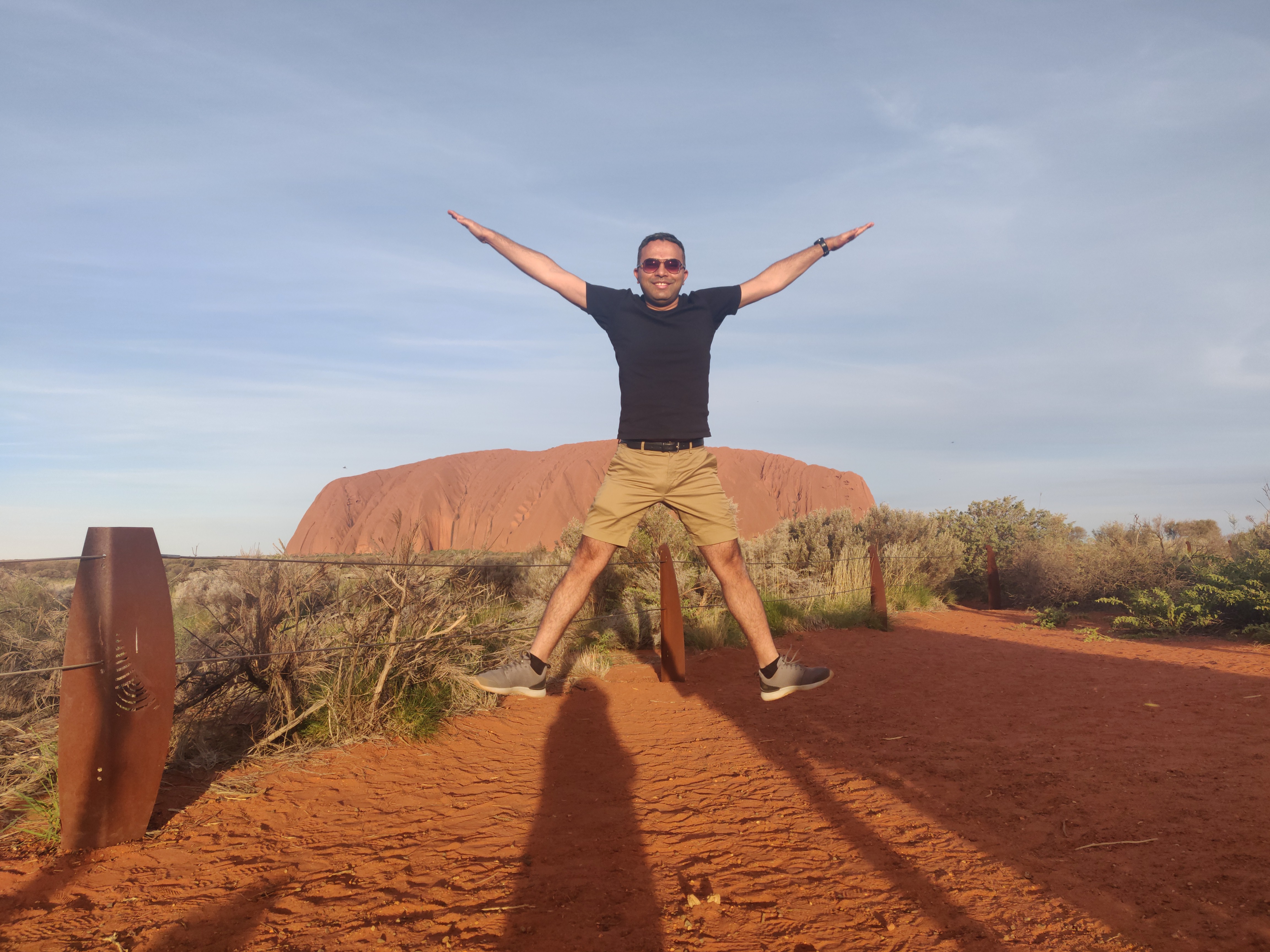
Uluru is also called as colour changing mountain as it changes colours at different times of the day and the year, most notably, it glows red at dawn and sunset. This is due to the presence of iron minerals found within the rock. The iron has slowly rusted over the years and thus, the rock is bright red in color.
It felt magical to observe different shades of the rock as it got closer to sunset and the bright red color was my personal favorite 🙂

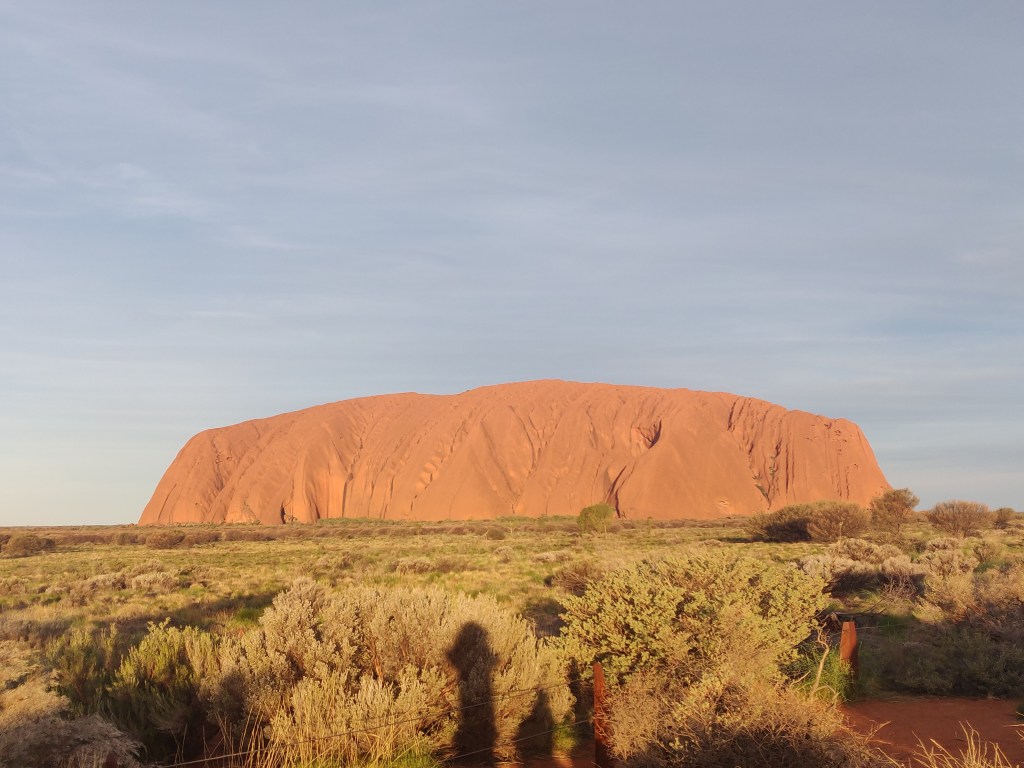
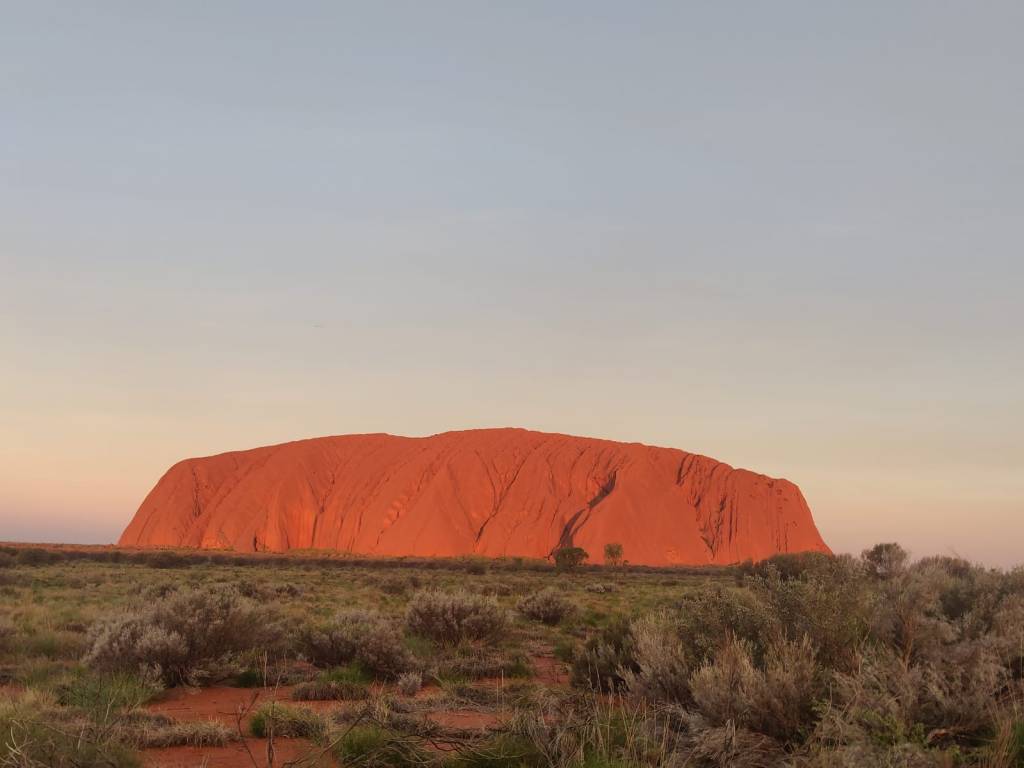

We started our way back to the resort as it got darker and the sky looked spectacular after the sunset.

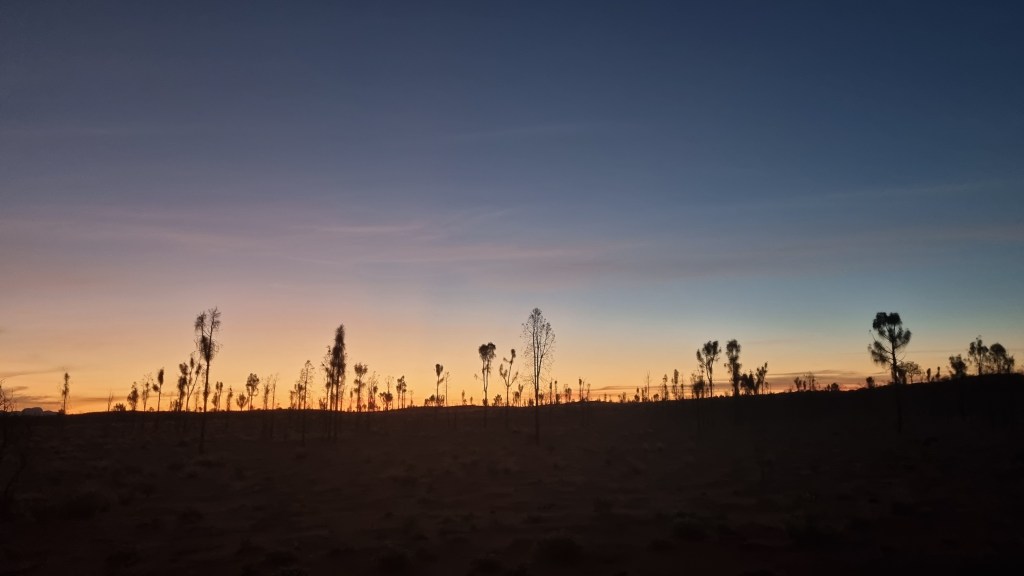
It has been just a few hours that we landed here and it unbelievably changed our state of mind and filled our hearts with immense peace and happiness. We were beyond words to explain the beauty of this place and the deep meditative effect looking at the rock.
As a huge fan of night sky and stars, I stepped outside of the room to take a view of the sky – it was clear and I could spot many stars even in the resort lights. We drove 10mins to reach just outside of the resort, where there were no lights, to observe the night sky. We couldn’t believe our eyes – The sky is completely FILLED with stars that we could clearly see the milky way galaxy in the center of the sky and many more stars around, that we couldn’t spot any dark patch in the sky. Another WOW moment of the day!! 🙂
The only disappointment was that, we didn’t have the expertise/gear to capture the sky, which is the next thing on my bucket list to learn.
Day 2: Uluru, Kata Tjuta (the Olgas), Field of Lights tour
Today was an ambitious day for us, this was the only full day at Uluru and we had to visit both Kata Tjuta National Park and Uluru to cover some beautiful walks without burning ourselves in sun. We split our day into three :- morning, evening and night with some rest in the afternoon from 1pm-4pm.
We chose to visit Kata Tjuta first in the morning, as it was around 1 hour distance from our resort and it will take half a day to explore this place.

Uluru–Kata Tjuta National Park is Aboriginal land and jointly managed by its Anangu traditional owners and Parks Australia. The park is recognized as UNESCO World Heritage Area for both its natural and cultural values.
Kata Tjuta is in the Uluru-Kata Tjuta National Park and you will need a park pass to go there. Kata Tjuta in Pitjantjatjara means ‘many heads’ and the area is a sacred site still used by Anangu men to this day. It consists of 36 domes, the highest of which is 546 metres tall which is 200 metres higher than Uluru.
Karu Lookout – Valley of Winds Walk (1 hour, 2.2 km return)
We decided to walk till the first lookout which is a part of Valley of Winds Walk. The walk is filled with gravel and small rocks and a moderate level walk to reach the lookout. The walk across the domes was beautiful with wild flowers and dramatic landscape.
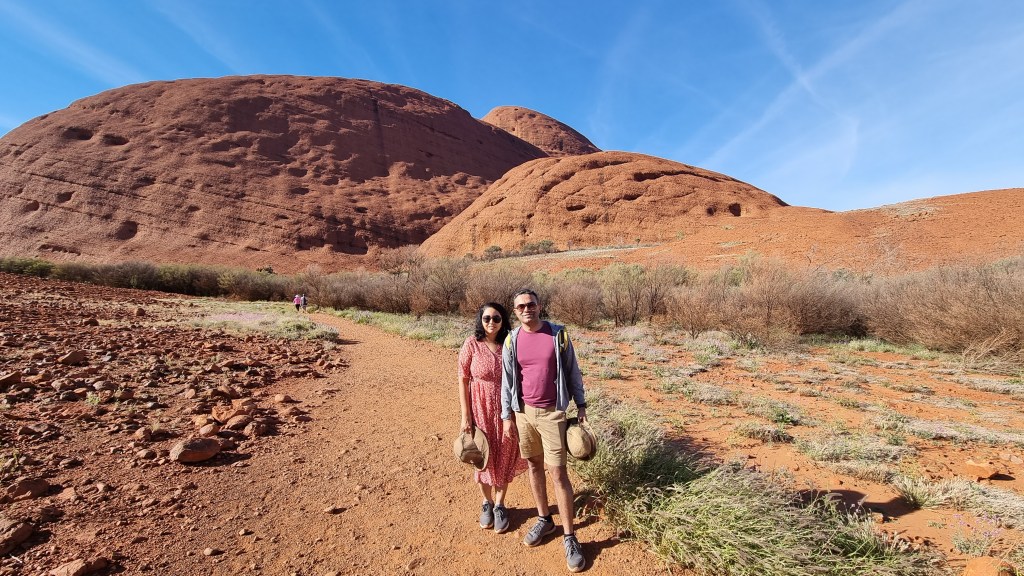
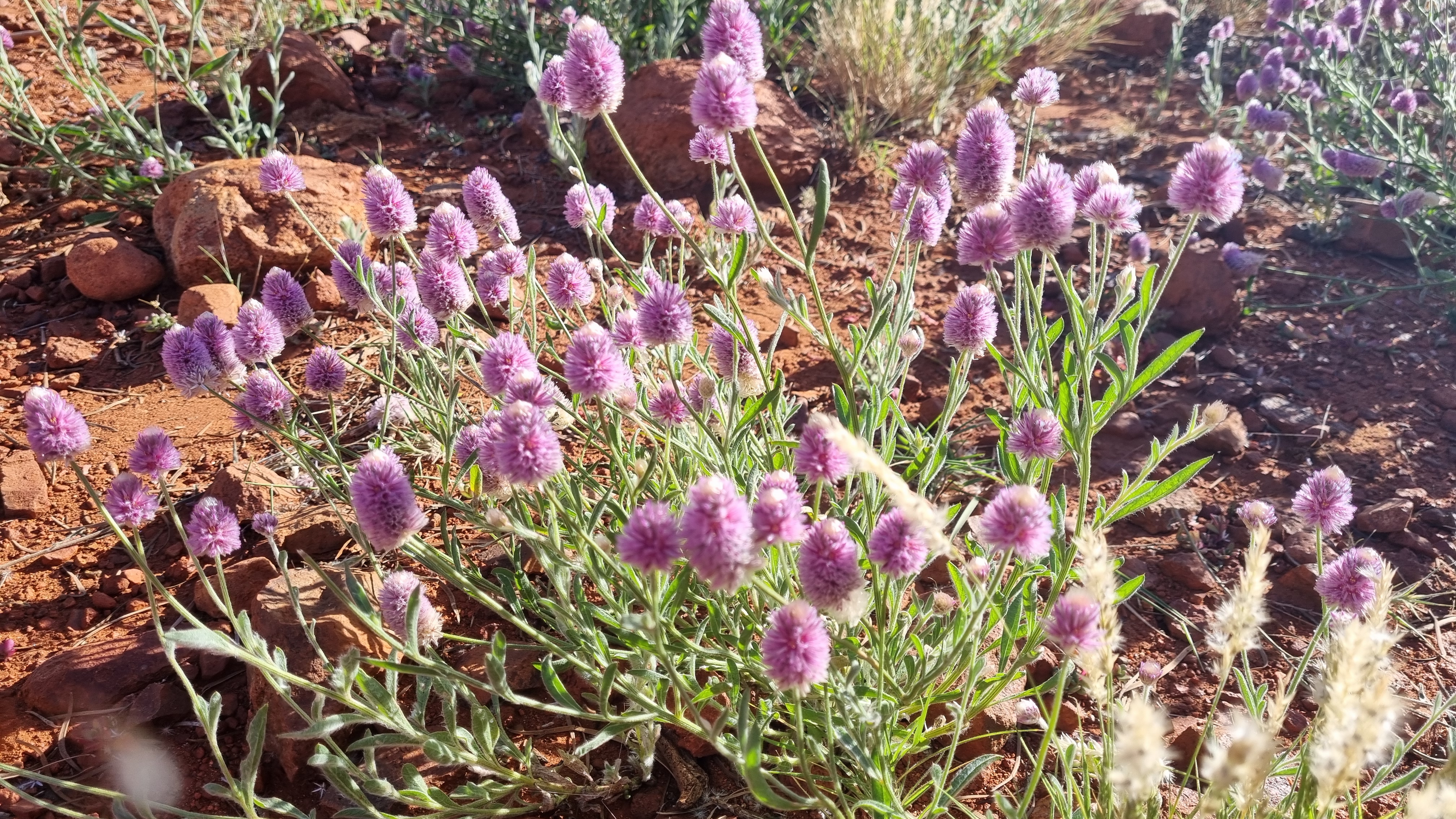
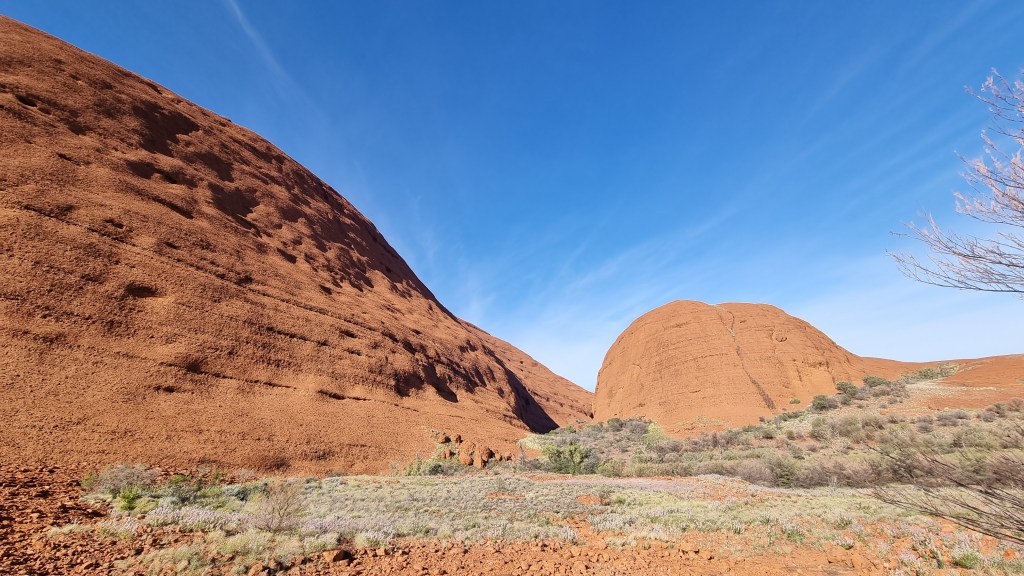
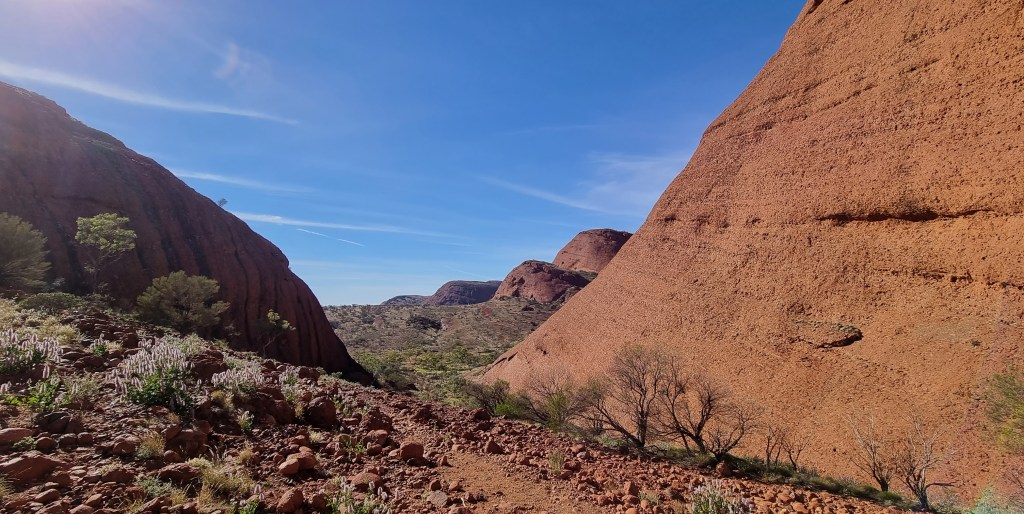
This lookout felt like a starter to explore other domes further, but we had no time to continue further on the Valley of the winds walk.
Sunset Viewing Area
There was a beautiful spot on the way to the next walk, which is the Kata-Tjuta sunset viewing area which gave us a close-up view of these domes and I could imagine how bright they look during sunset in the red soil around.
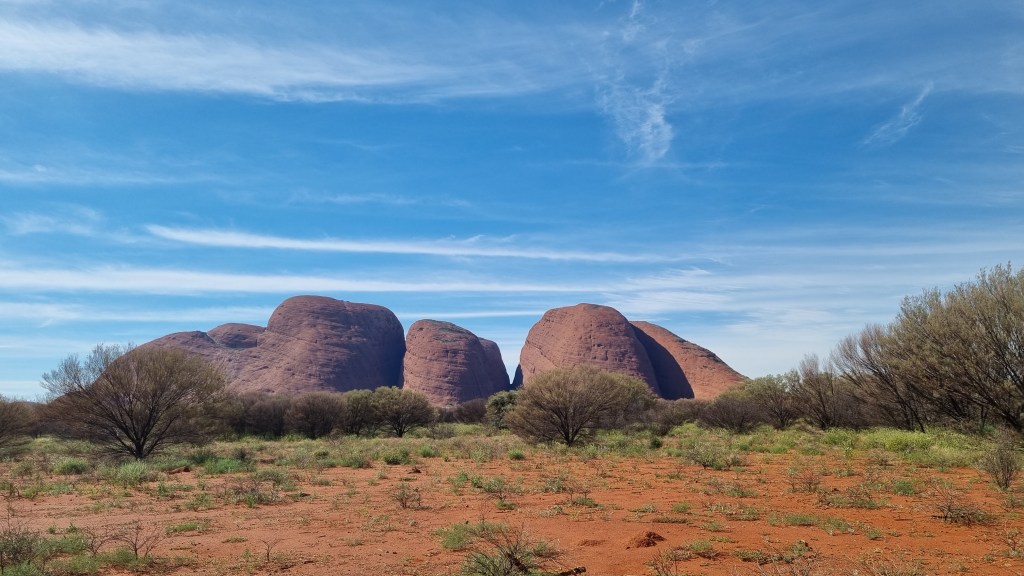
Walpa Gorge Walk (1hr, 2.7km return)
Luckily, we reached this walk around 11am when the sun is getting high in the sky and this walk is guarded from the hot sun. We enjoyed the walk amidst the shade and breezy winds that pass through the gorge.
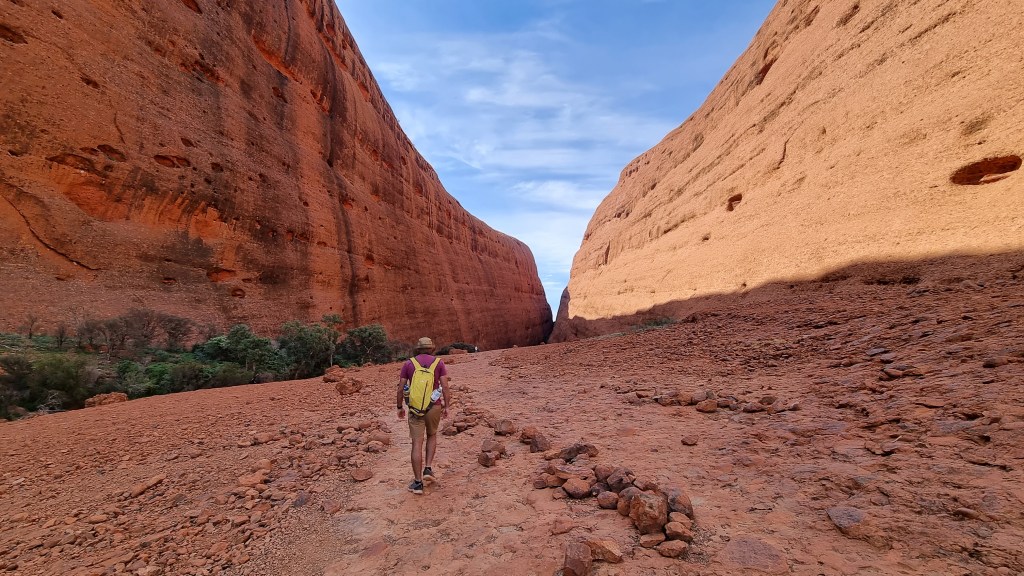
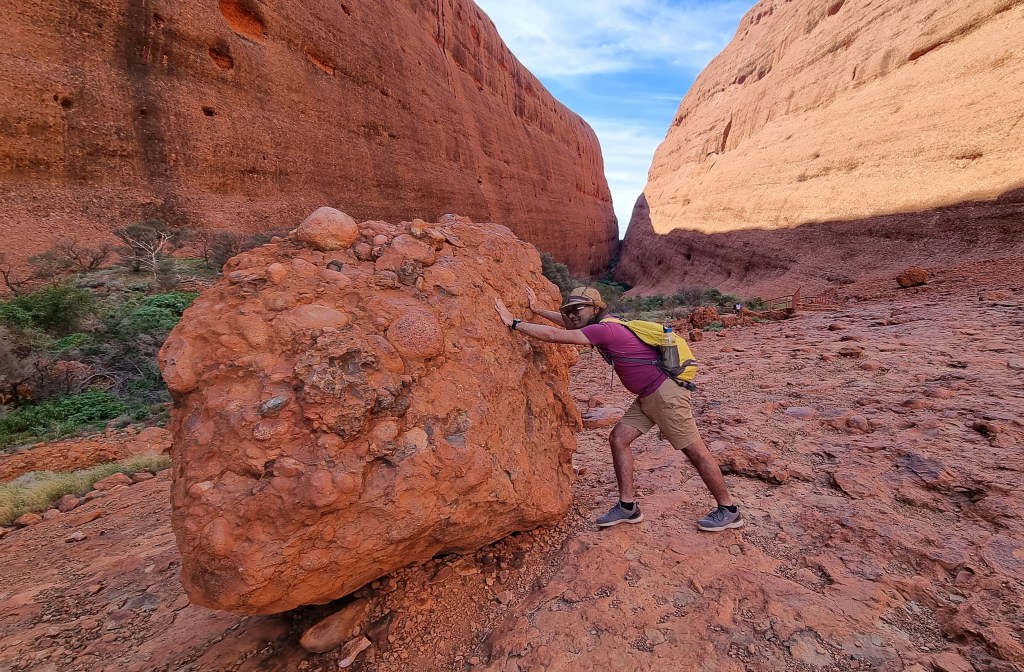
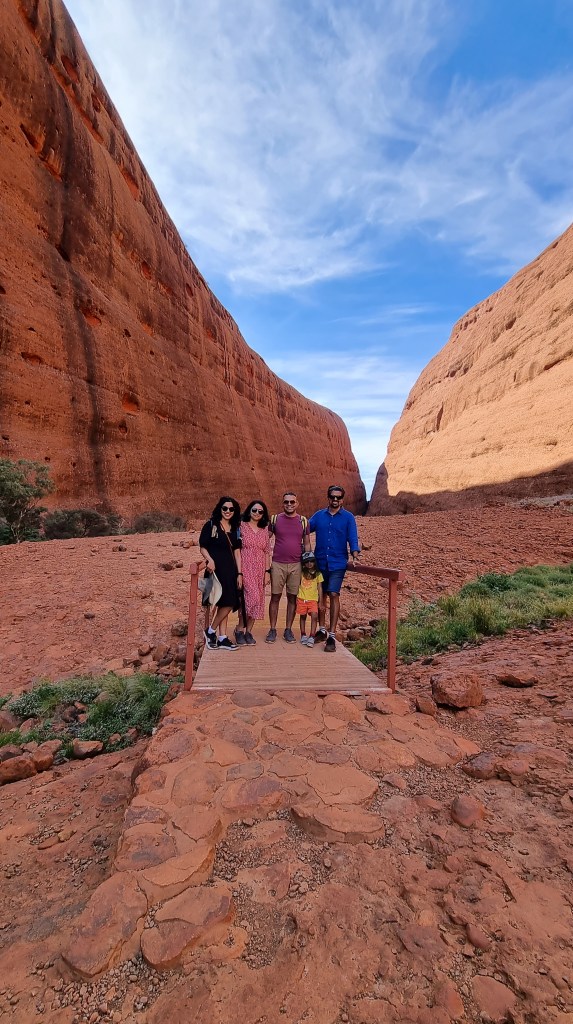
Walpa means windy, so named for the refreshing winds that pass through the gorge. It was an easy walk compared to the other one with cool bridges in between 🙂
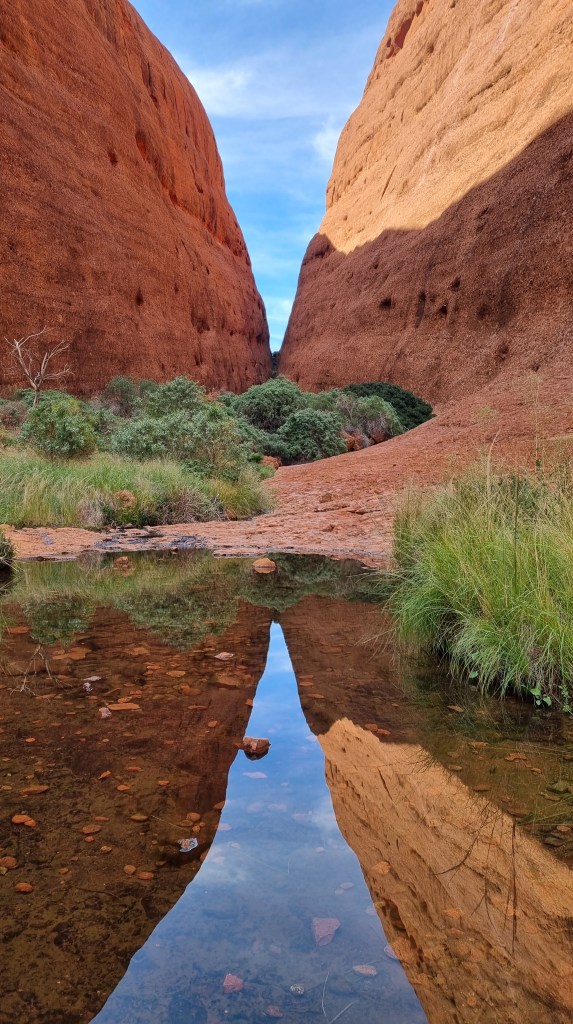
We reached the gorge at the end of the walk and the reflection of the rocks in the water looked amazing 🙂
We headed to our apartment from there for lunch and some rest in the afternoon. After a couple of hours, we drove to our first walk of Uluru. While Kata Tjuta takes us in between the rocks and domes, Uluru walk is completely flat and easy. The Uluru base walk is about 10 km of track that takes us around the whole circumference of the rock.
We decided to concentrate on the main sections of the walk instead of the complete walk.
Mala walk
This walk goes from the Mala car park to Kantju Gorge.
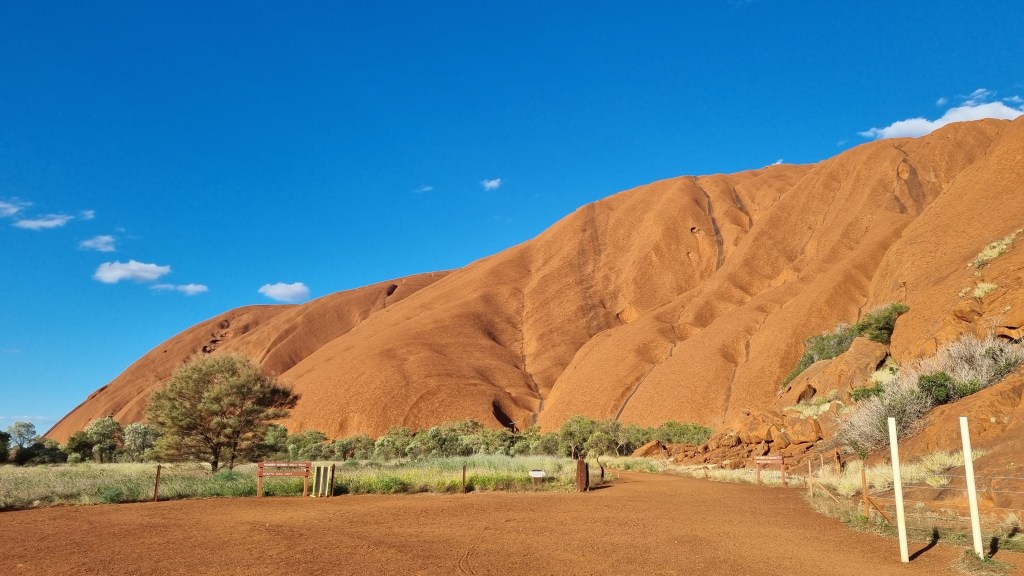
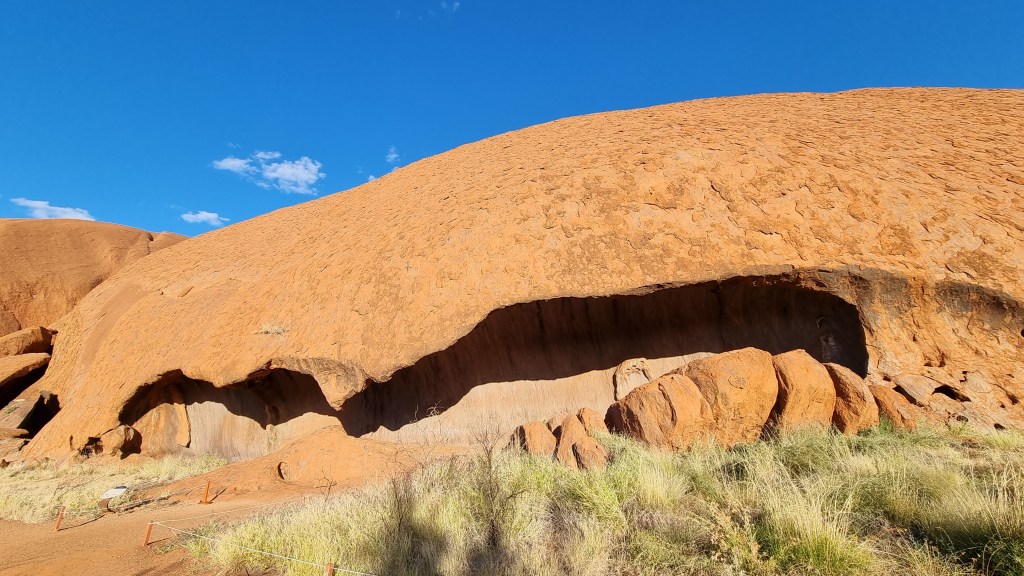
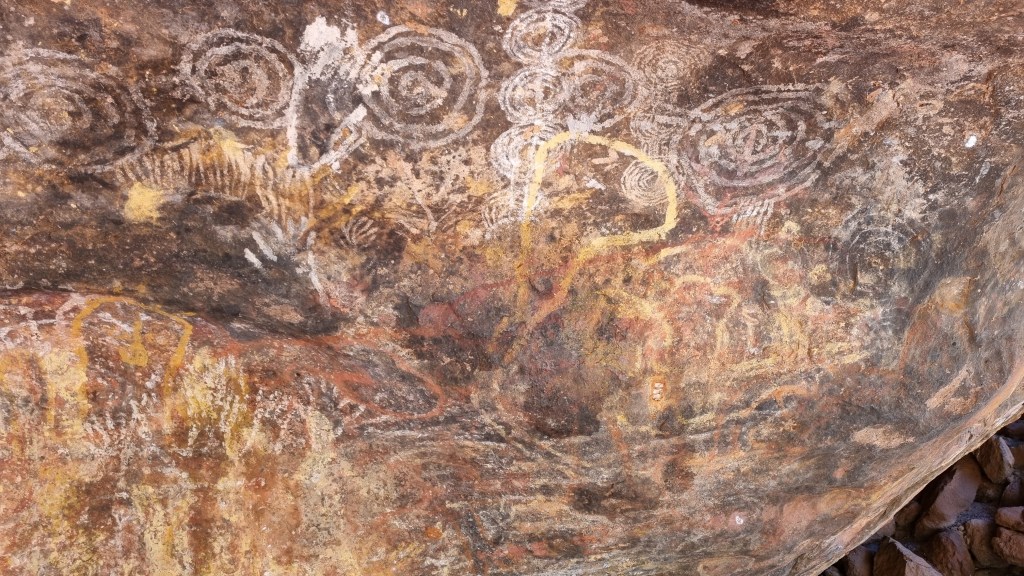
We found many caves with stories written there, on how the Mala people camped when they first arrived at Uluru and the kitchen cave where they prepared their meals. The Mala people are the Anangu’s ancestors, who currently own this land.
Kantju Gorge was surrounded by vertical walls with a waterhole at the bottom.
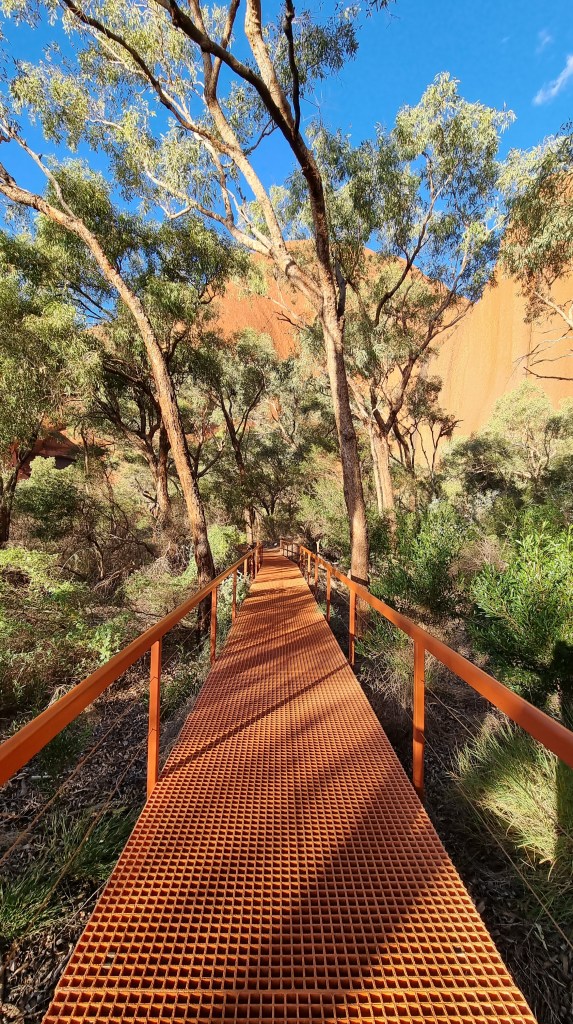
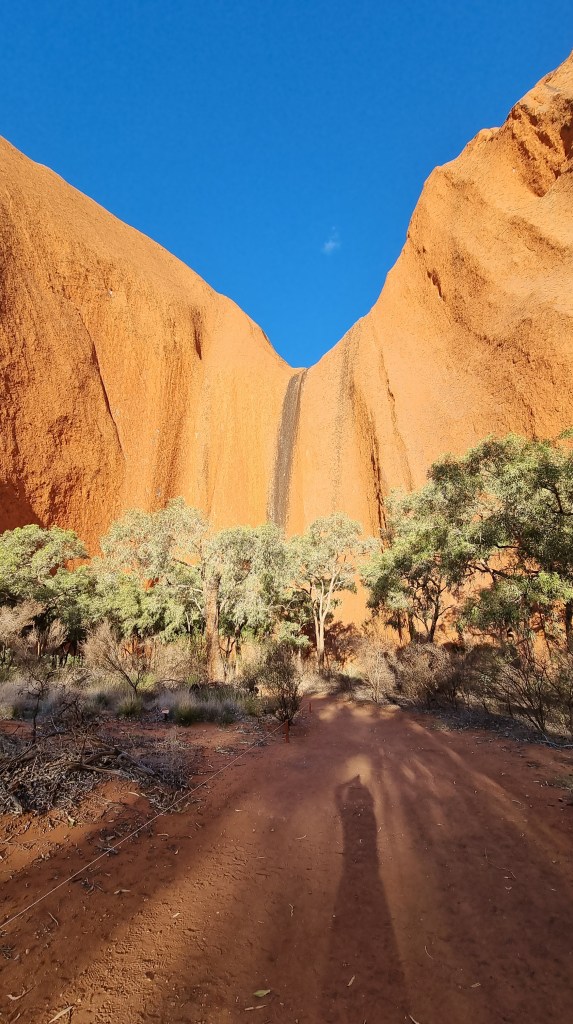
We were closer to sunset time and we could see the bright color of the rock from close today.
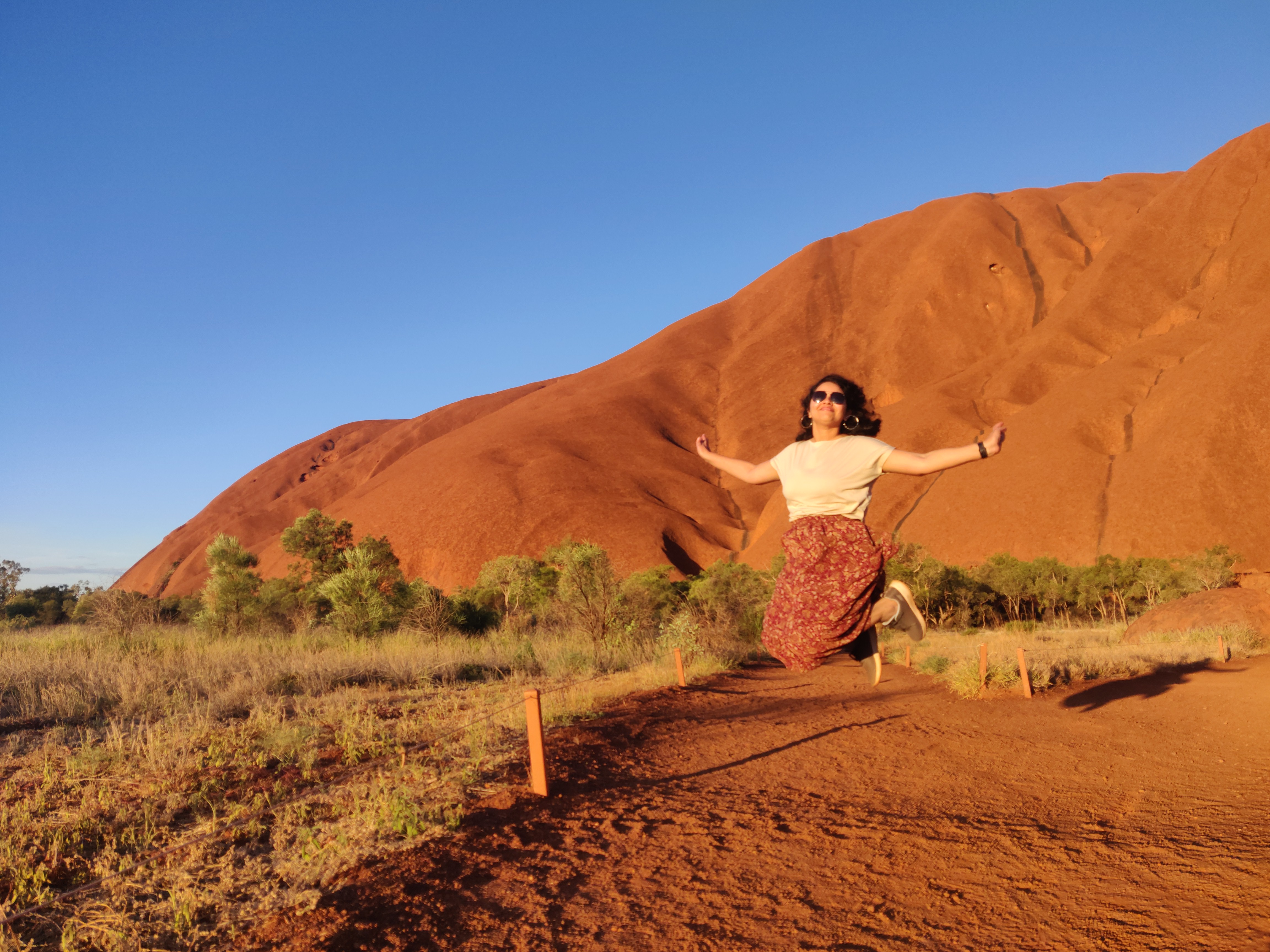
We missed our sunset today, as we planned to go on Field of Lights tour planned immediately after sunset.
Field of Lights Tour
I read about this tour in many Uluru travel blogs and this was highly recommended. I had no clue of how this tour is going to be and had fewer expectations about this place. The bus picked us up from our apartment and took us around 20mins away from the resort into a dark place with the lights display.
Field of Light Uluru is created by an internationally celebrated artist Bruce Munro. The exhibition, is named Tili Wiru Tjuta Nyakutjaku or ‘looking at lots of beautiful lights’ in local Pitjantjatjara is Munro’s largest work to date. It covers more than seven football fields area with 50,000 spindles of light lit by fibre optics.
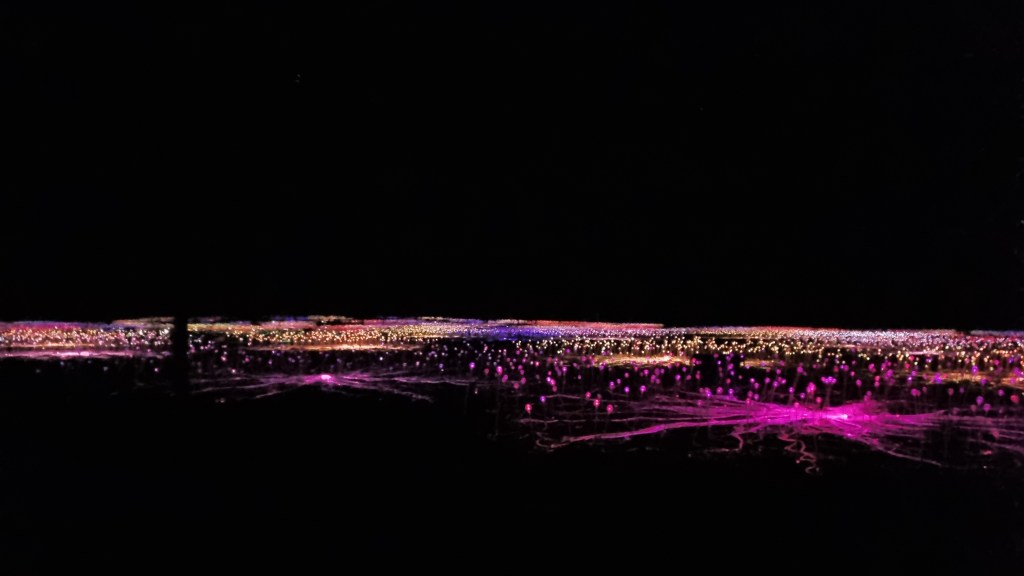
These lights looked a bit dull for naked eye and looked absolutely beautiful on camera. That’s something that amused me, typically things happen vice versa. We walked on and on clicking pictures of various bulbs changing colors.
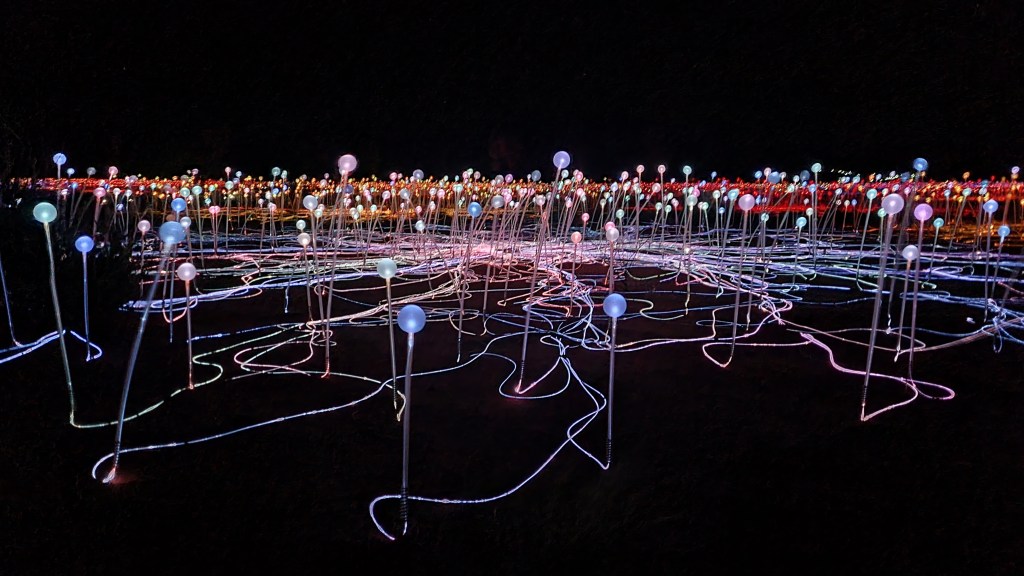
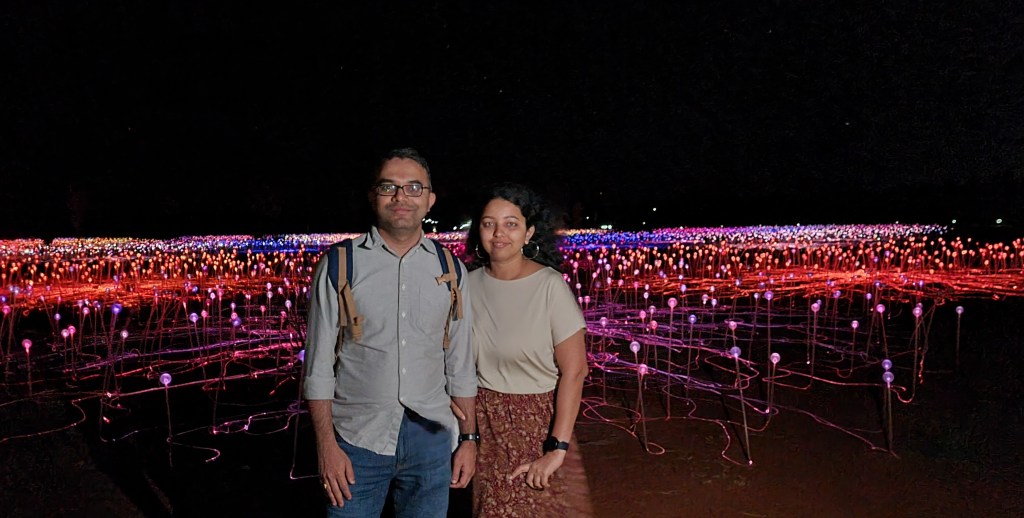
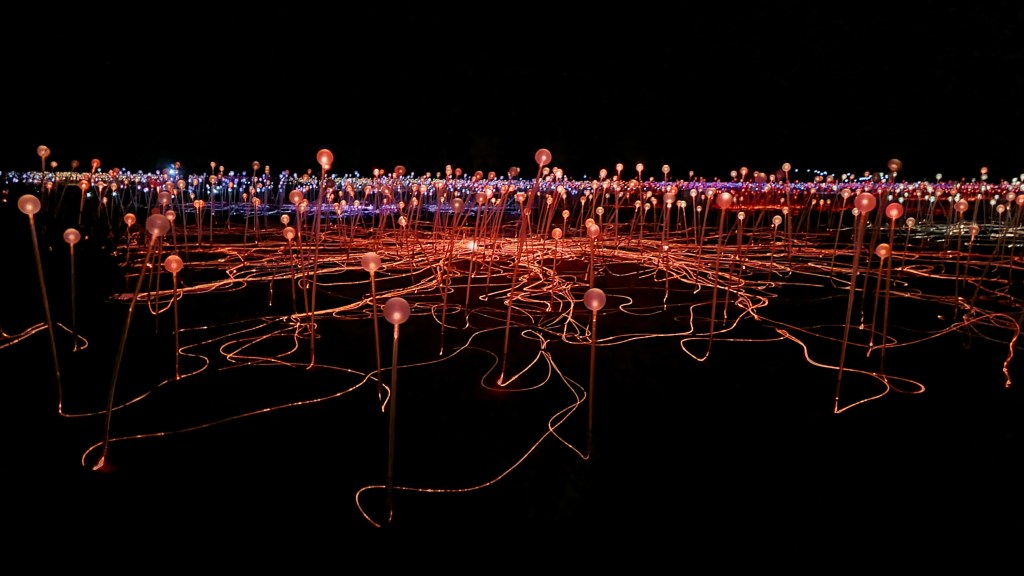
The best part of this tour is the night sky again. I think we spent more time looking at the sky than at the lights below. The sky is beautifully illuminated with stars all around and I felt these lights below are human’s way of illuminating the ground, but it was of no match to the stars and the milky way galaxy in the sky.
With the brilliant display of stars in the sky, it was a great end to a wonderful day 🙂
Day 3: Uluru Sunrise, Uluru -> Sydney
We woke up early to catch sunrise today. We reached the sunrise viewing area, which is on the other side of the rock. We realized that we were viewing this rock only from one side so far and today is a good chance to explore the other side of this.
Uluru Sunrise Viewing Area
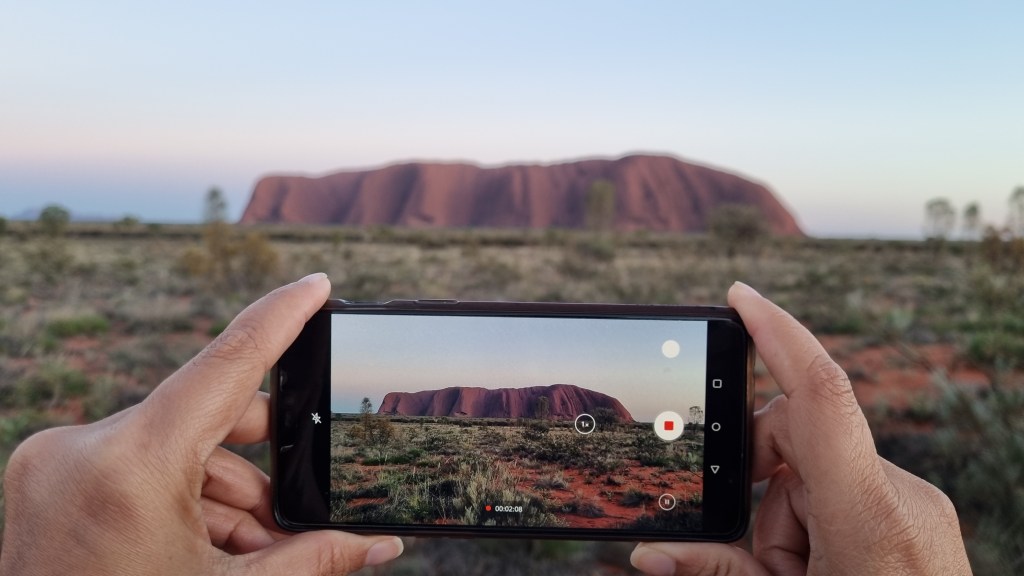
We waited for sunrise to observe the first rays of sun hitting the rock, but we realized that sun rays were not reaching straight on the rock and only part of the rock received the rays and therefore the color is uneven. The other part of the rock is not smooth with bends in between making it difficult to view uniform color across.
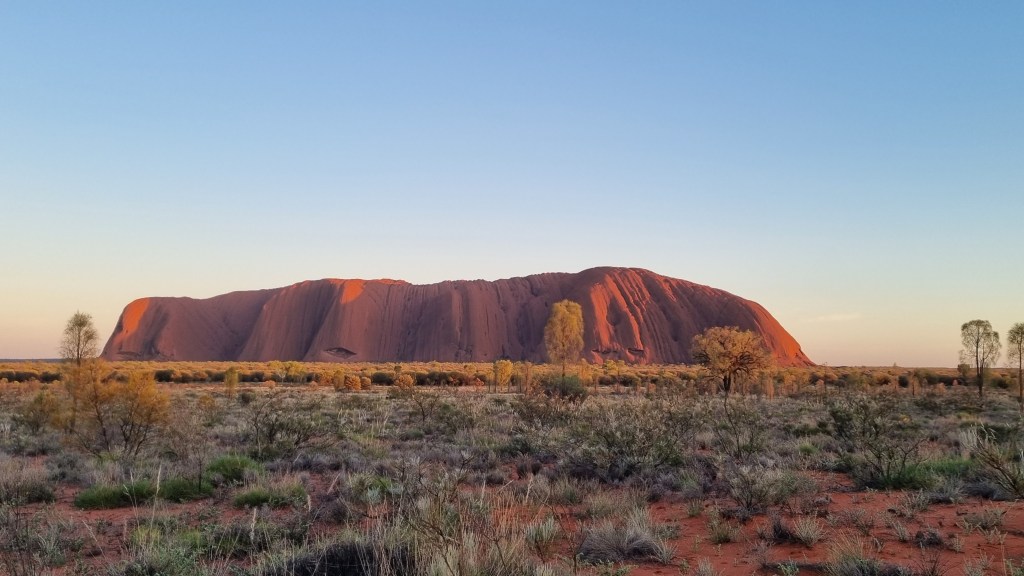
It was still a good experience to witness the sunrise, but sunset view was the better in comparison.
Important Tip: the national park had many flies around and a fly net for face avoided irritation of flies over the face and allowed us to explore the place better. We got this tip from other travel blogs and we would like to highly recommend this to anyone visiting Uluru.

Kuniya walk
We checked out of our hotel by 10am and reached Kuniya walk carpark on our last walk of Uluru. The short Kuniya walk runs from the Kuniya carpark to Mutitjulu Waterhole. This walk was quite exciting with interesting stories written all along.
https://parksaustralia.gov.au/uluru/discover/culture/stories/kuniya-liru-story/
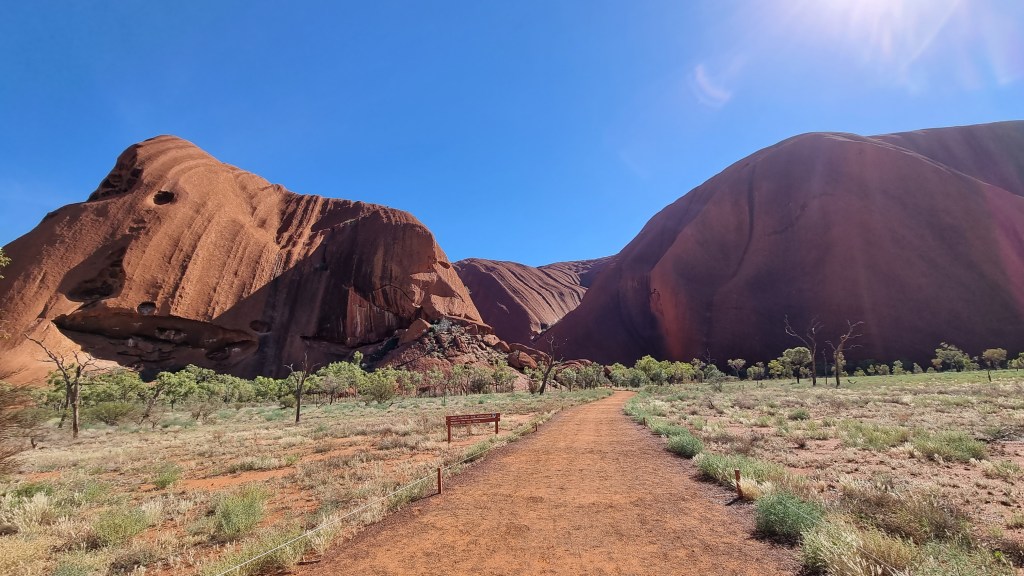
The aboriginals believe that their ancestors reside in these rocks and some areas of the rock resemble human faces.
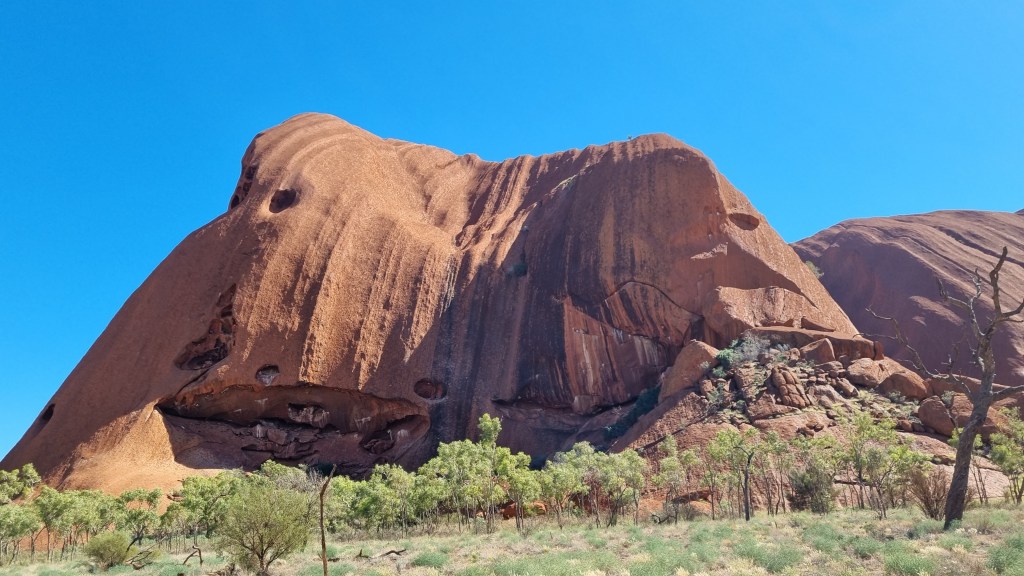
There are beautiful aboriginal arts for display on caves in between.

We reached Mutitjulu Waterhole at the end of the Kuniya walk. This beautiful waterhole is one of the few permanent water sources around Uluru. We sat on the bench there for sometime to enjoy our serenity of the place.
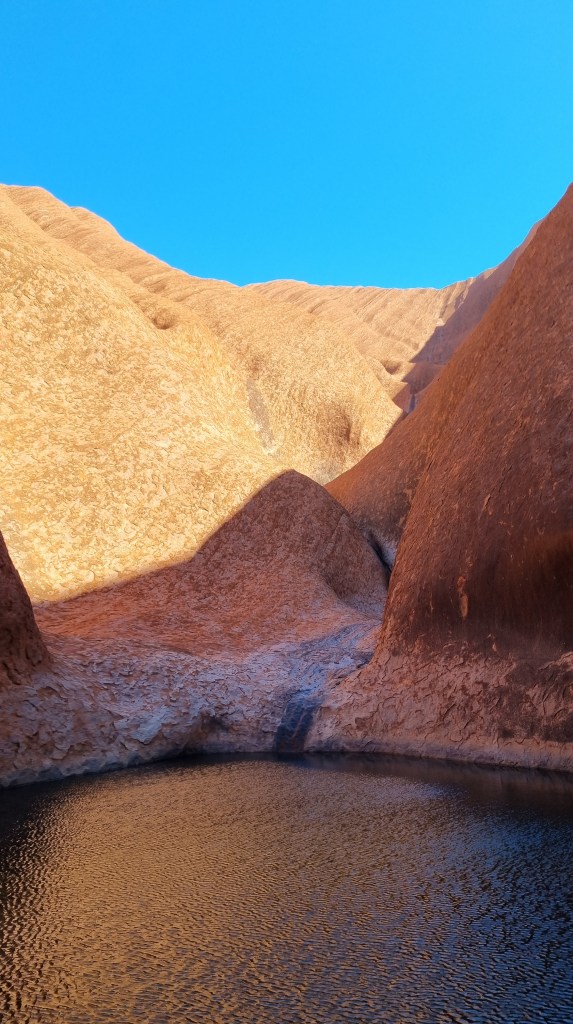
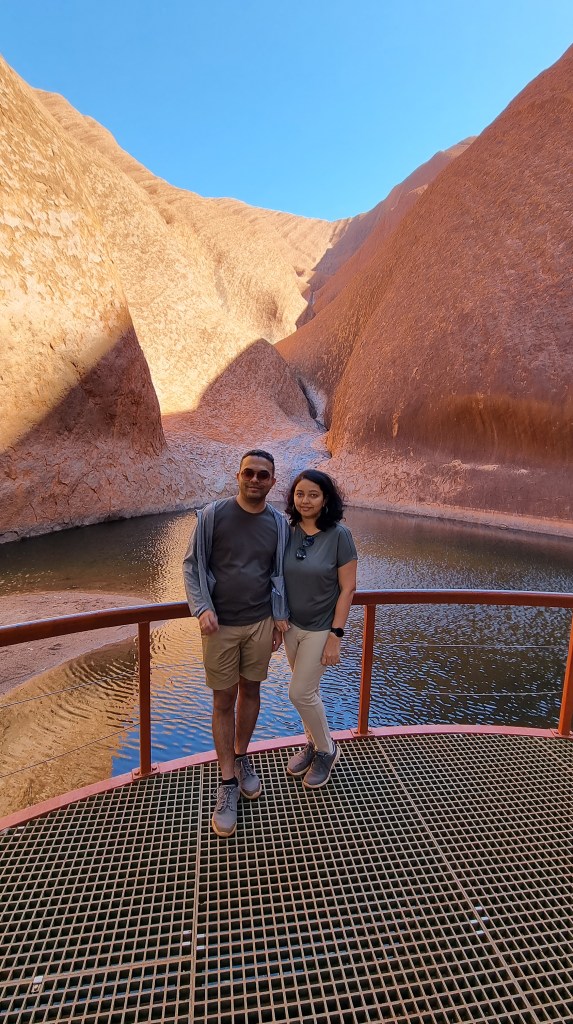
This place turns interesting when it rains. We couldn’t watch it, but the images of rain over Uluru at this waterhole were awesome, turning it to a waterfall. This was one of the images from google during rain.

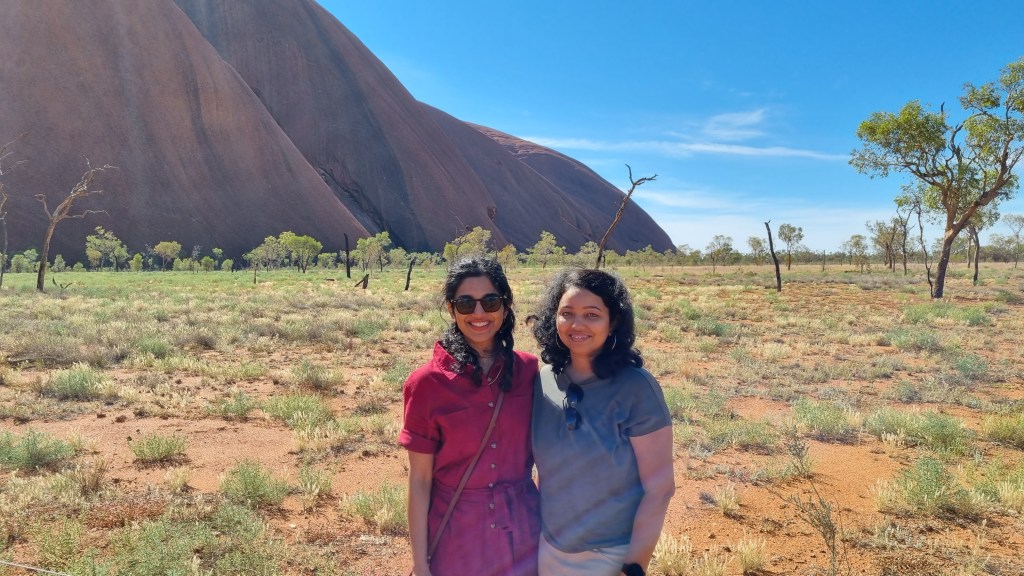
After the walk, we headed over to airport to catch our flight to Sydney.
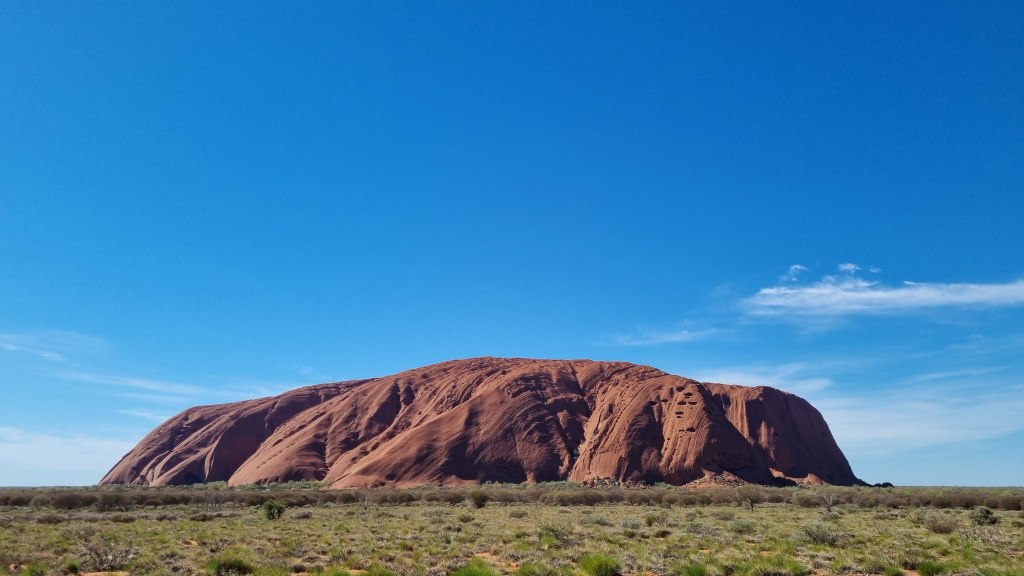
It was finally our time to said good-bye to the Uluru rock. Thank you Uluru for giving us amazing experiences and immense peace! Bye-bye for now.

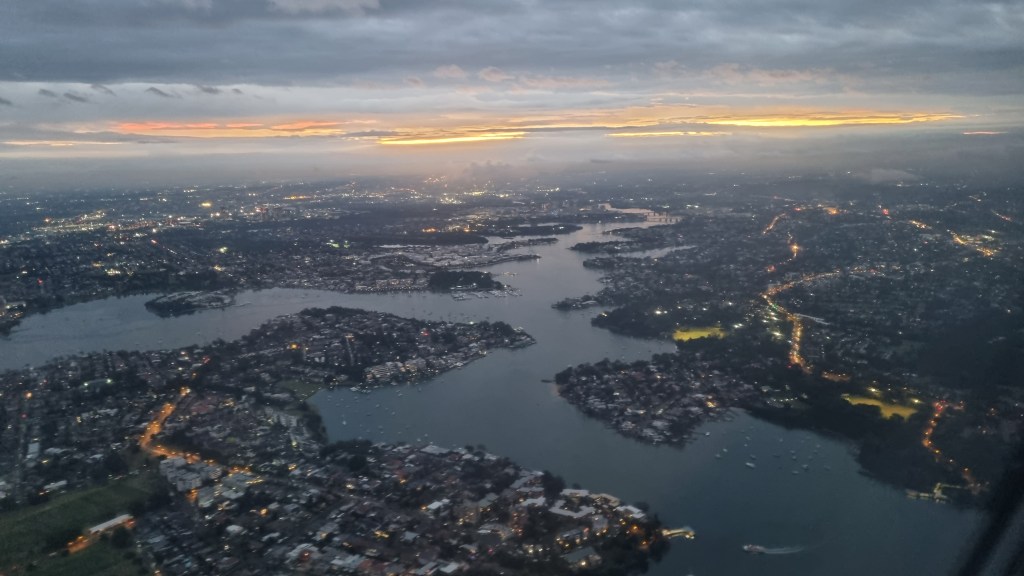
We reached Sydney back by sunset time. Sunrise at Uluru and Sunset at Sydney, from Blue Sky to Cloudy Sky!
 Life Travel Fantasy
Nice. Narrated well.
LikeLike