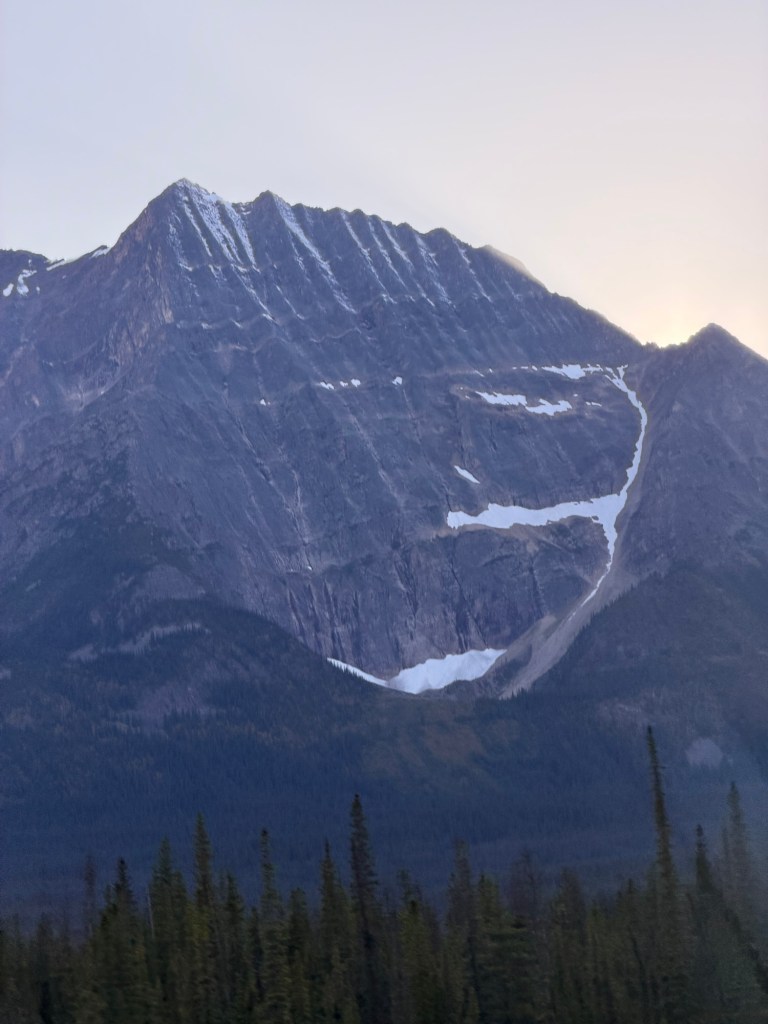
Canadian Rockies was a recent addition to my travel bucket list, mostly inspired by all the stunning photos of turquoise lakes on Instagram. Since social media can sometimes exaggerate things, I went into this trip keeping my expectations fairly grounded. That said, I absolutely love the mountains, so any opportunity to plan a trip to the peaks always makes me happy 🙂
Planning & Logistics
One surprising thing about planning a trip from the Bay Area to Banff is how convenient the flight duration is.
- Flight Time: Just a short 2.5-hour direct flight from SFO to Calgary (YYC).
- Time Zone: Only 1 hour ahead of Pacific Time.
- Family Travel: The minimal travel time and slight time difference made it an ideal destination to travel with our toddler without disrupting sleep routines too much.
Since the glacial lakes are fully thawed and accessible for only a few months during the summer, demand gets high quickly. We made sure to book everything 4 months in advance to secure reasonable stays and permits.
Day 1 – San Francisco to Canmore
My major excitement for today was about visiting a new country! I was curious to see what Canada would be like and whether it would feel any different from the US.
Calgary airport itself gave us a very nice first impression. The airport was really good, quite artistic and had a lot of Canadian culture around it. One of the first things we started noticing ever since we landed was the use of two languages everywhere – English and French. Along with the airport’s art and cultural elements, these little differences made it feel like we were in a different country.
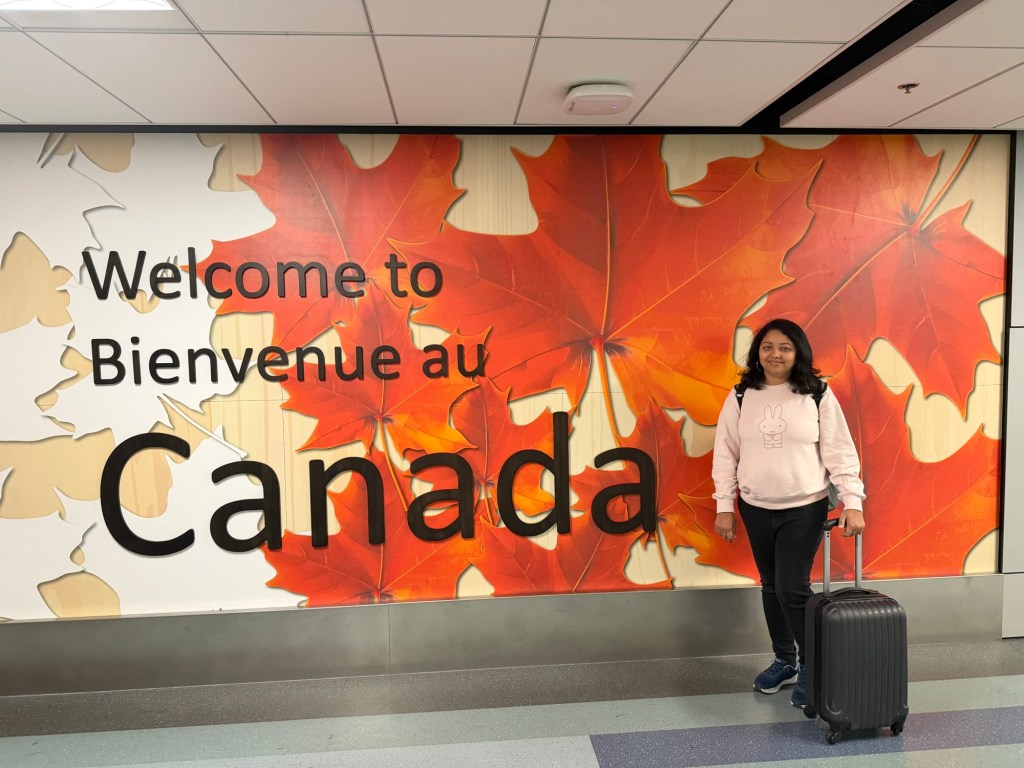
We picked up our rental car and drove directly from the airport to Canmore.
Canmore is a beautiful mountain town nestled right in the heart of the Rockies. Even arriving just after sunset, we could already spot the towering peaks covering the town from every direction – it was simply gorgeous! Another pleasant surprise was finding out that many restaurants stay open until midnight, even in a small mountain town. Arriving late with a toddler, not having to stress about dinner was such a relief. We ended the night eagerly waiting for sunrise to catch our first proper look at the surrounding mountains.
Day 2 – Banff and around
When we woke up on our second morning, we went to the hotel window eager to finally see the mountains framing Canmore. But these peaks are so massive they create their own weather! Up until 9:00 AM, the summits were wrapped in thick, low-hanging clouds. It felt like a slow reveal, and once the morning mist finally drifted away, we got our very first breathtaking look at the town completely enveloped by majestic rock faces.
The Scenic Drive to Banff
From Canmore, Banff is an easy 30-minute drive. While Banff is the central hub where all the iconic sights begin, we chose Canmore as our base as it’s significantly more budget-friendly while still giving that full mountain town experience.
The drive between the two towns was nothing short of stunning. I’ve never truly appreciated rock structures before this trip, but seeing these mountains up close changed that completely. Each rock face has its own unique texture, shape, and personality, sculpted over thousands of years by snow and ancient glaciers.
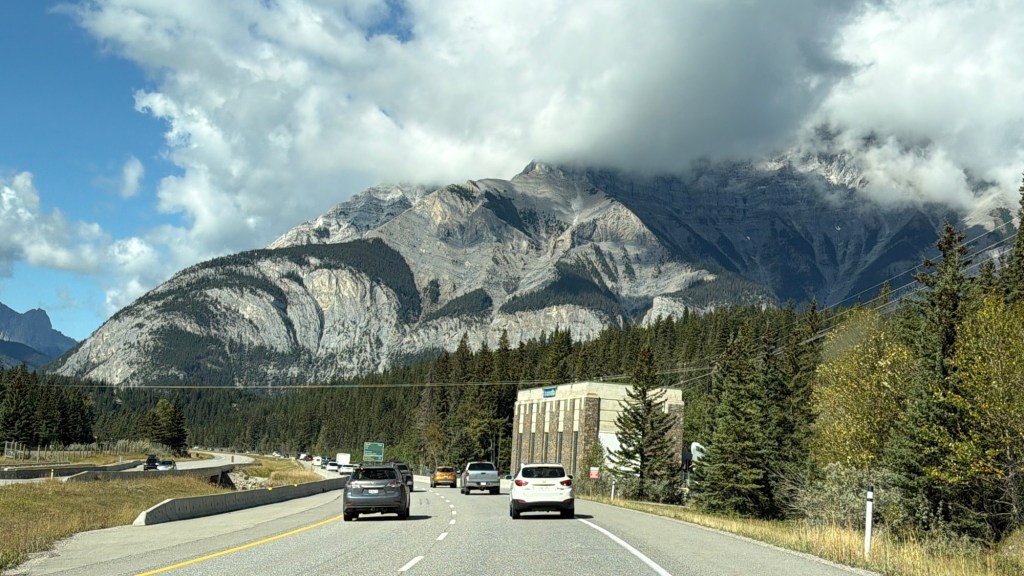
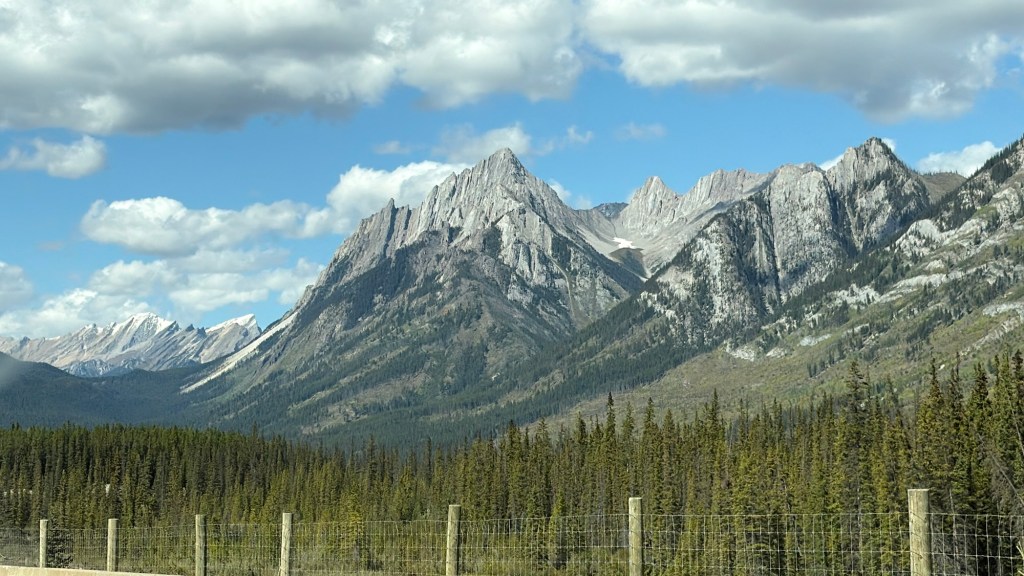
Along the highway, we kept noticing these massive, arched overpasses covered in trees and grass. At first, they looked a bit mysterious, but we soon understood they are wildlife overpasses built specifically so animals can cross the busy highway safely. Our little one was absolutely fascinated by them and kept watching out for “tunnels”.
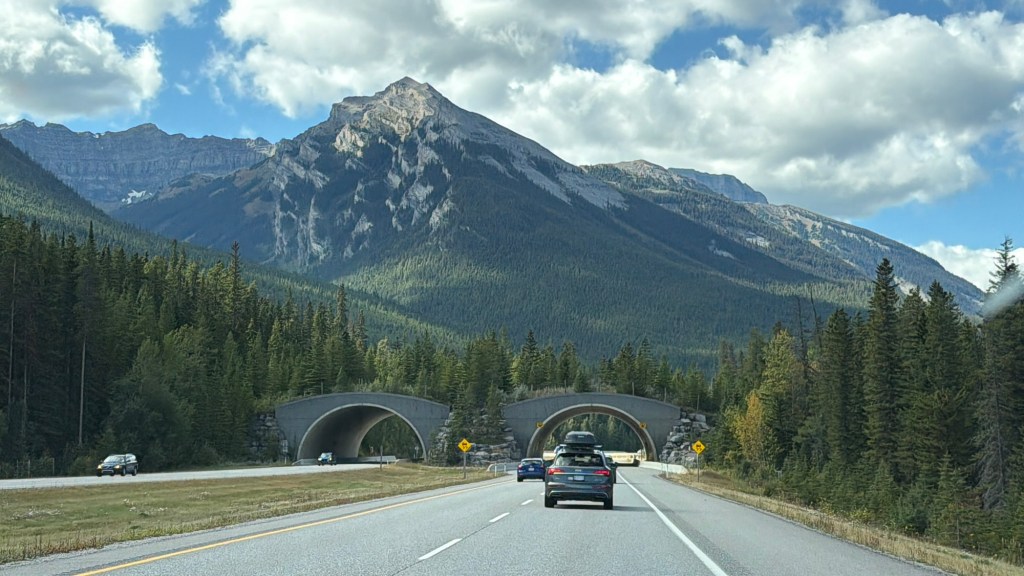
Quick Tip: Just before entering Banff National Park, you need to buy a Parks Canada Pass. Since we were staying for about a week, we opted for the National Parks Discovery Pass. We ended up sitting in a pretty long queue at the gate to get ours—definitely buy yours online ahead of time if you can to skip the wait!
Vermilion Lakes
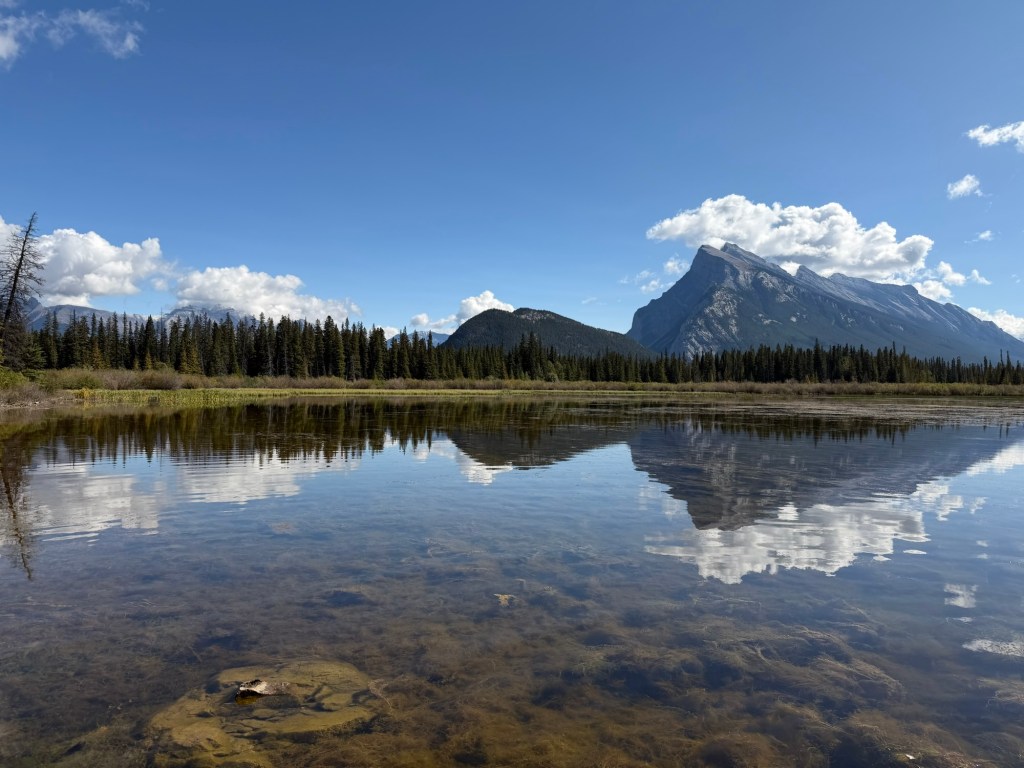
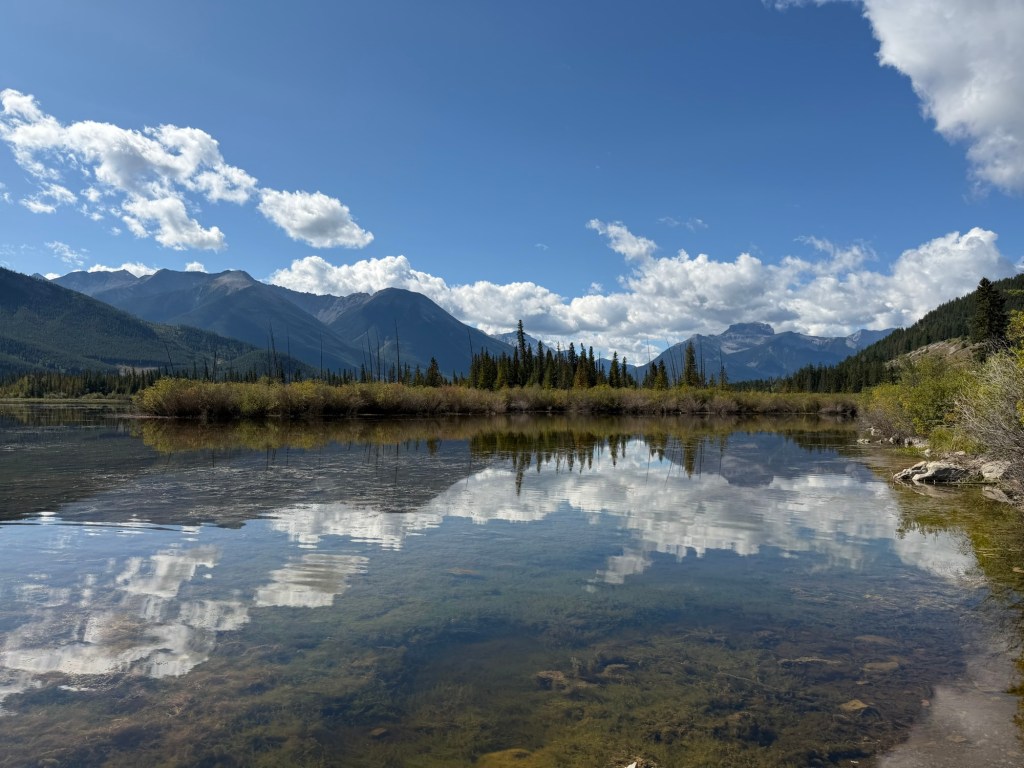
Our first stop was Vermilion Lakes. It’s a peaceful, quiet area with a walk way right along the water, offering glassy reflections of the surrounding peaks. It was the perfect low-key spot to stretch our legs and get used to the crisp mountain air.
Banff Town
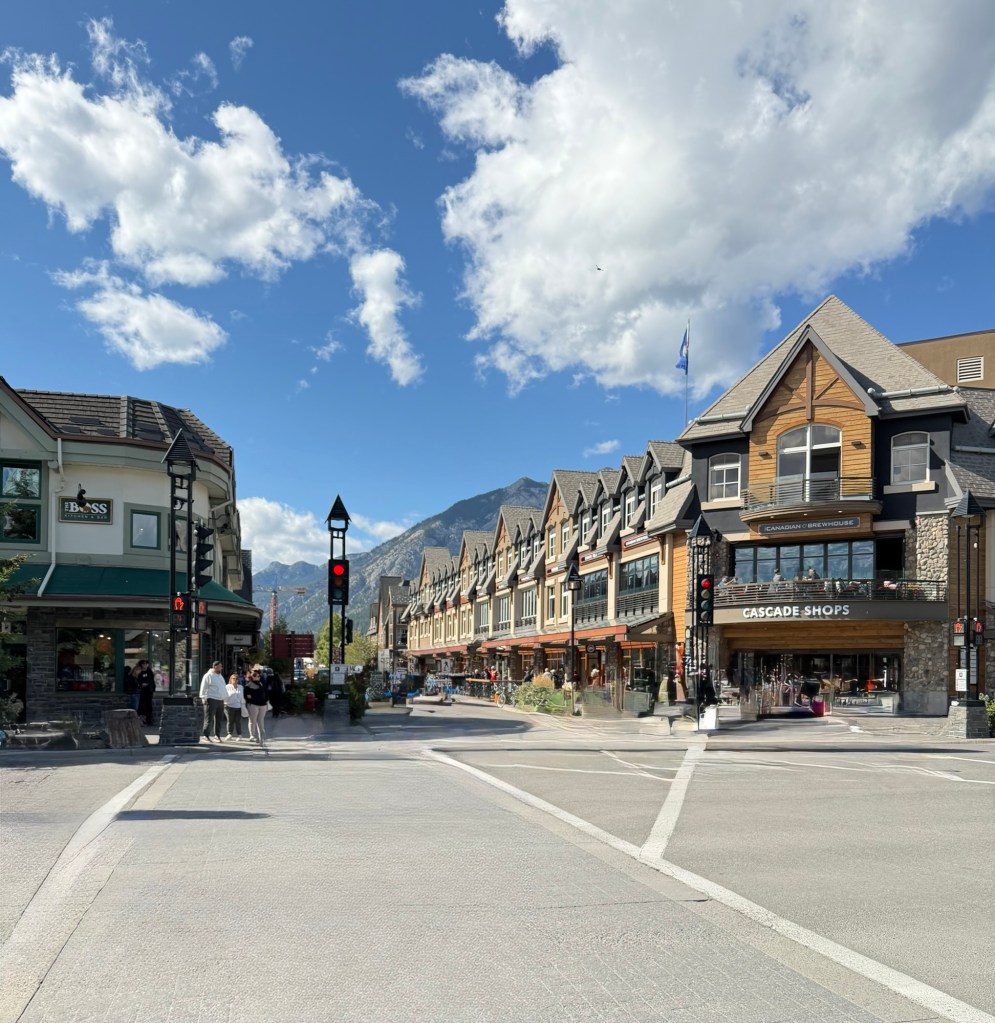
By afternoon, we drove into Banff Town for lunch. If Canmore is relaxed and quiet, Banff is pure energy! It’s such a charming, vibrant mountain town filled with colorful storefronts, bustling outdoor patios, and visitors from all over the world. Finding a parking spot took a bit of patience, but once we did, we grabbed a bite to eat and just soaked in the lively atmosphere.
Johnston Canyon
After lunch, we made our way over to Johnston Canyon. The drive there was absolutely gorgeous—we passed towering, tree-less mountain peaks and the striking Castle Mountain, and I just couldn’t resist stopping to click a few pictures along the way.
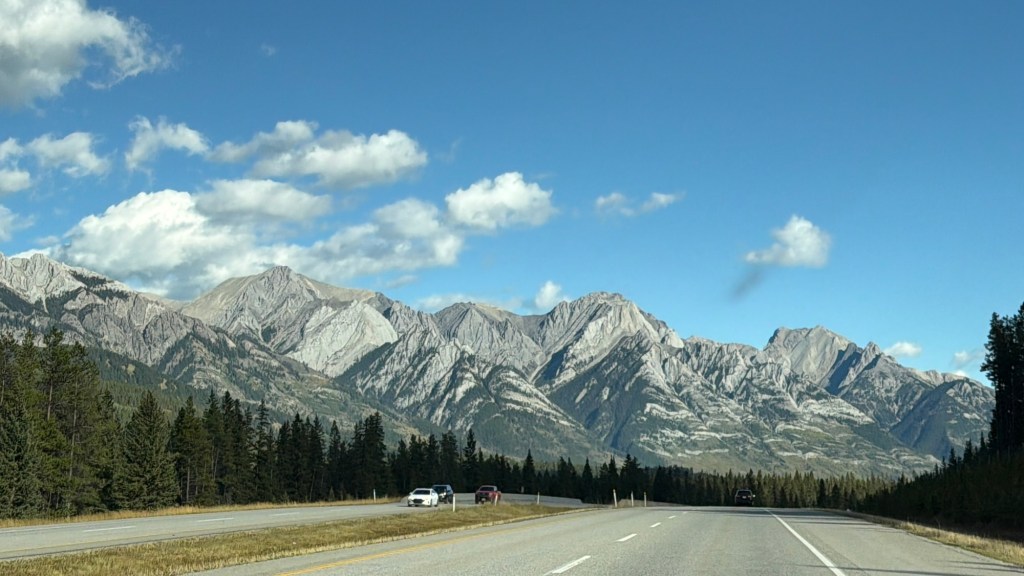
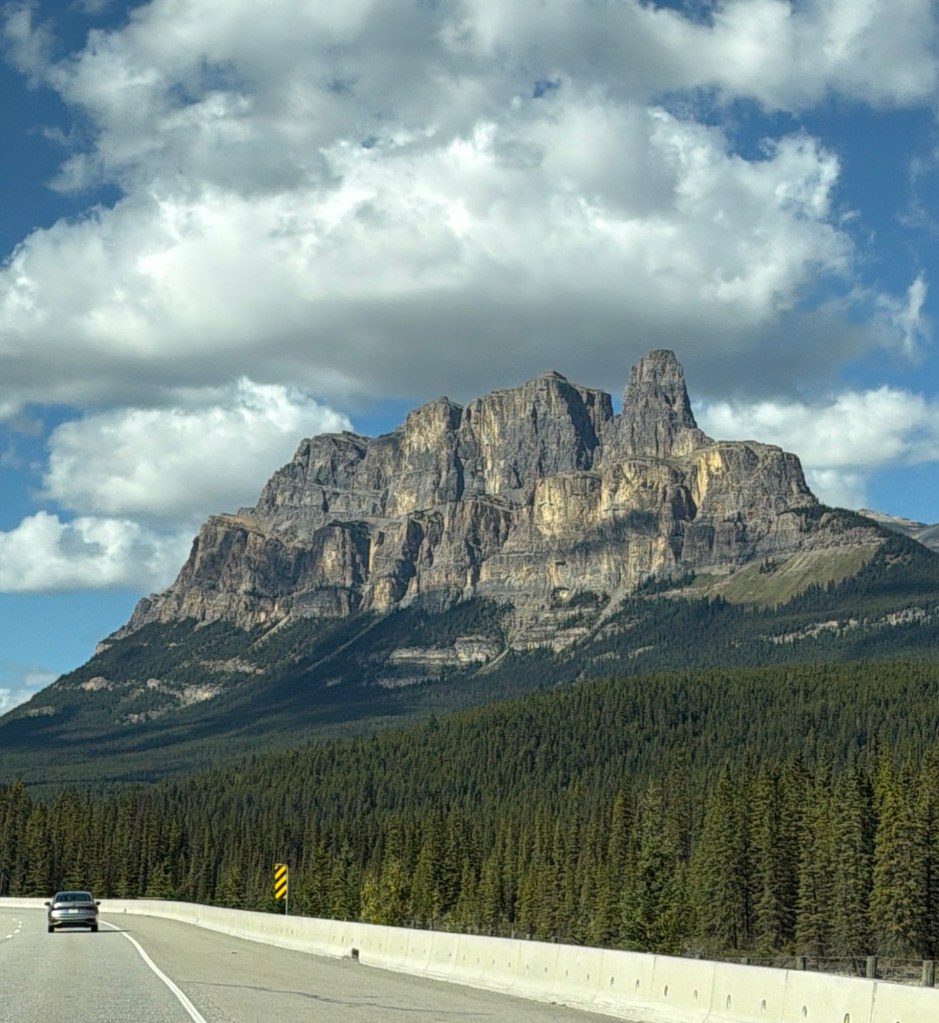
Parking at Johnston Canyon tested our patience again—we circled for at least 15 minutes before finally snagging a spot. It definitely felt like the weekend effect, with plenty of locals heading out to enjoy a good hike alongside the tourists.
The path itself is well-paved and technically stroller-friendly, but it has a steady, continuous uphill incline. We hiked up far enough to catch some beautiful views of the canyon and roaring water before deciding to turn around.
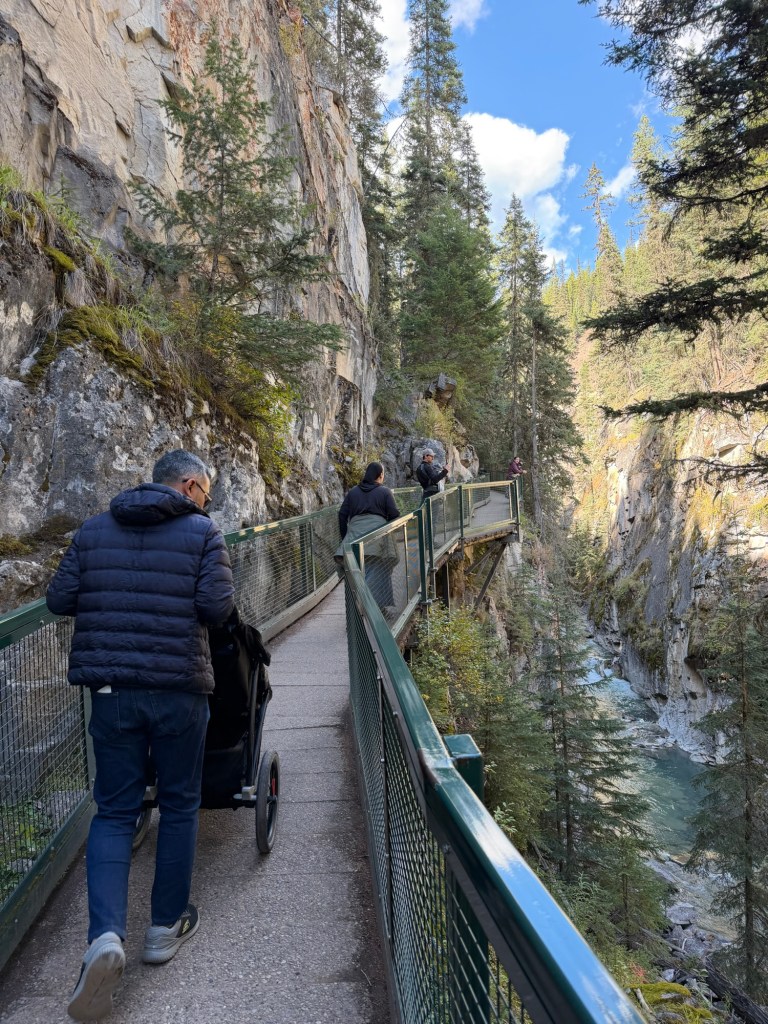
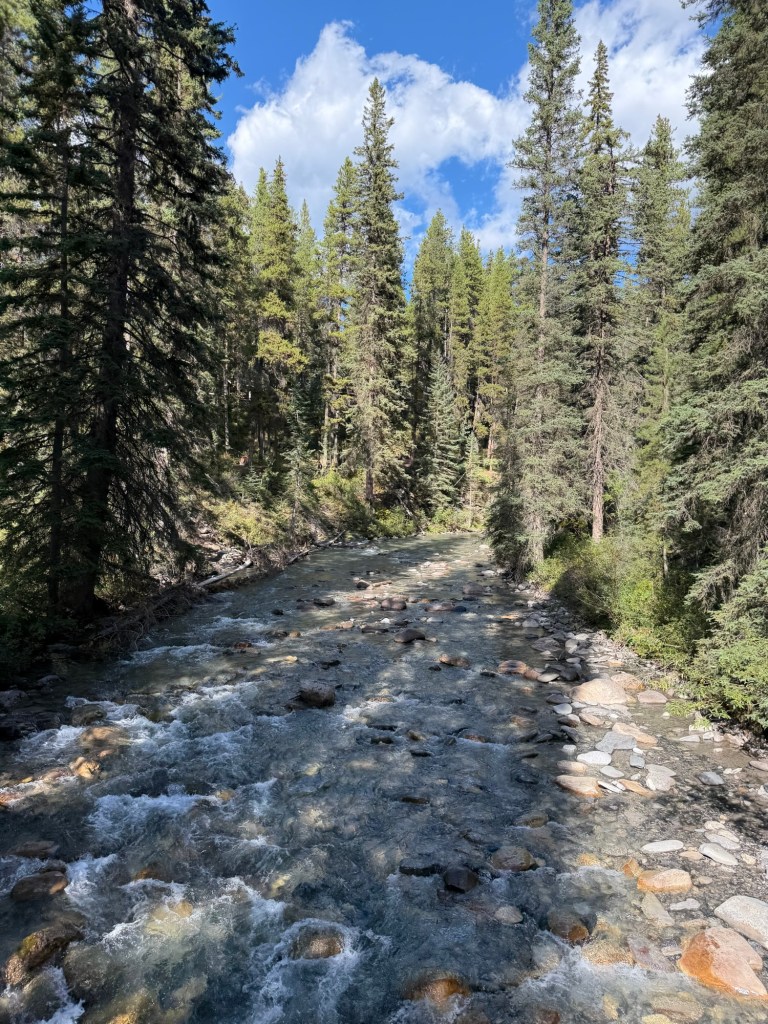
If you’re visiting with young toddlers or dragging a heavy stroller, this incline can get pretty exhausting. Looking back, if you’re tight on time or energy with little ones, this is one spot you could comfortably skip without missing much.
Banff Gondola
All day long, we went back and forth on whether we should do the Banff Gondola. We were trying to choose between this or the Jasper Skytram later in the trip. By late afternoon, with blue skies above us, we made a decision to go for the Gondola—and it turned out to be one of the best choices.
The ride up to the summit of Sulphur Mountain was an absolute thrill. Floating smoothly up the mountain gave us sweeping, panoramic views of Banff town and the endless valley below.
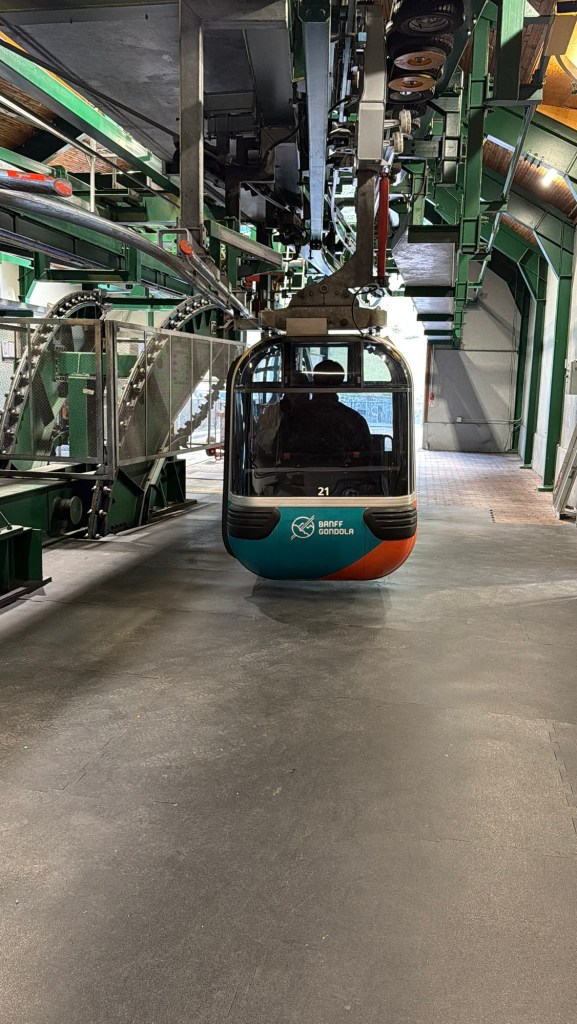
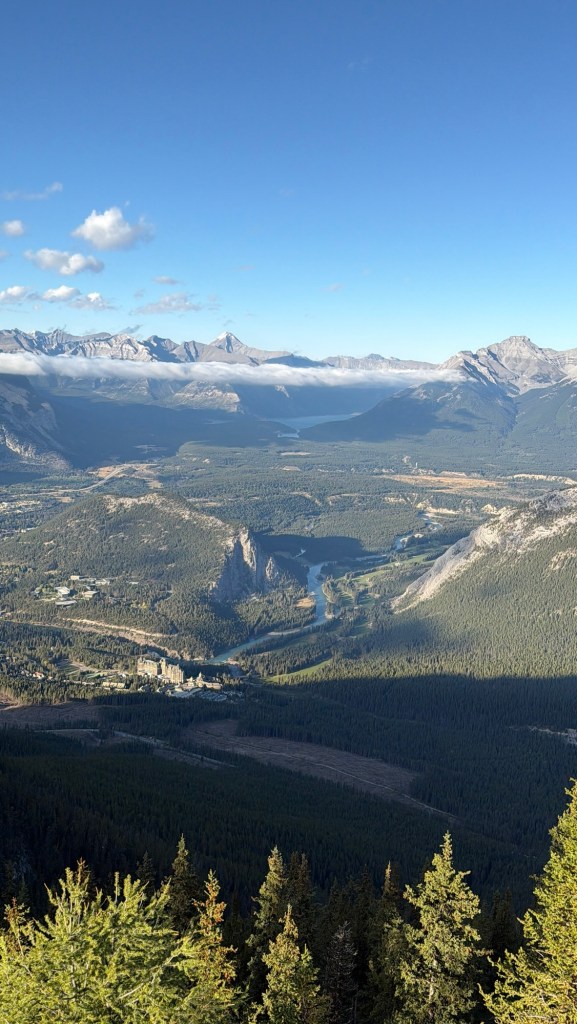
When we reached the top, we were amazed to find a massive, modern 4-story summit complex. It was fully equipped with cozy cafes, restaurants, observation decks, and even a dedicated play and craft area for kids. Because it was freezing cold and windy at the peak, we fell into a fun rhythm of stepping outside for incredible photo moments, then darting back inside to warm up and let our little one play.
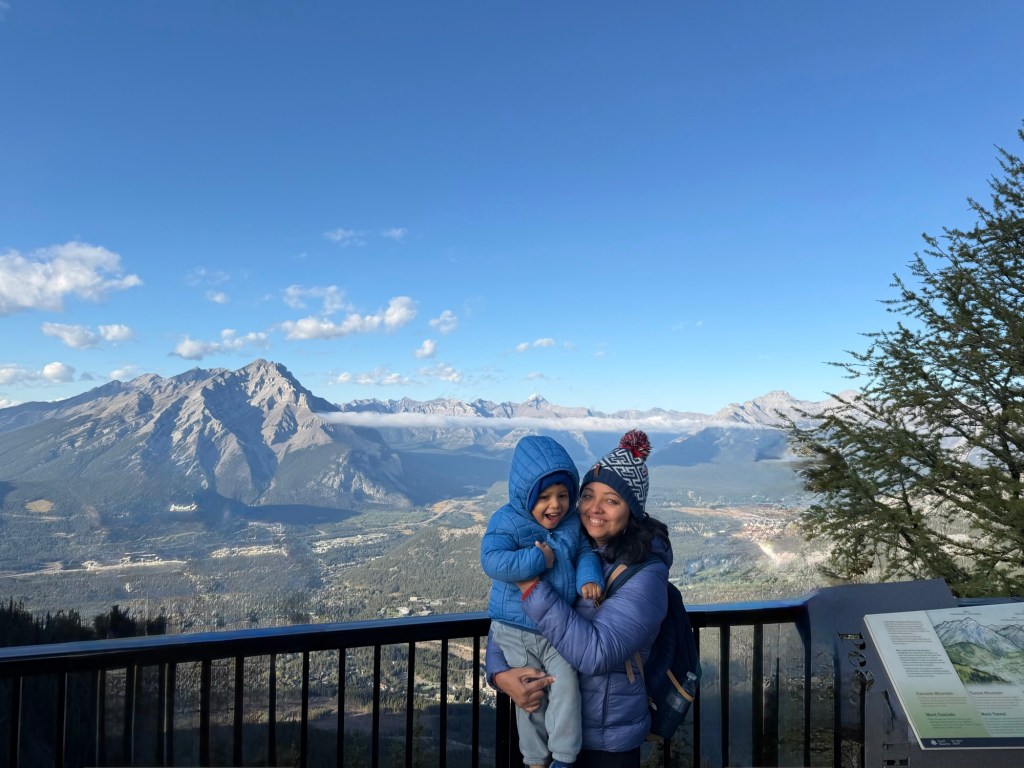
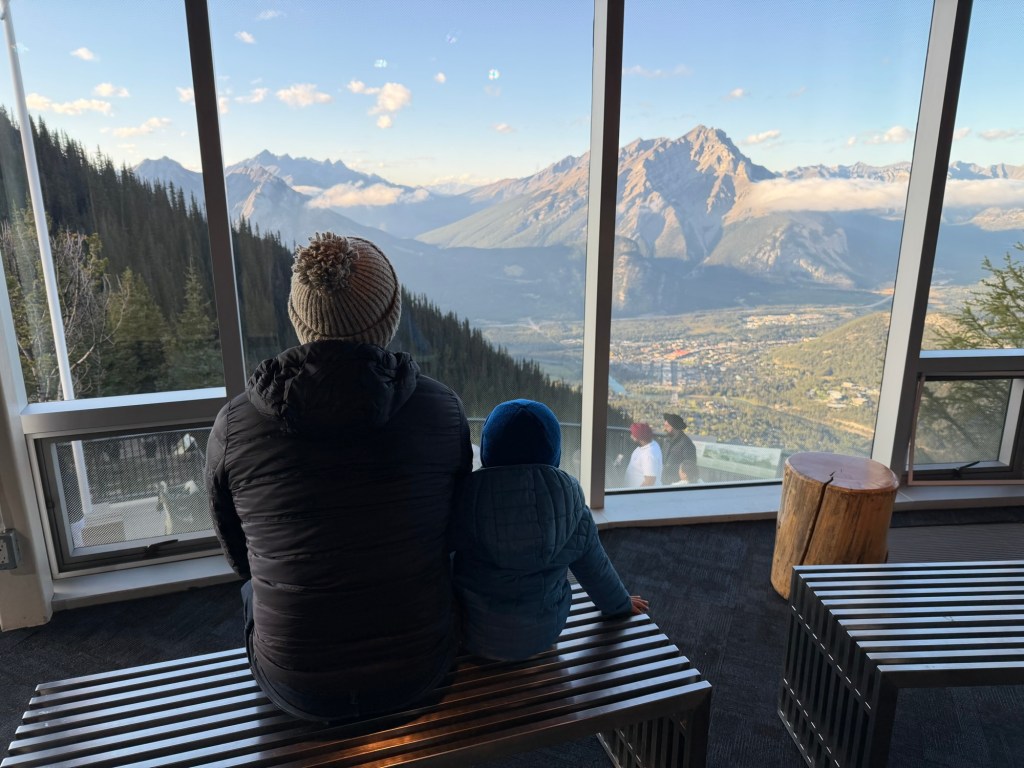
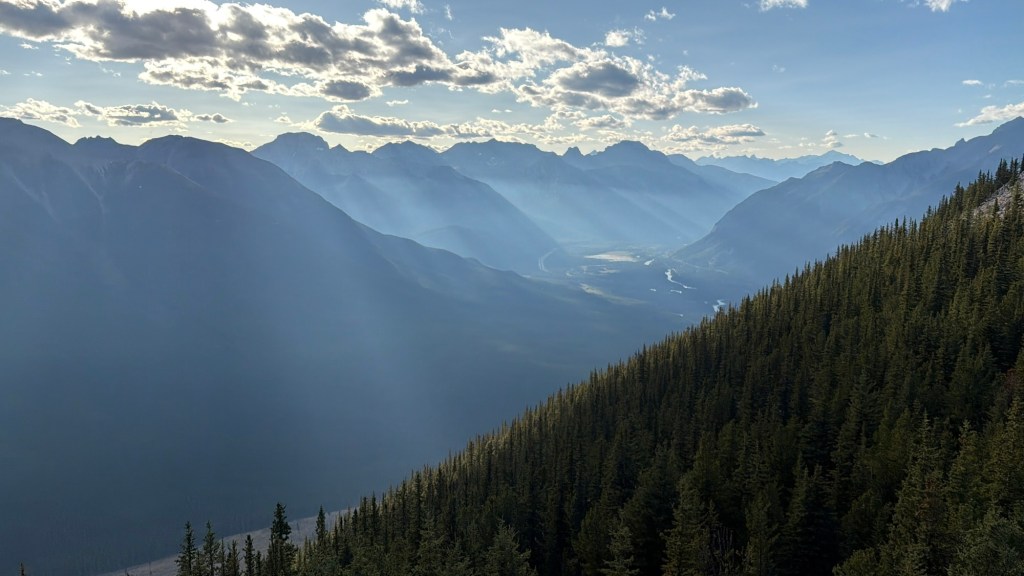
Watching our toddler enjoy both the cable car ride and the summit center made it feel worth it. It was a beautiful way to wrap up the day.
Day 3 – Yoho National Park
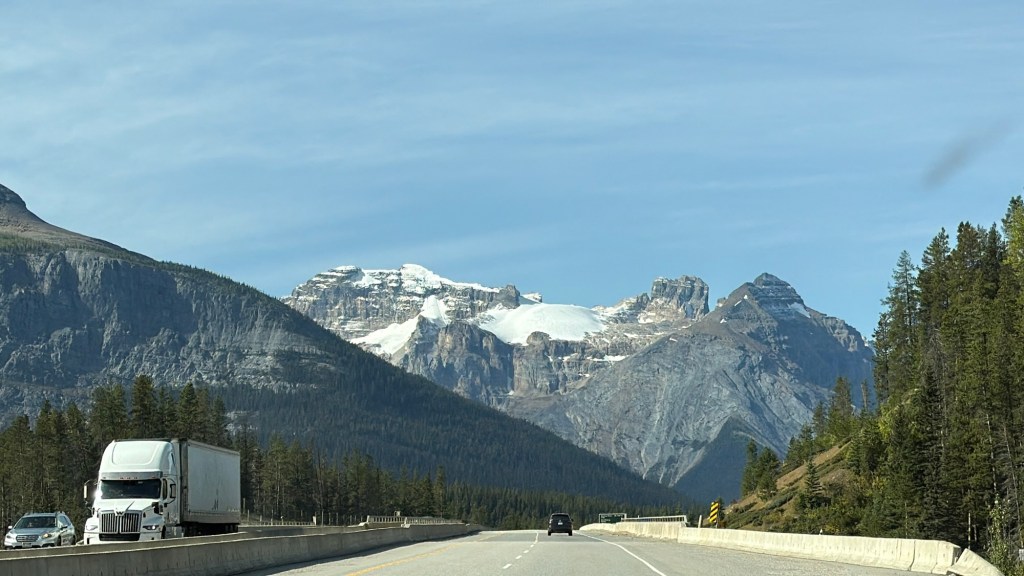
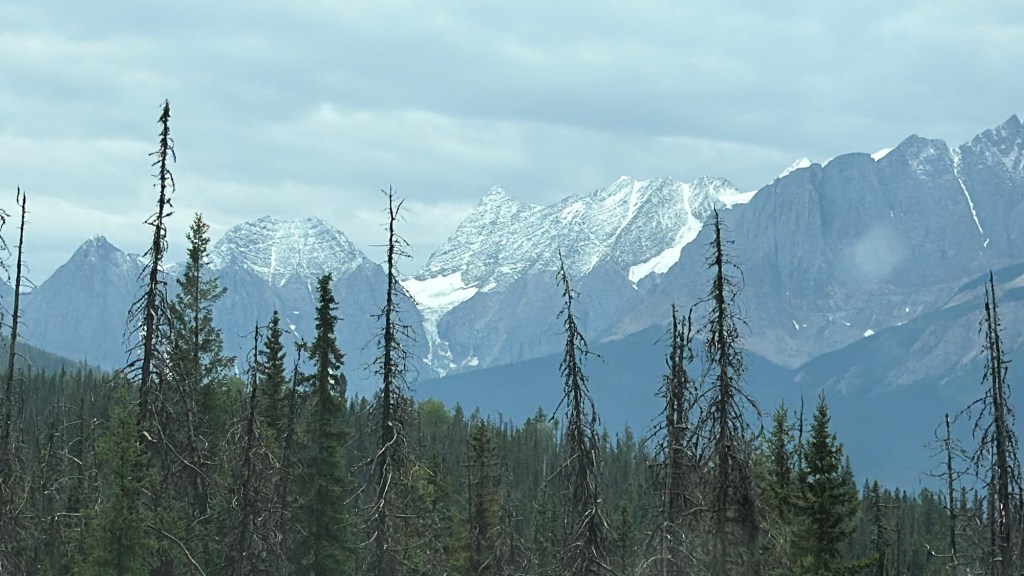
Today, we drove from Canmore toward Lake Louise, planning a stop at Yoho National Park along the way. Sitting just across the border in British Columbia, Yoho often gets overlooked compared to places like Banff, but it has incredible spots to visit.
The drive was beautiful and it was even more special because it was the first time on our trip we spotted real glaciers on the mountain peaks.
Emerald lake
After experiencing the parking challenges in Banff over the past couple of days, we made a decision to focus on the major attraction first and then visit other points: Emerald Lake. Emerald Lake’s parking took a while, but it wasn’t as bad as Banff.
Stepping up to the lake was an incredible moment—this was our first vibrant, colored lake of the trip and it felt very special! The lake’s brilliant green color surrounded by serene mountain walls and lush evergreen trees made the whole scene feel deeply tranquil.
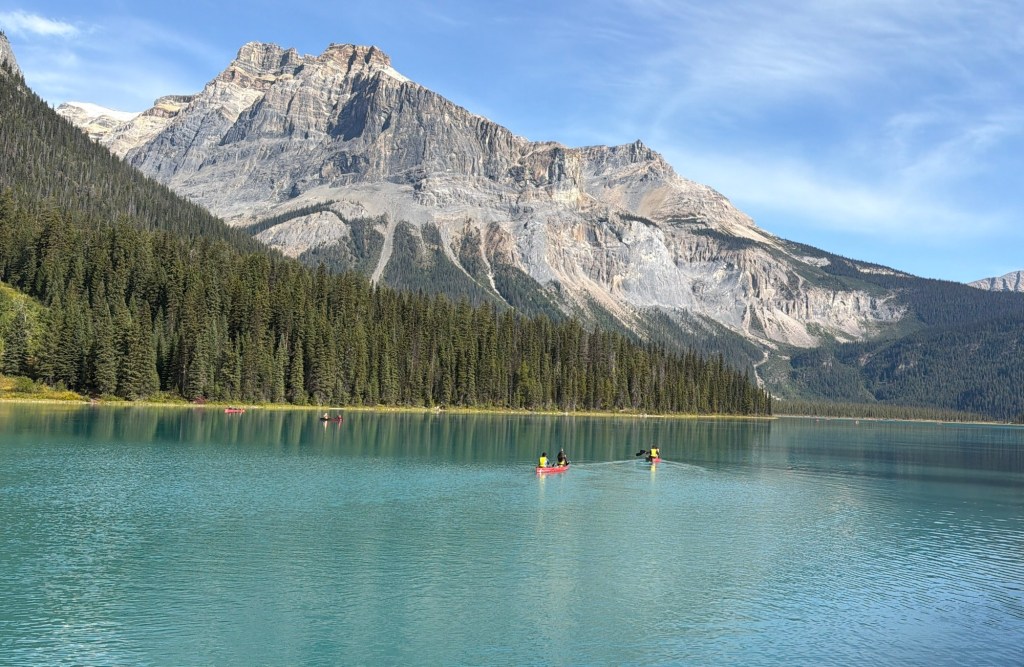
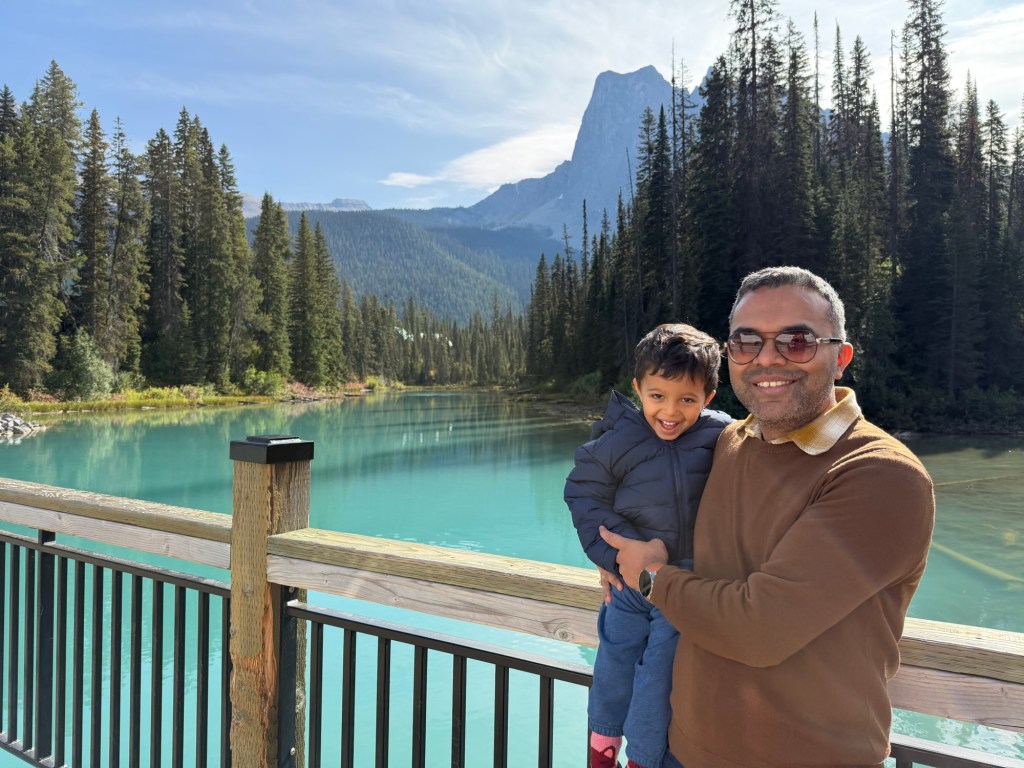
The Science Behind the Color: The secret to Emerald Lake’s stunning hue lies in the melting glaciers high above it. As these glaciers grind down the mountain, they deposit rock flour—a fine, silt-like powder—into the water. When sunlight hits these floating particles, it refracts and scatters, creating brilliant colors. Because sunlight plays such a huge role, the water looks most vibrant on clear summer days, and fortunately, we were blessed with a bright, sunny afternoon to witness it in all its glory!
Natural Bridge
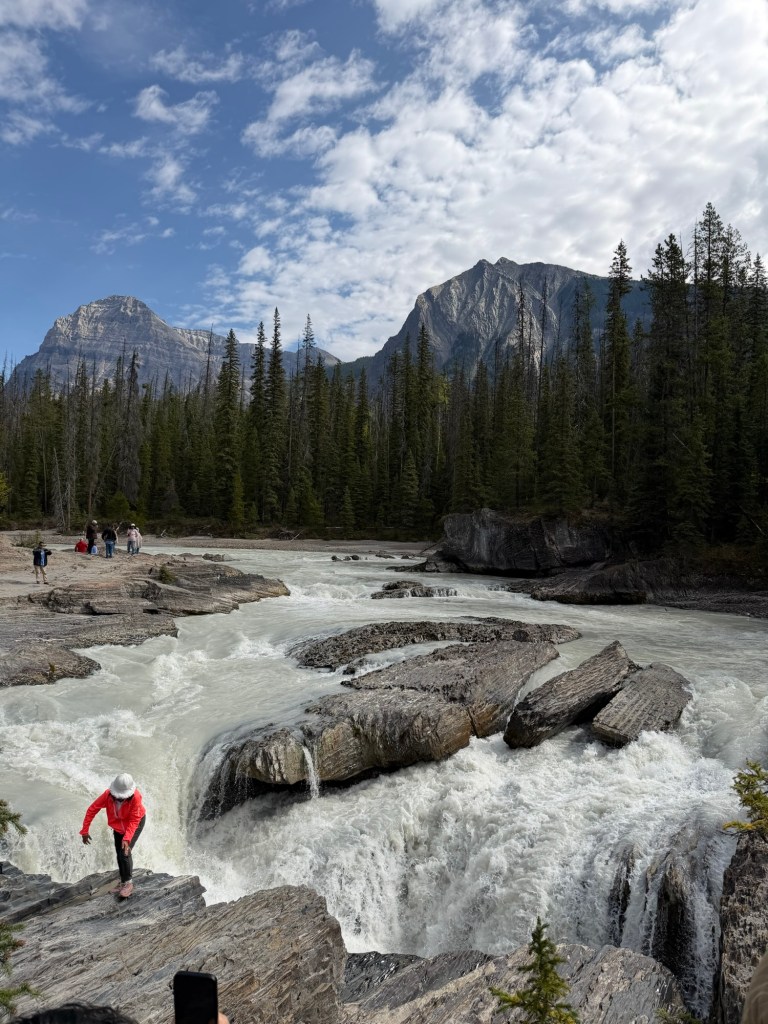
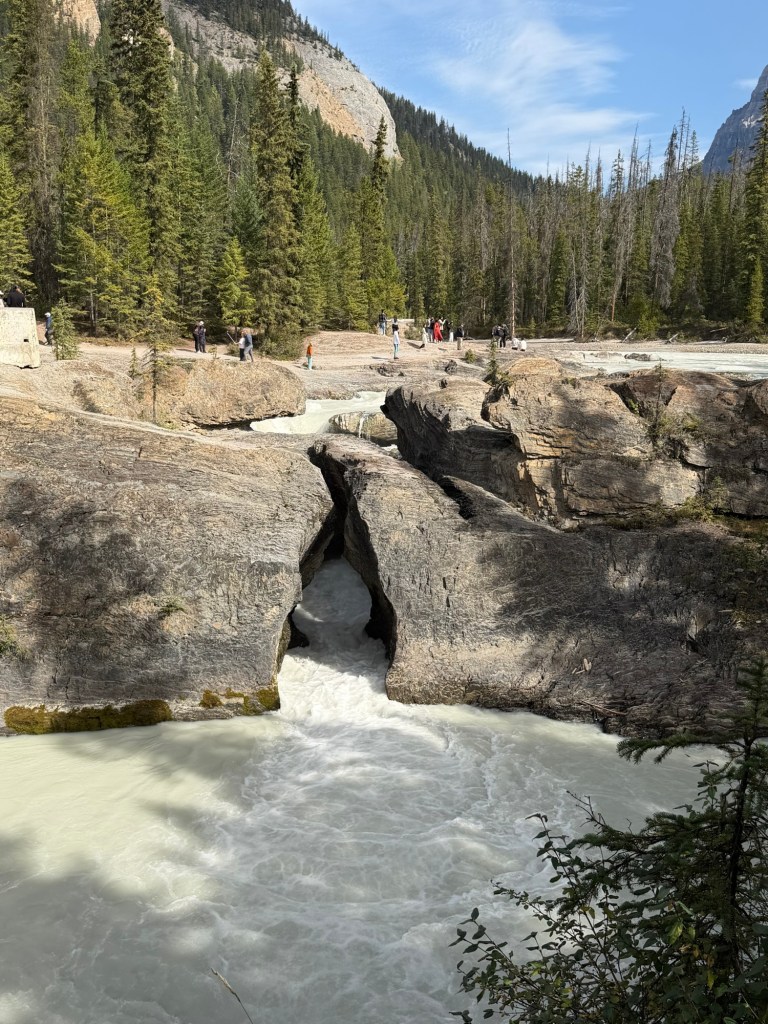
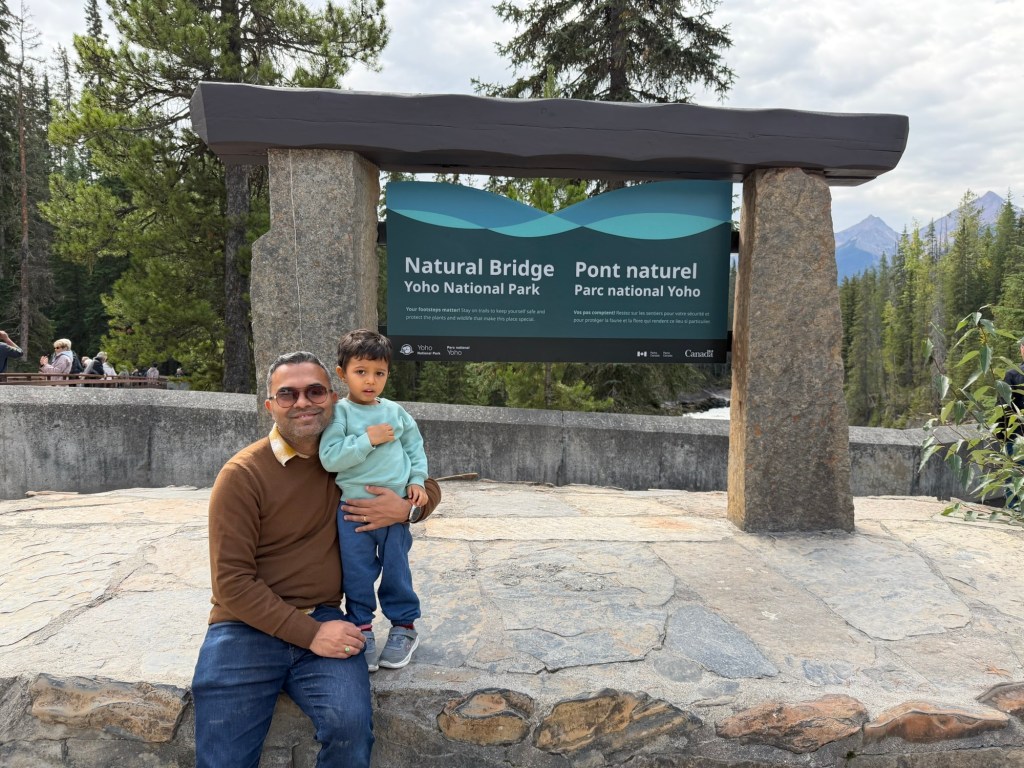
After enjoying the lake, we headed next to the Natural Bridge. At first glance, it almost looks like a waterfall, but as you get closer, you realize it’s a striking rock formation where the powerful Kicking Horse River has carved a natural stone arch out of solid rock through centuries of water erosion.
Spiral Tunnels Viewpoint
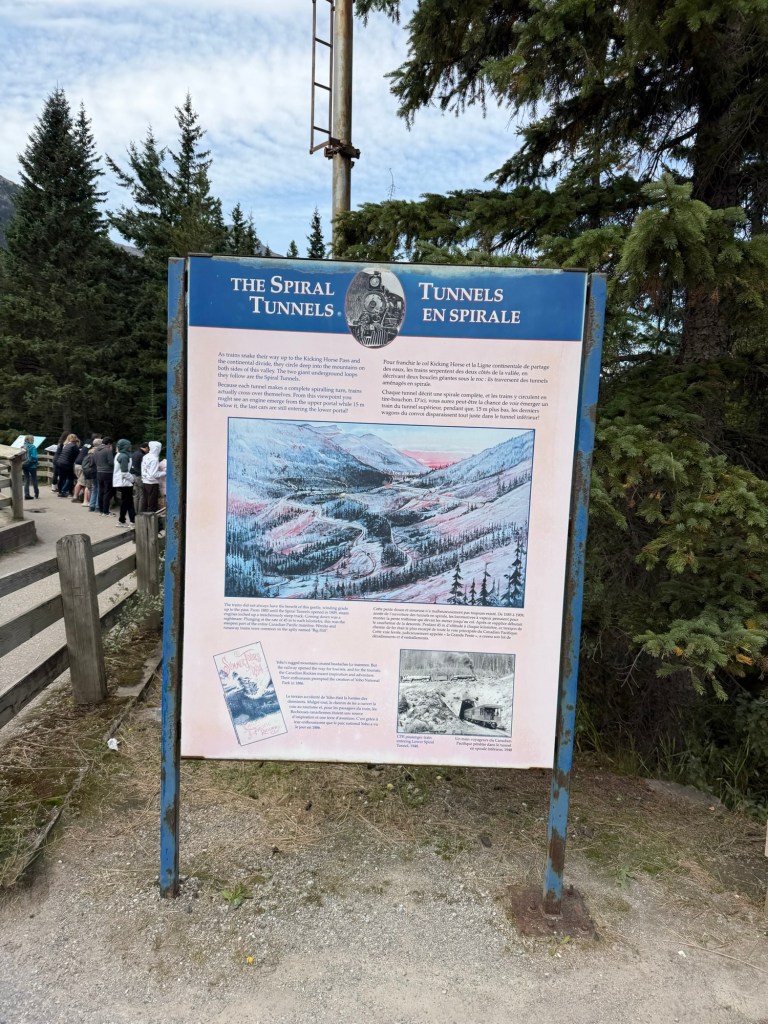
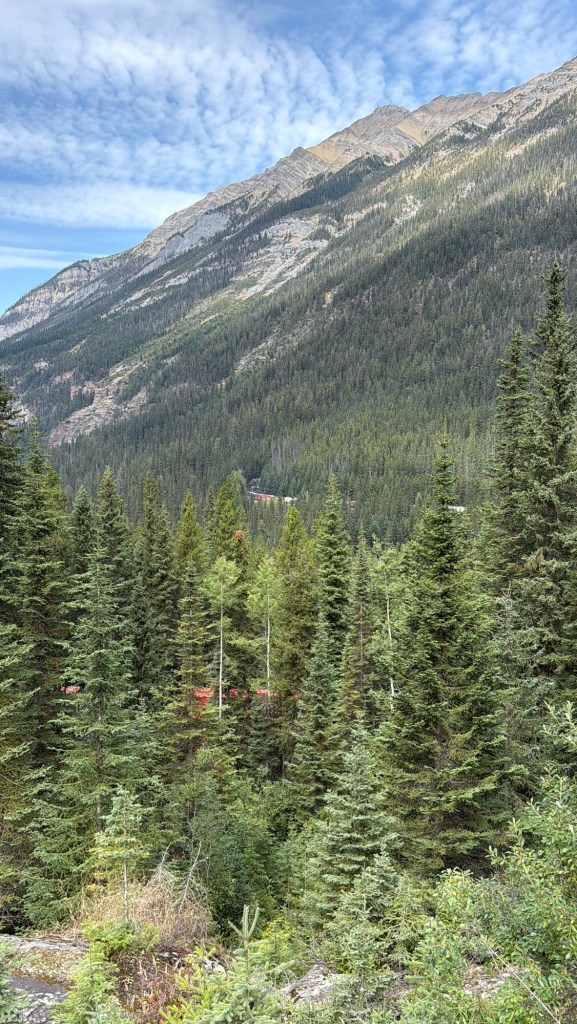
Before heading to Lake Louise, we made a quick stop at the Spiral Tunnels Viewpoint. This spot overlooks two railway tunnels built inside the mountains in the early 1900s to help trains navigate the dangerously steep mountain pass. We could see two trains passing over the tunnels in a short time.
Lake Louise Sunset
We reached Lake Louise by afternoon and checked into our hotel. We already had shuttle tickets booked for the lakes the next day, but we were too excited to wait and decided to get our first glimpse of Lake Louise that evening!
We drove there around 6 pm hoping to find parking easily, only to realize that it costs $40 for the day and becomes free after 7 PM. We considered waiting, but with the sun going down and the weather getting colder, we decided not to waste an hour and just went in.
The moment we walked up from the parking lot and caught our first view of Lake Louise, it was so truly magical that we both fell silent, just standing there absorbing the overwhelming beauty of it all. In that exact instant, we looked at each other and felt that the entire trip was completely worth it right then and there—anything else we saw after this was purely a bonus. The place possesses an incredible charm and energy that draws you in immediately.
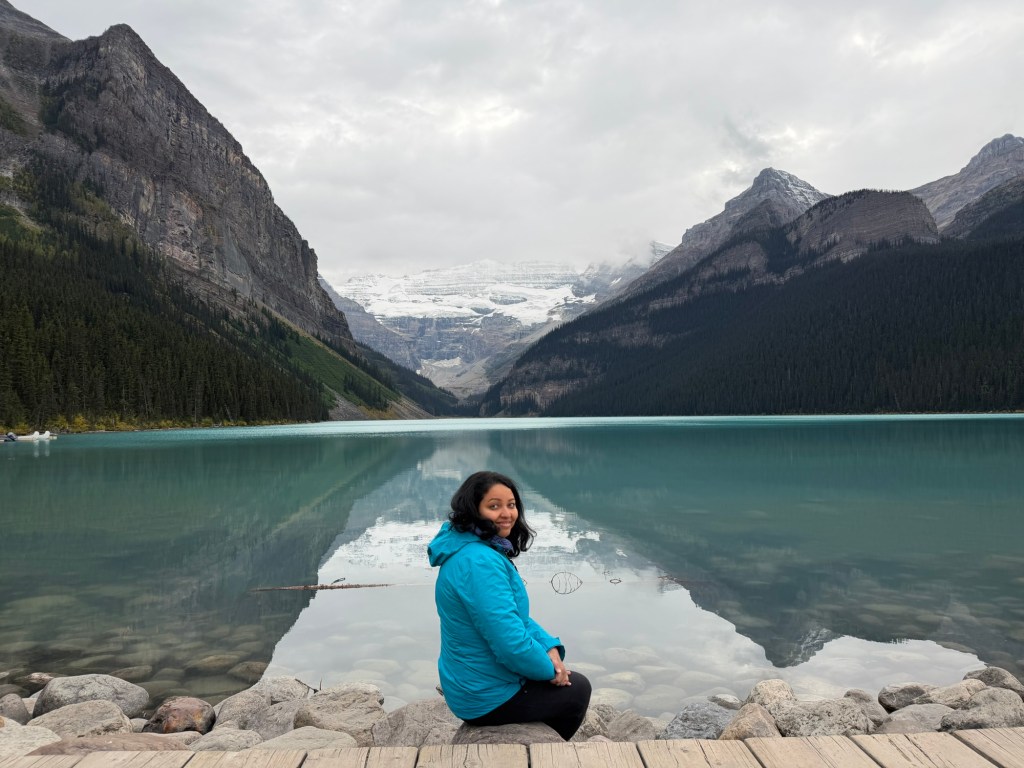
We followed the lovely walkway along the shore, simply soaking in the peace. My little one was absolutely thrilled, running freely around the lake with pure joy. It’s not just the lake itself that takes your breath away; it’s the whole grand setting—the towering mountains, the Victoria Glacier standing right in front of us, the glassy reflections, and that mesmerizing color. Everything feels serene and enchanting.
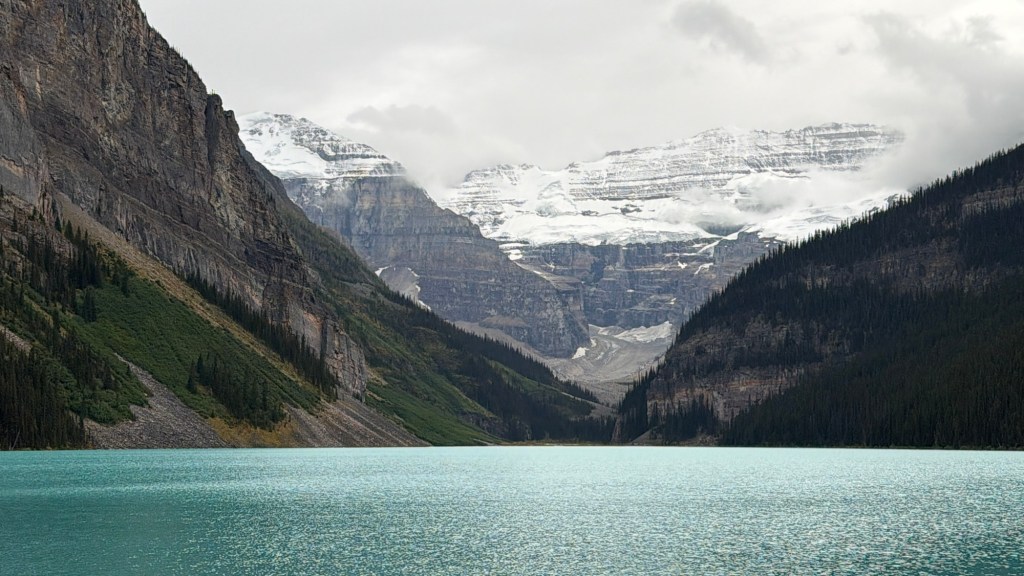
Standing there, I couldn’t help but smile that we are going to come back here tomorrow and experience this all over again tomorrow!
Day 4: Moraine Lake and Lake Louise
Today was the big day—the most awaited moment of our entire trip: visiting the two magical lakes back-to-back!
Reaching Moraine Lake requires a bit of planning since private vehicles aren’t allowed. You have to take either the Parks Canada shuttle or any private tour shuttles. Parks Canada opens their main tickets on April 15th—where slots vanish in minutes—and then releases a second wave of tickets two days prior: https://parks.canada.ca/pn-np/ab/banff/visit/parkbus/louise
We had already secured a 2:00 pm slot for the whole family well in advance, but I really wanted to experience Moraine Lake in the quiet early morning. Luckily, I managed to find a solo 7:00 am ticket during that 48-hour rolling release. It turned out to be the perfect strategy: I got my early morning adventure, and we didn’t have to wake our little one up at dawn in the cold!
Moraine Lake morning
When I stepped outside in the morning, it was super cloudy and raining lightly—the mountain skyline in Lake Louise had completely disappeared. As I drove to the shuttle hub, I kept hoping for the weather to turn around. The 40-minute drive to Moraine was scenic as we cut deep into the woods, but the mountains remained hidden. I began hoping that if nothing else, the afternoon would clear up for our afternoon visit with the whole family.
The shuttle dropped us off at the Moraine lake, completely off the grid with no cell service. Stepping up to the shore for a quick first look, I kept praying the clouds would lift. Having done no research beforehand, I suddenly missed my phone and internet deeply! Without a map or plan, I simply followed a crowd heading up the Rockpile Trail—which turned out to be the absolute best move I made all day. The elevated view of the lake from up there was perfect.
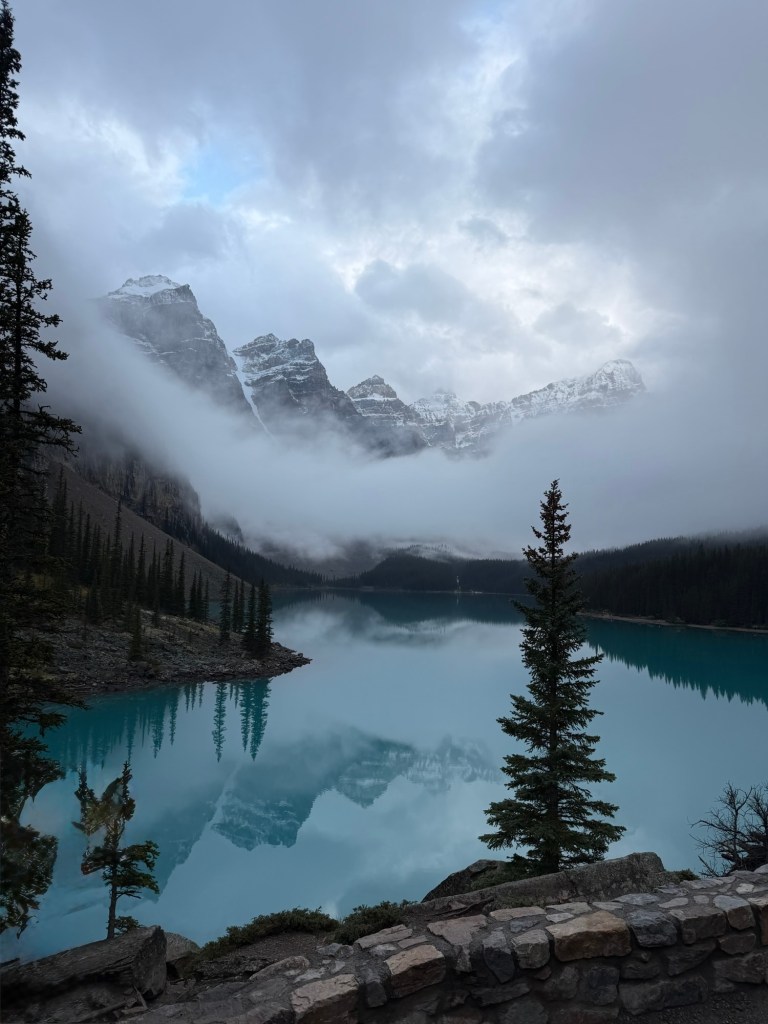
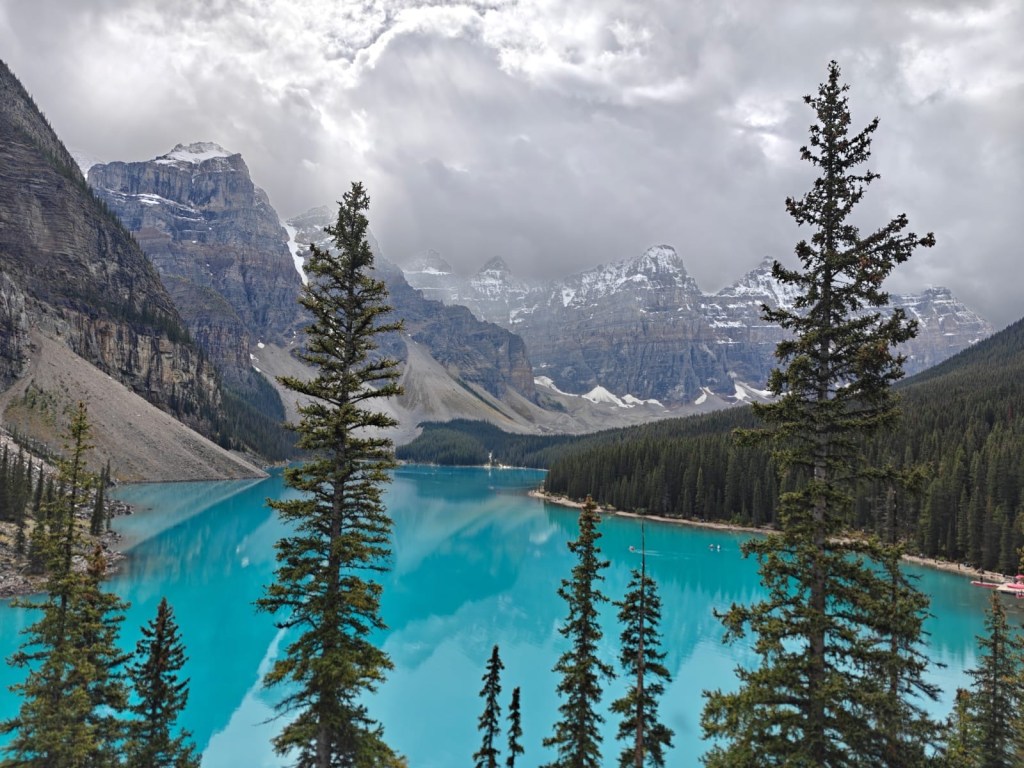
I joined a group of eager visitors waiting patiently for the sunrise. The clouds played a game of hide-and-seek, teasing us with momentary views and keeping our spirits high. Then, around 8:30am, after nearly an hour of waiting, the sky finally opened up. The mountains revealed themselves in all their full glory framing the vibrant turquoise water below—and the waiting in the cold felt totally worth it.
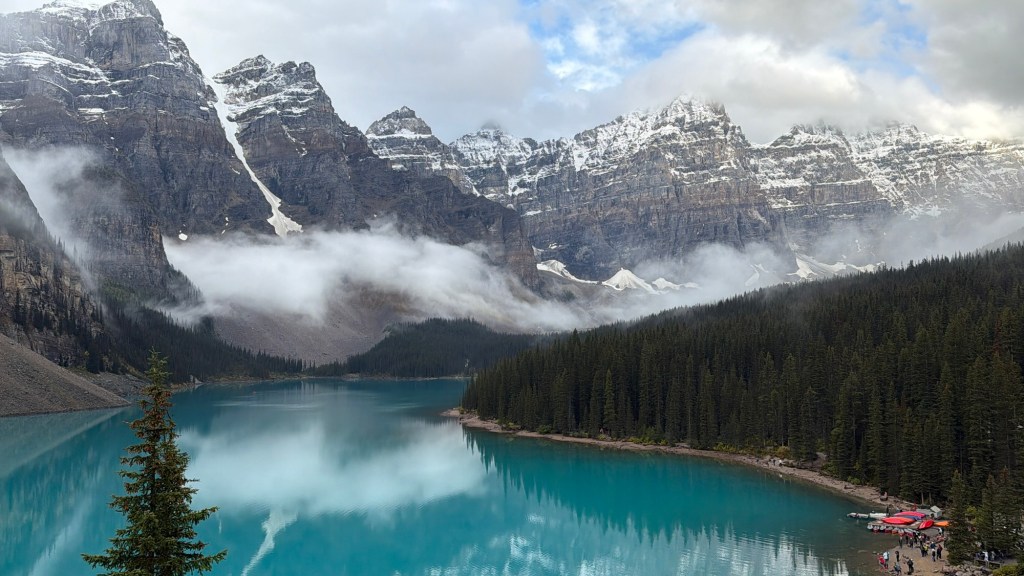
Surrounded on all sides by the towering Ten Peaks, the rich blue water of Moraine Lake created a scene of pure magic.
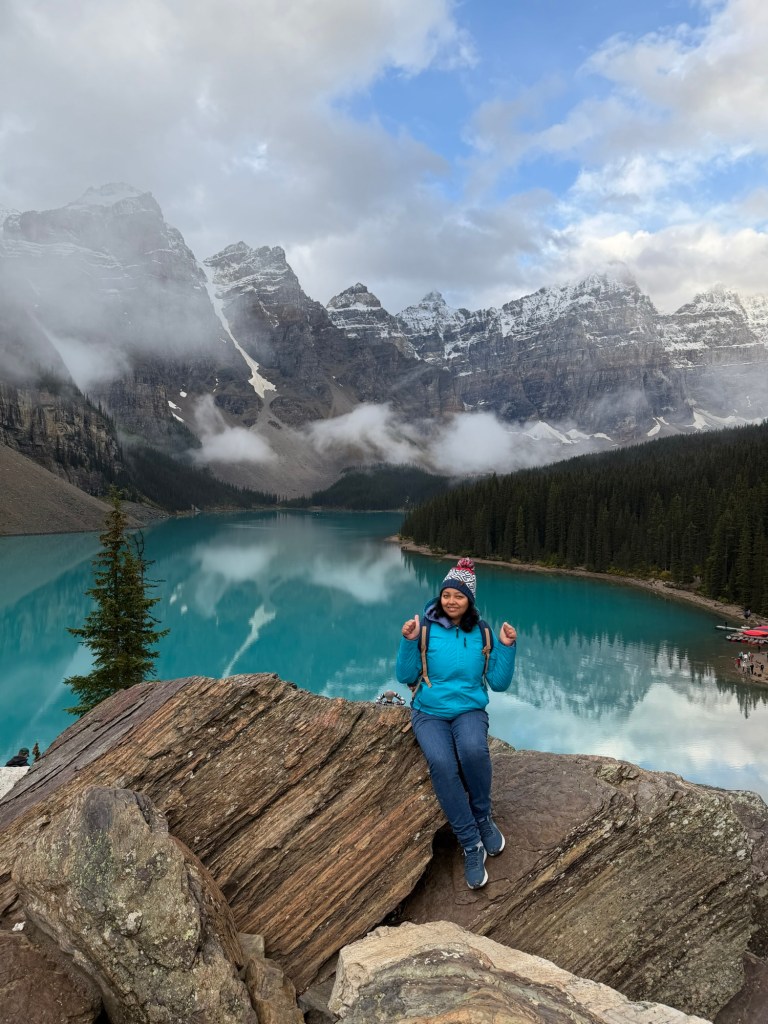
I walked along the trail path to find a few more camera angles and came across a couple getting their wedding photos taken. It was wonderful to see, and they added such a beautiful, joyful touch to the scenery I was capturing.
Lake Louise morning
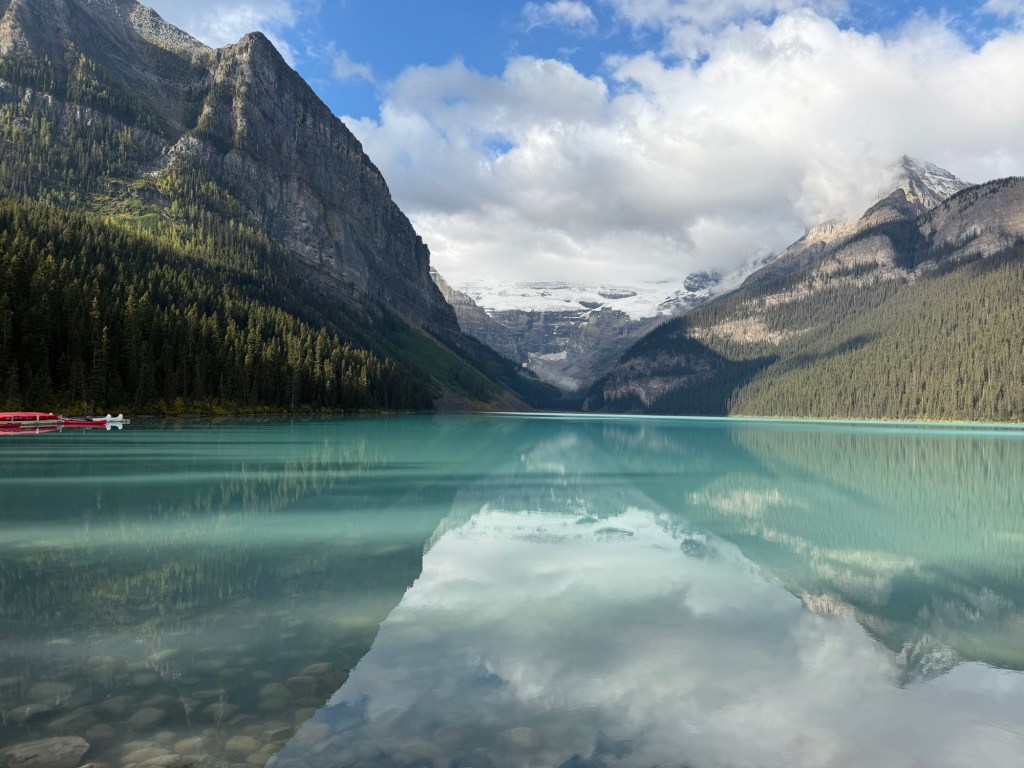
The shuttle takes us to both the lakes, so I reached Lake Louise next from Moraine and took a quick look at how it looked like in the morning before heading back to hotel. It was brighter, and the blue sky added beauty.
Moraine Lake afternoon
By the time we took our second trip to Moraine Lake in the afternoon, the weather had improved slightly—more mountain peaks were showing, though it remained mostly cloudy. Having spent the morning here, I was now officially acting as the family tour guide! Our first stop was the main lakefront shore, where everyone naturally gathers, but my husband wasn’t immediately impressed and wondered why we had taken a whole shuttle just to get there.
I smiled and steered him straight toward the Rockpile Trail instead. The moment he reached the top, it all clicked for him. Because Moraine is a smaller lake, having that higher vantage point makes all the difference in truly taking in the bright water framed by the towering mountains 🙂
Once we finished exploring, we treated ourselves at the cozy little cafe right there with some fresh coffee and hot fries—the perfect pitstop before taking the shuttle back over to Lake Louise for the afternoon! While I wished we had gotten a bright, sunny day at Moraine Lake, I was so grateful that the clouds cleared enough for us to see all the magnificent peaks both times we visited.
Lake Louise afternoon
The weather turned pleasantly warm by the afternoon, giving us the perfect excuse to slow down and stay a while. We spent a great deal of time leisurely walking around Lake Louise, admiring the vibrant color, the reflections, and the massive mountains towering above. It was so nice not having to hurry, letting our little one play as we took in the fresh mountain air. After a lovely afternoon exploring the shore, we took one final look around, bade our heartfelt goodbyes to the lakes, and concluded a beautiful day.
Day 5: Icefields Parkway Drive
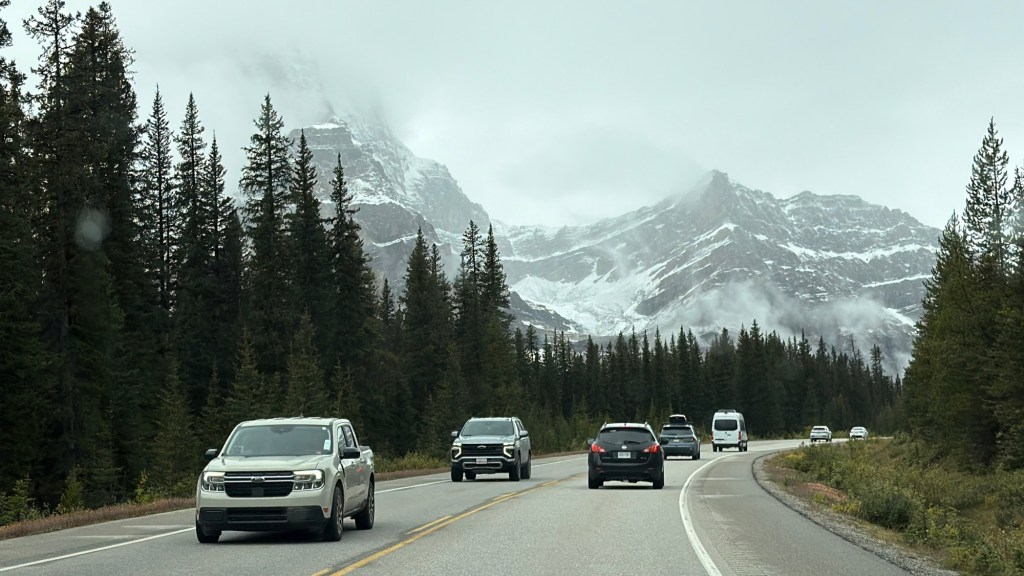
Today was another important day of our journey – driving the Icefields Parkway, known as one of the most scenic drives in the world. Surprisingly, we didn’t even know about the Icefields Parkway until we started planning our Banff trip, so discovering this beautiful drive felt like an unexpected bonus to our trip for the turquoise lakes!. The Icefields Parkway stretches for about 230 km between Lake Louise and Jasper, passing through the heart of the Canadian Rockies with glaciers, turquoise lakes, waterfalls and mountains all along the way. I had already enjoyed our drives through the Rockies so far, so I was really excited to see what was so special about this one!
The morning was quite cloudy, making us wonder how much we’d actually be able to see at the viewpoints.
Bow Lake
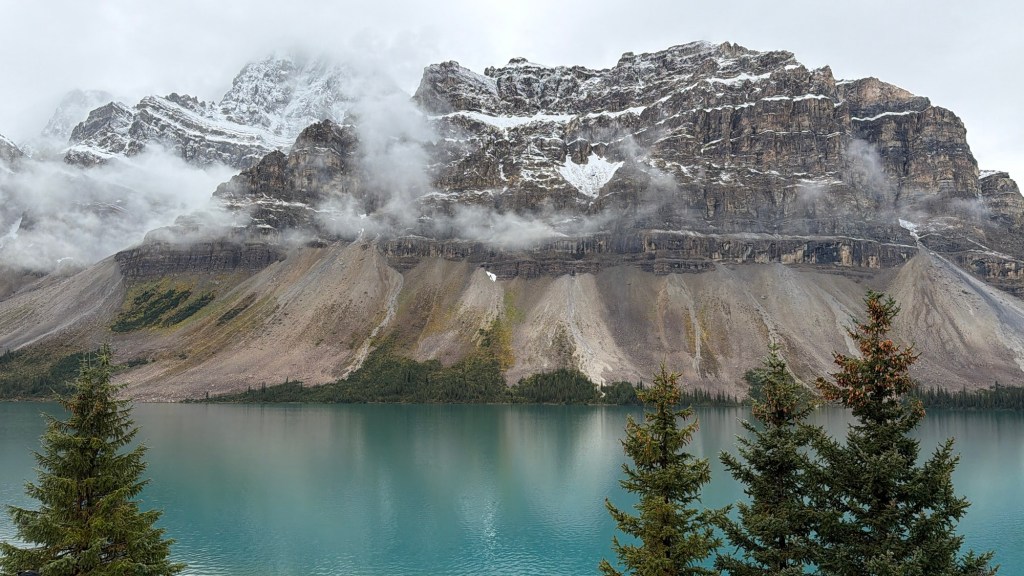
Our first stop was Bow Lake—and while the water itself was beautiful, heavy clouds hid most of the surrounding mountains, so we couldn’t get the full, dramatic view.
Peyto Lake viewpoint
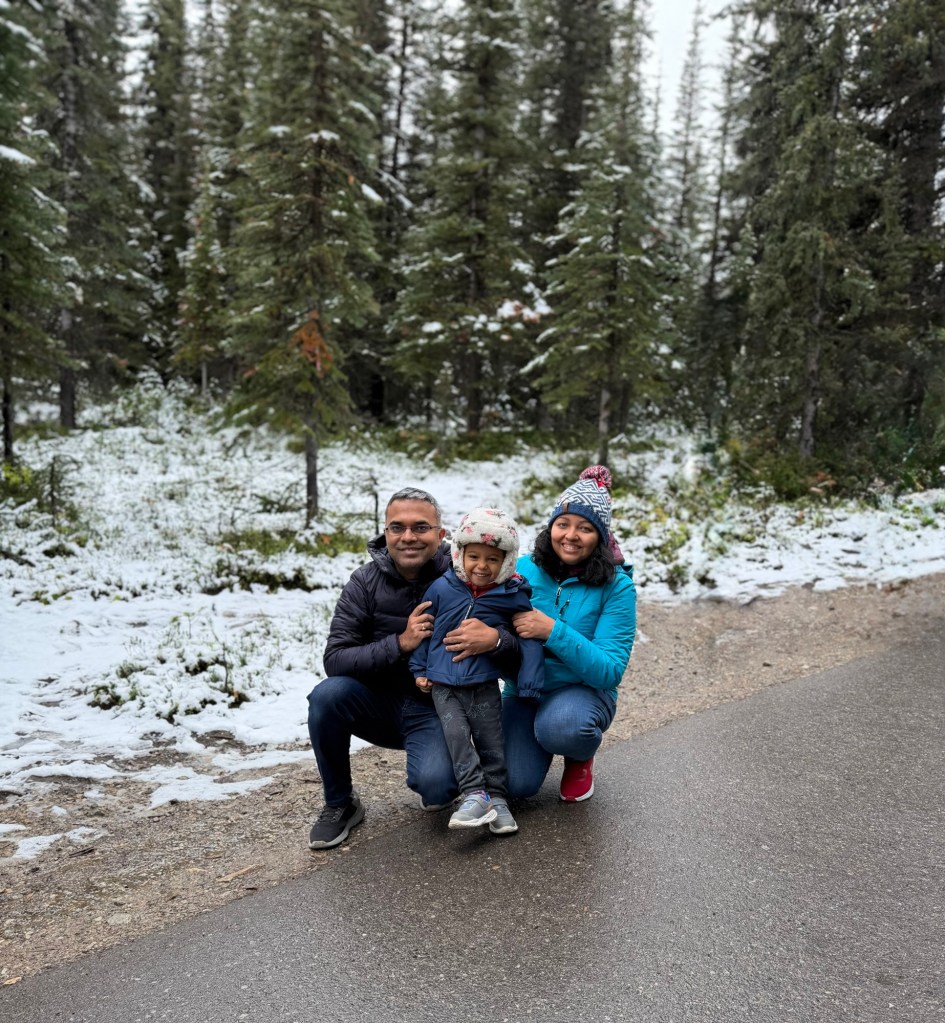
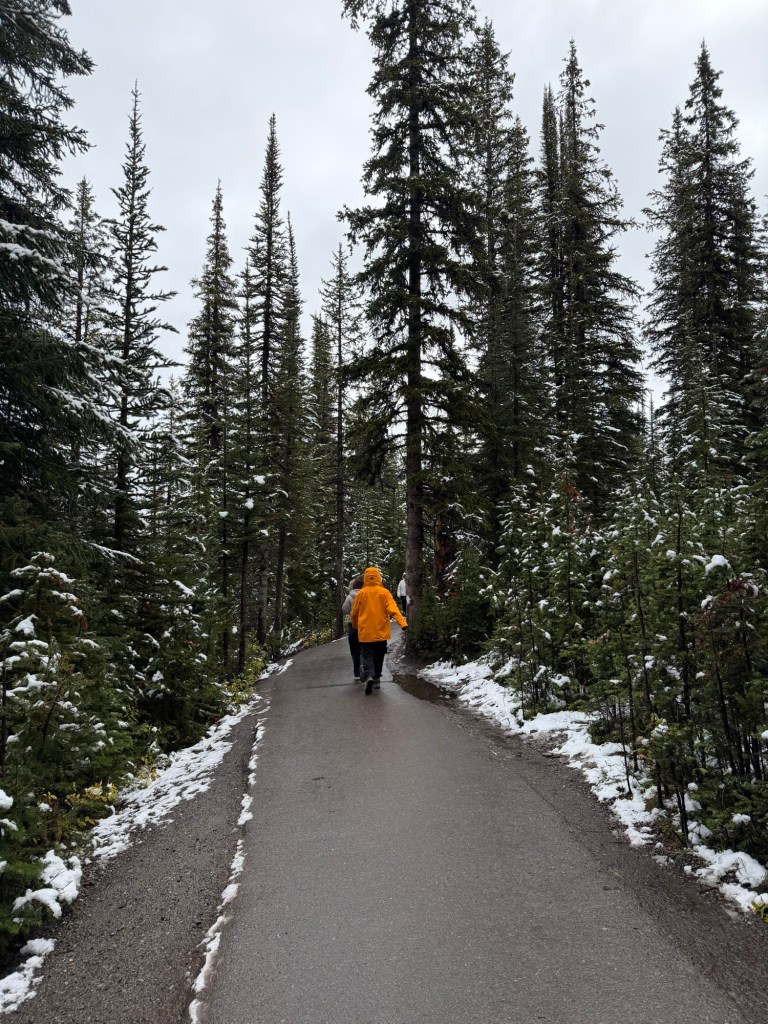
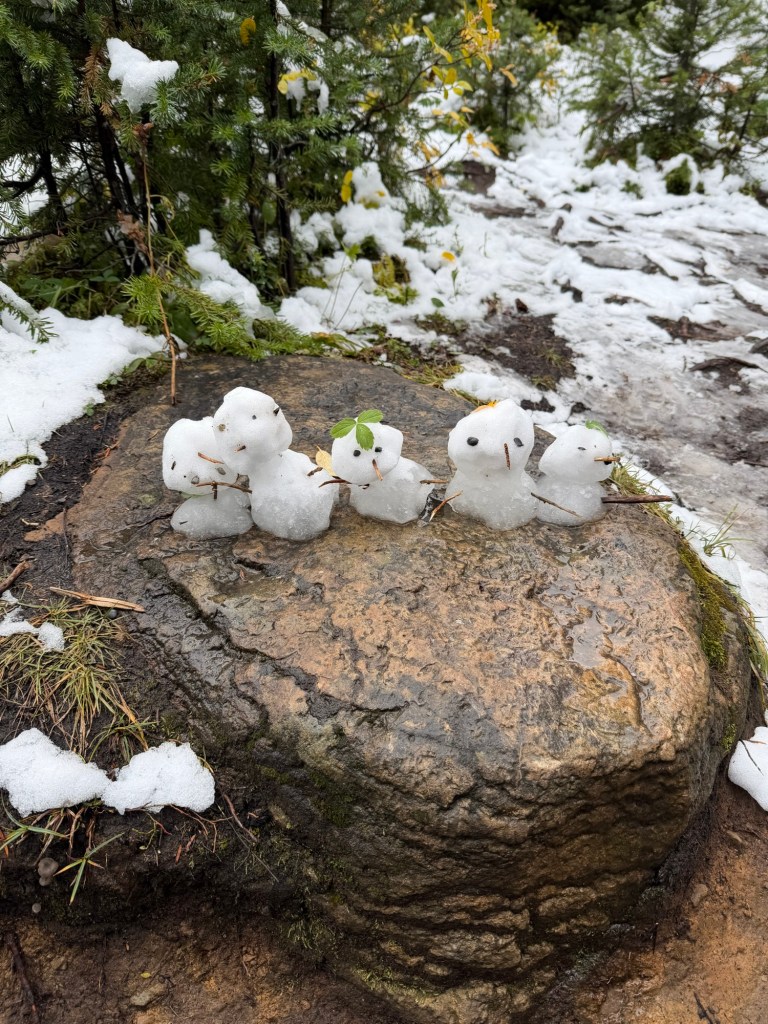
Our next stop was Peyto Lake, which requires a short hike through the forest to reach the main viewpoint. Right away, we found the path covered in fresh snow, turning the trees around into a scene straight out of a winter fairytale! We stopped thinking about the clouds and started enjoying the snowy wonderland around us. My little one was over the moon, trying to walk, pick snow, and lead the way up the trail.
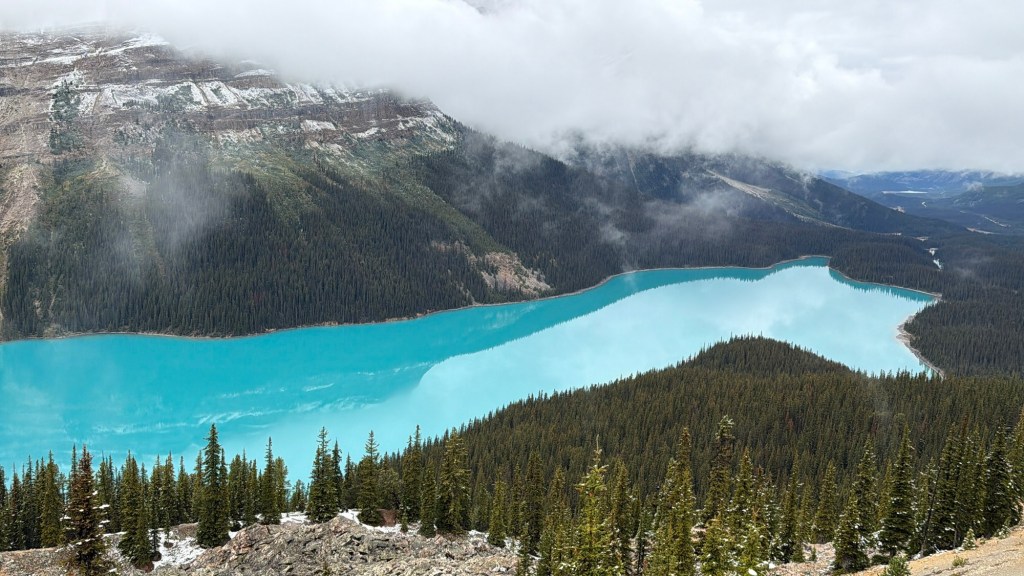
When we finally reached the lookout, I couldn’t believe my eyes. Peyto Lake is famous for its vibrant blue color, created by silt flowing in from the Peyto Glacier behind it. Since the platform sits high up at Bow Pass—the highest point along the Icefields Parkway—we get an incredible view of the entire lake, which looks just like the shape of a wolf. Seeing that brilliant water pop against the cloudy skies and snow-covered mountains was a moment I’ll never forget.
Columbia Icefield Tour with Glacier Skywalk
Right after Peyto Lake, the skies started clearing up beautifully giving us high hopes for our Columbia Icefield tour. We stopped at the Discovery Centre for lunch and to get ready for the tour.
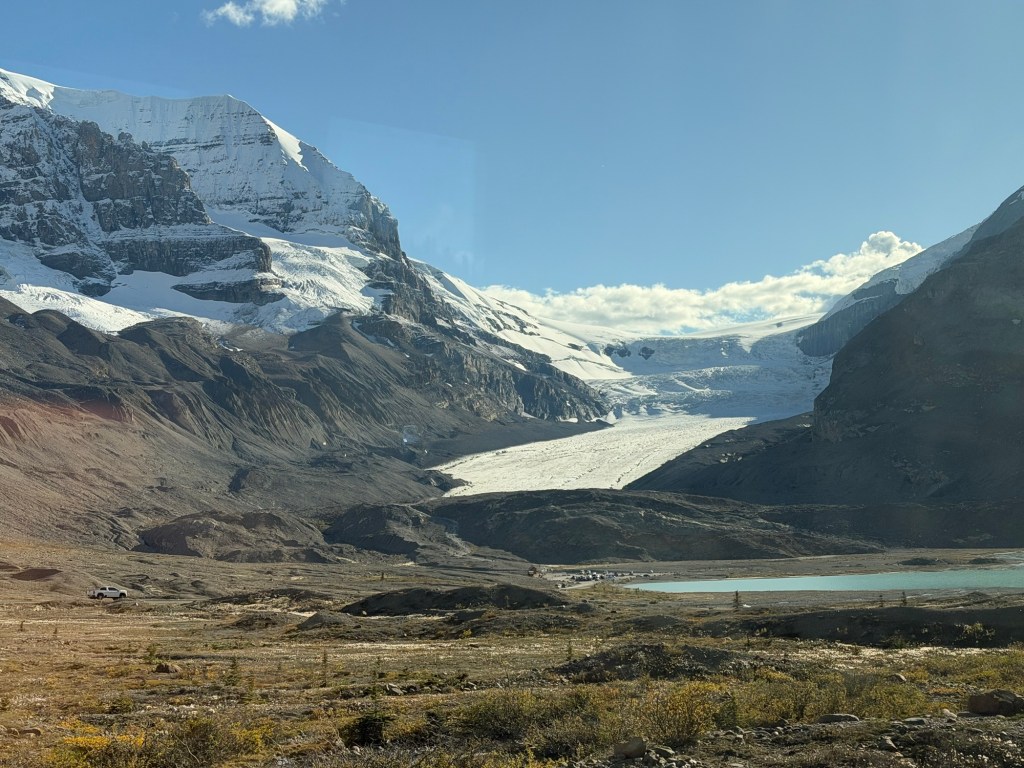
The process of getting onto the glacier was so fun—a short transfer shuttle brought us to a station where we switched into a massive Ice Explorer, a huge all-terrain truck with giant tires. It crawls down steep slopes and right out onto the Athabasca Glacier.
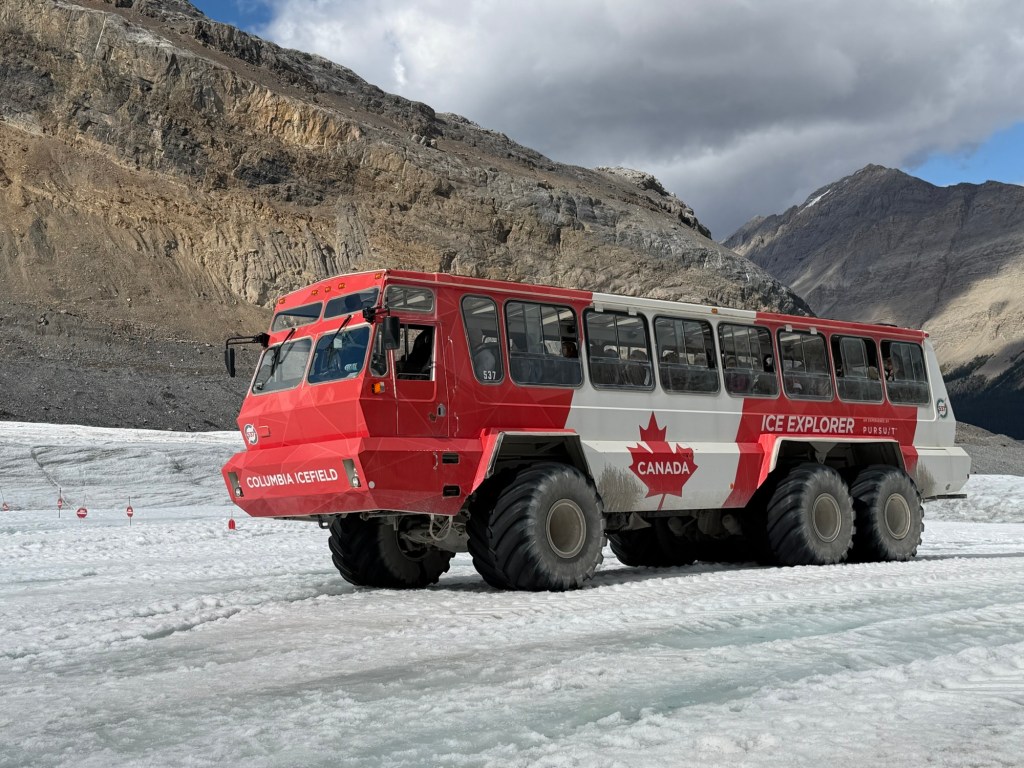
It was an unbelievable experience stepping off the truck and walking directly on ancient glacier ice, taking in the close-up views and playing in the ice. We got to drink fresh water flowing straight off the glacier, and it was super cold, crisp, and refreshing. We’ve seen plenty of glaciers from a distance over the years, but stepping onto one was something truly special.
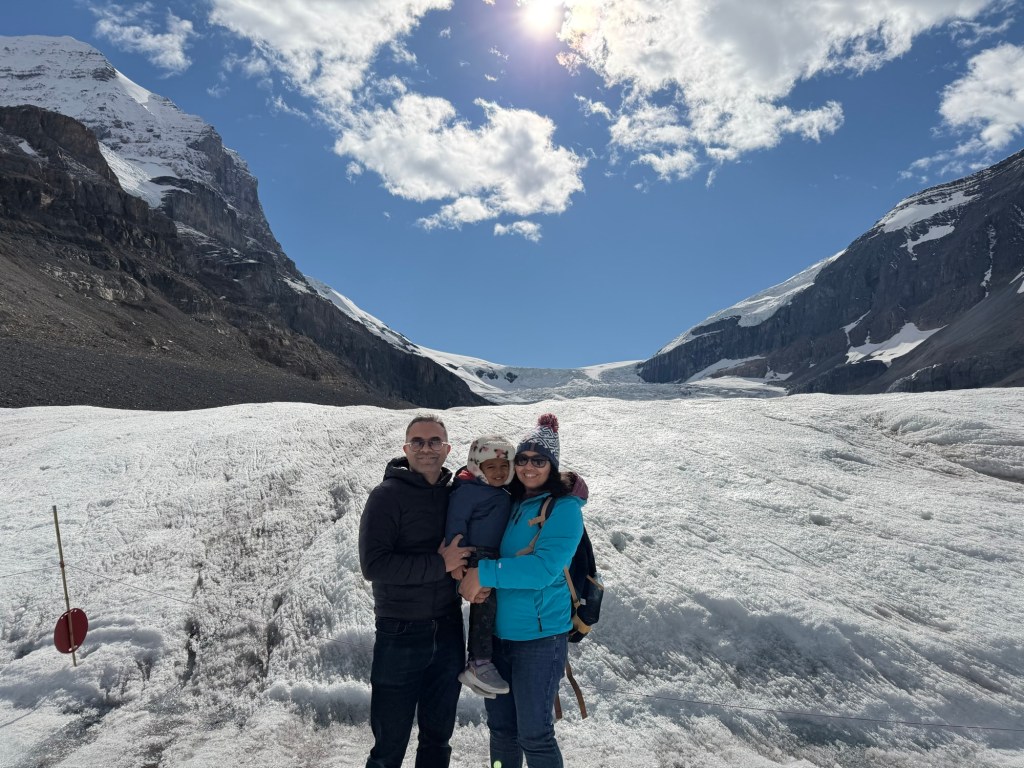
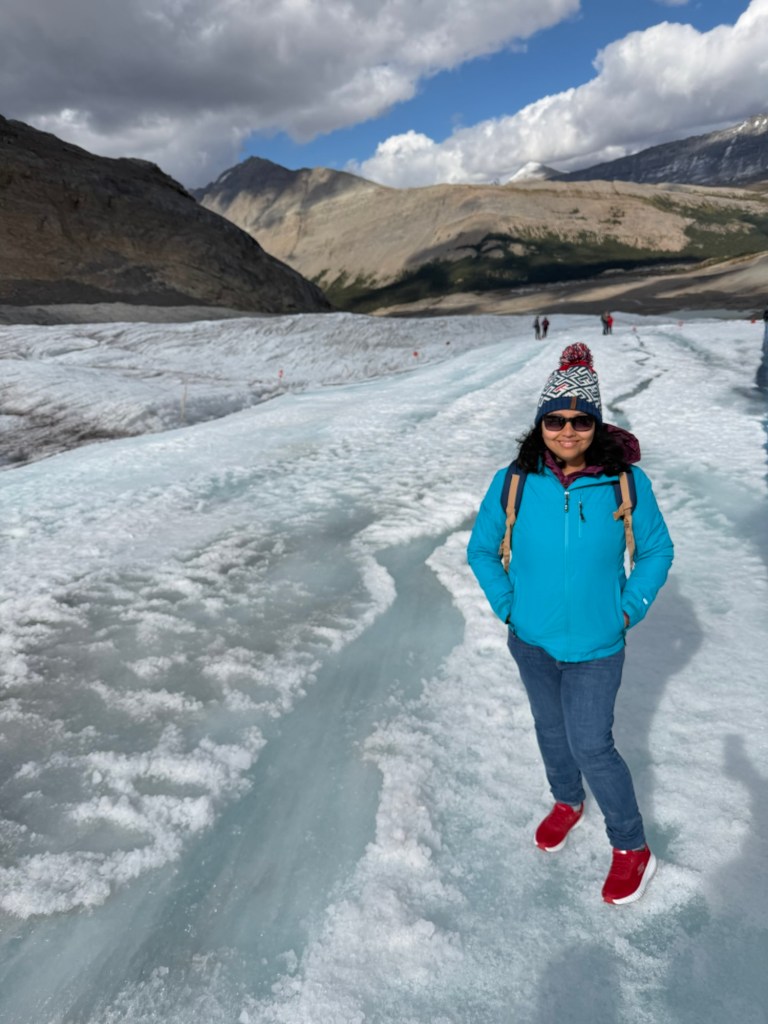
Interesting fact: Our tour driver shared something incredible about the Athabasca Glacier—it lies on an extremely rare Triple Continental Divide, one of only a few such points in the entire world. That means the fresh glacier water we tasted actually flows into three different river systems, eventually feeding three separate oceans: the Pacific, the Atlantic, and the Arctic.
Next, the tour shuttle brought us to the Columbia Icefield Skywalk on our way back to the main building. The cliffside pathway leads to a glass observation deck above the Sunwapta Valley. That initial step onto the clear glass definitely gives you a quick surge of adrenaline as you look down at the dramatic drop below.
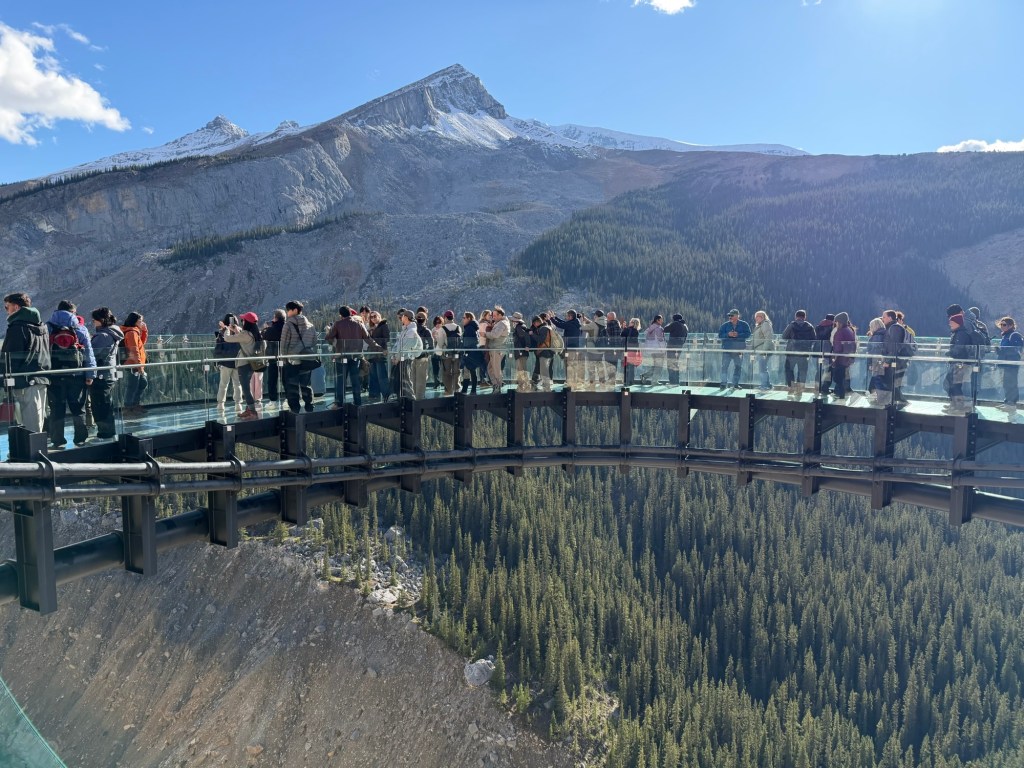
It’s a neat experience with great valley views, but to be completely honest, coming straight off the glacier tour made it feel a little underwhelming in comparison.
Jasper
Although there are many other stops along the drive, we drove straight to our hotel in Jasper to rest after a long day, knowing we could catch the rest on our return drive to Calgary.
Approaching Jasper town, the burned forest from the 2024 wildfire was a sad sight. Seeing miles of black, charred trees made the impact of the fire painfully real. It was heartbreaking to witness the impact firsthand.
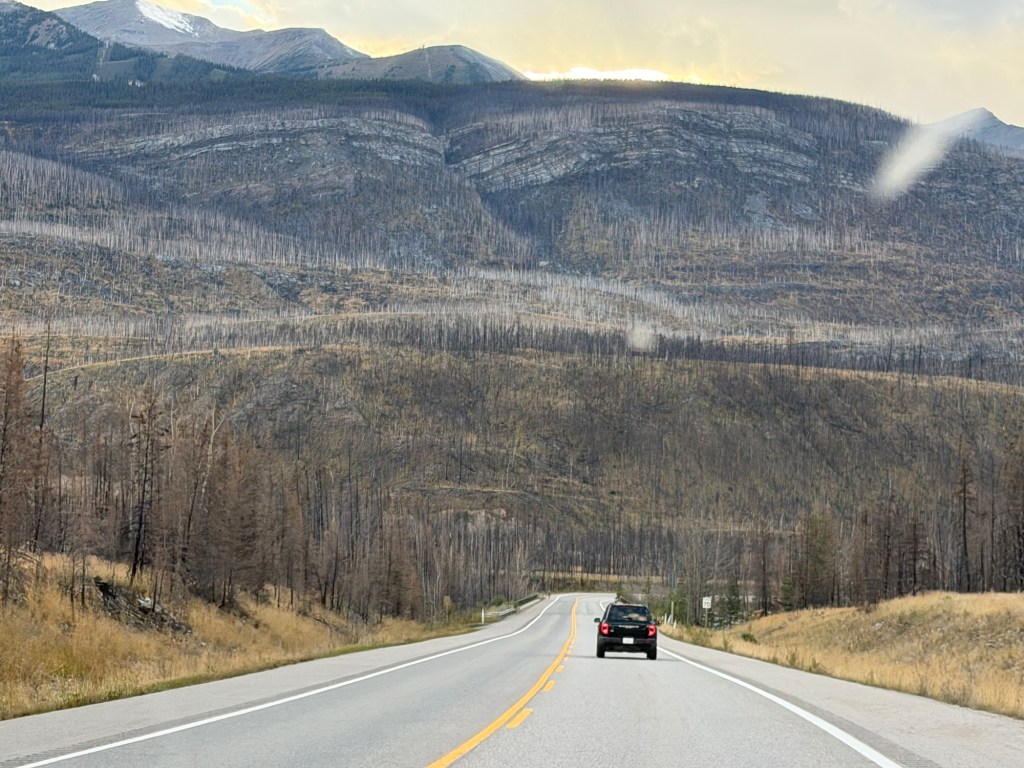
It was a day filled with incredible contrasts, leaving us in awe of nature’s vibrant beauty, raw power, and delicate fragility all at once.
Day 6: Maligne Lake cruise and Jasper
After a long drive yesterday, we wanted today to be all about taking it easy and exploring Jasper National Park at a gentler pace.
Maligne lake cruise
We started our morning with a scenic drive out to Maligne Lake for a classic boat cruise. Maligne Lake is the largest natural lake in the Canadian Rockies, famous for its deep blue water and towering glacier-fed basin. The highlight of the cruise was stopping at Spirit Island, one of the most photographed and sacred places in the Rockies.
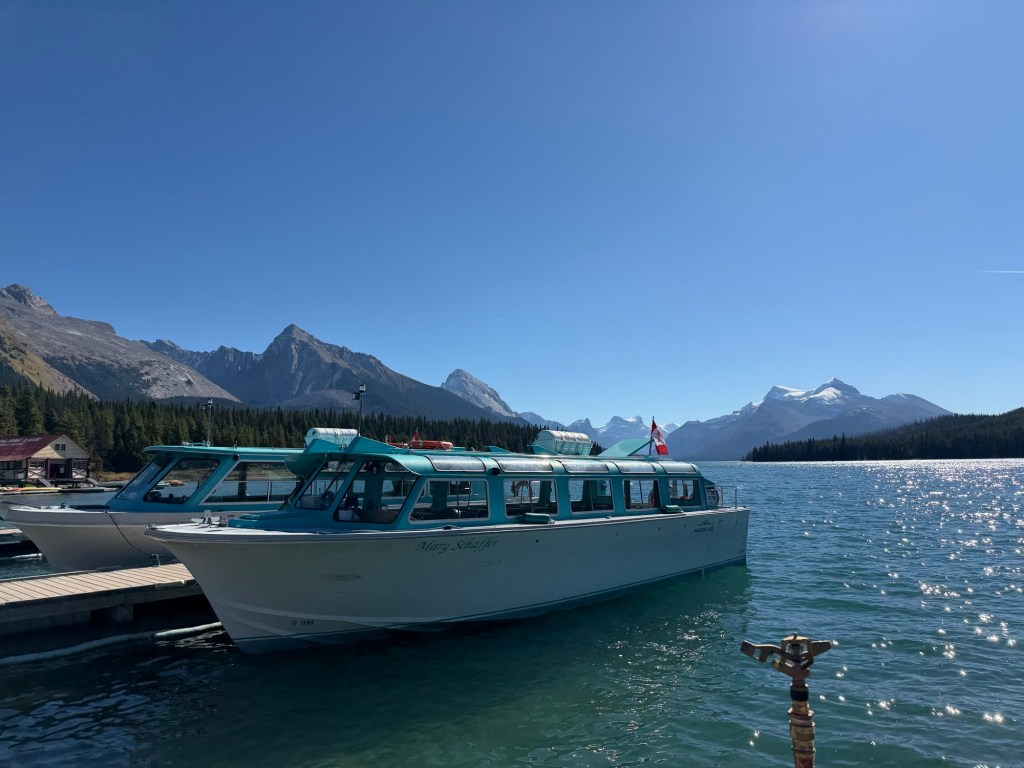
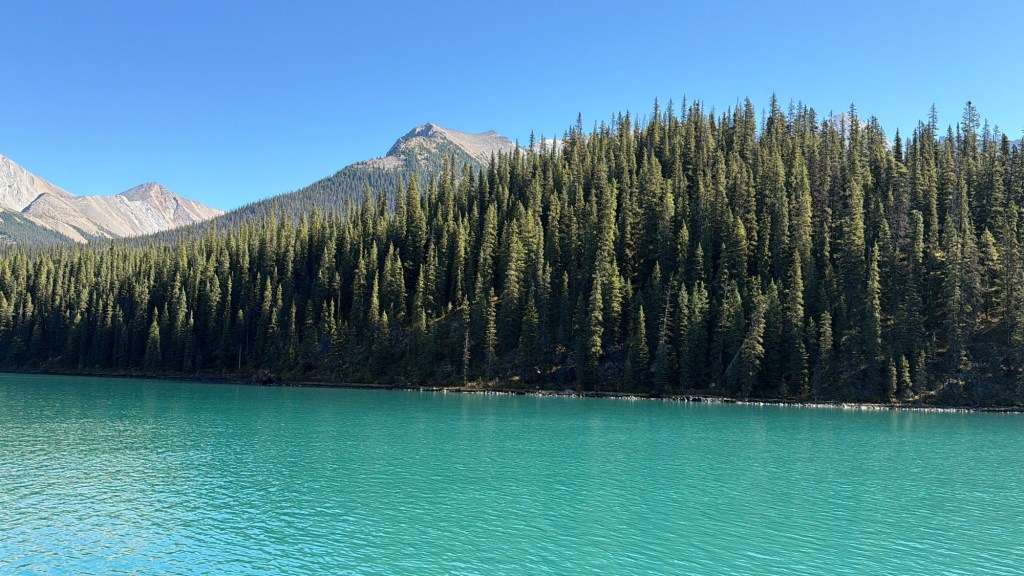
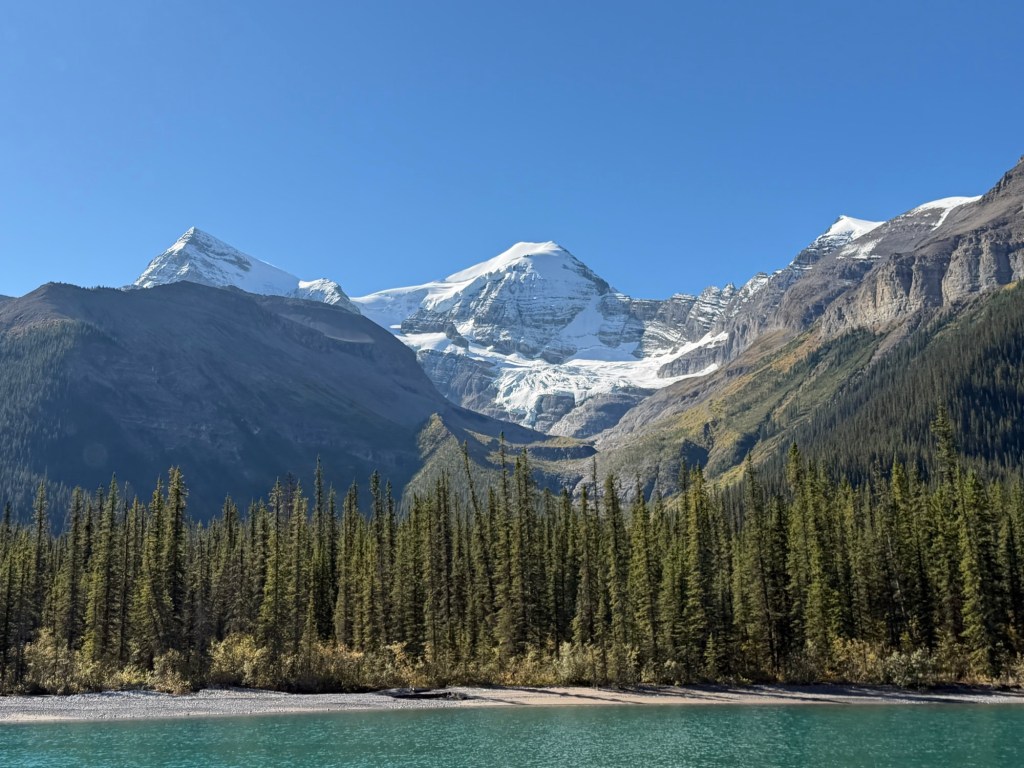
Spirit Island became world-famous in 1960 when a photographer captured its picture for Kodak’s massive display in New York’s Grand Central Station, showcasing it as the quintessential “Spirit of Canada.” It’s one of those rare, magical spots where all four core elements of the Canadian Rockies align in a single frame: towering mountain peaks, ancient glaciers, dense evergreen forests, and vivid glacial waters.
But long before it captured the world’s imagination, Spirit Island held a deeply sacred place in the heritage of the local Stoney Nakoda First Nation. For generations, Indigenous people held a deep spiritual connection to these waters and surrounding peaks, treating the island as a revered sanctuary. Today, access onto the island itself is restricted out of respect for its sacred nature and spiritual heritage. Standing at the viewpoint and taking in that quiet, majestic landscape was purely serene.
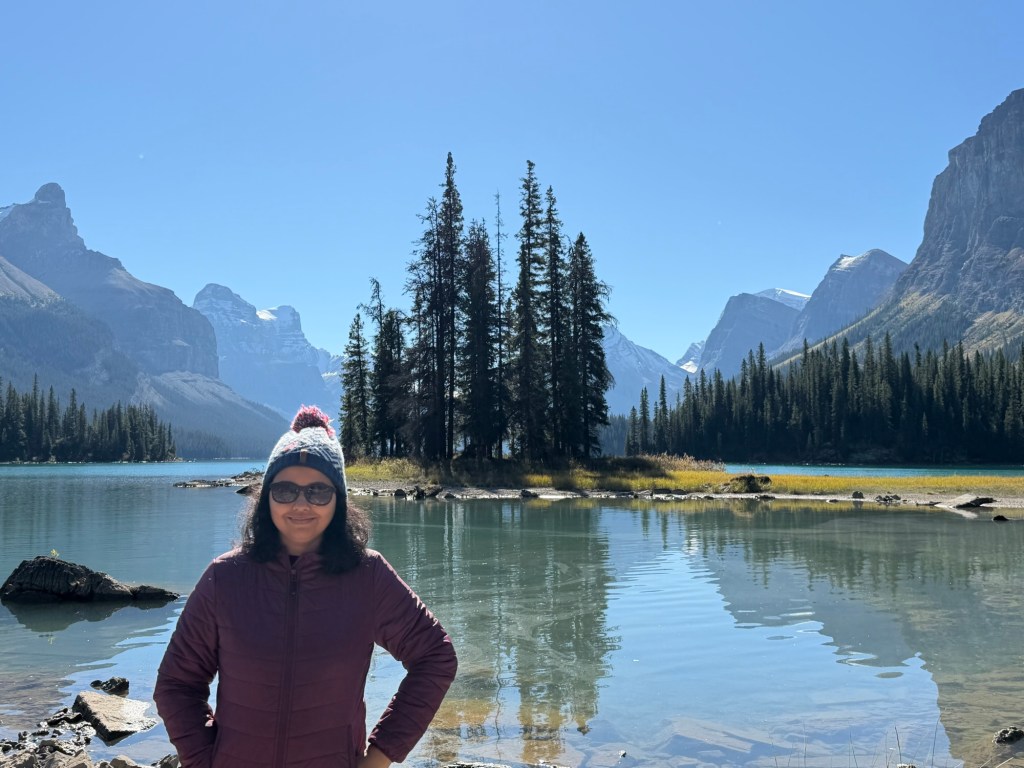
It was such a beautiful cruise across the water. The boat was pretty basic, but our guide was great at explaining all the details and history of the lake. Interestingly, our guide mentioned that the lake thaws by mid-June and completely freezes over again by mid-October—making us realize just how narrow that small summer window is for visitors to experience it.
Jasper town
After the cruise, we drove back to Jasper town for lunch. It’s a cute, charming little town—surprisingly smaller and much more walkable than Banff or Canmore. As we strolled through the streets, I came across a beautiful mural reflecting the pain, memory, and hope of Jasper after the recent wildfires. It was a touching moment that grounded our visit with a real appreciation for the town’s quiet strength.
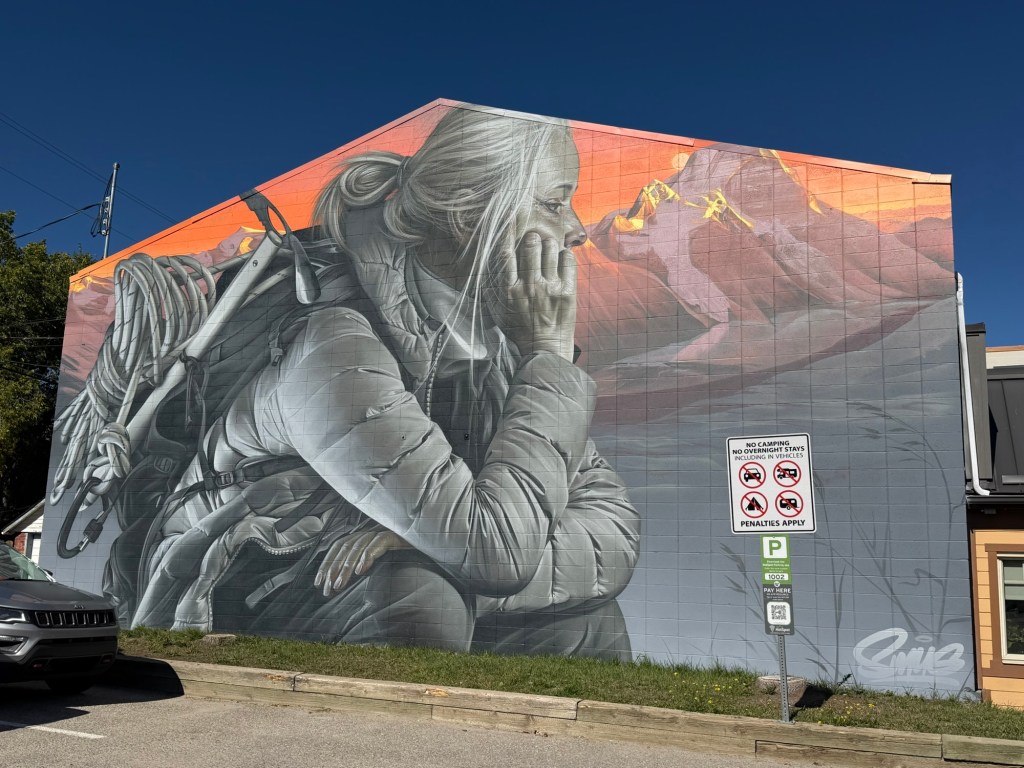
In the late afternoon, we decided to visit a couple of famous waterfalls along the Icefields Parkway:
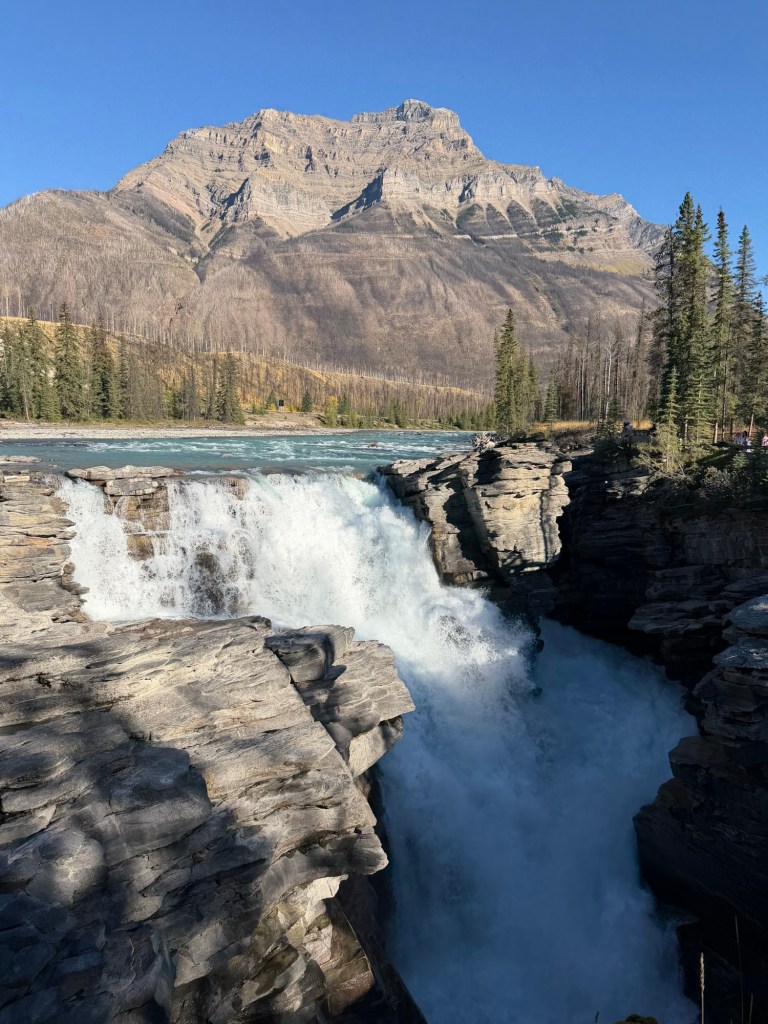
Athabasca falls
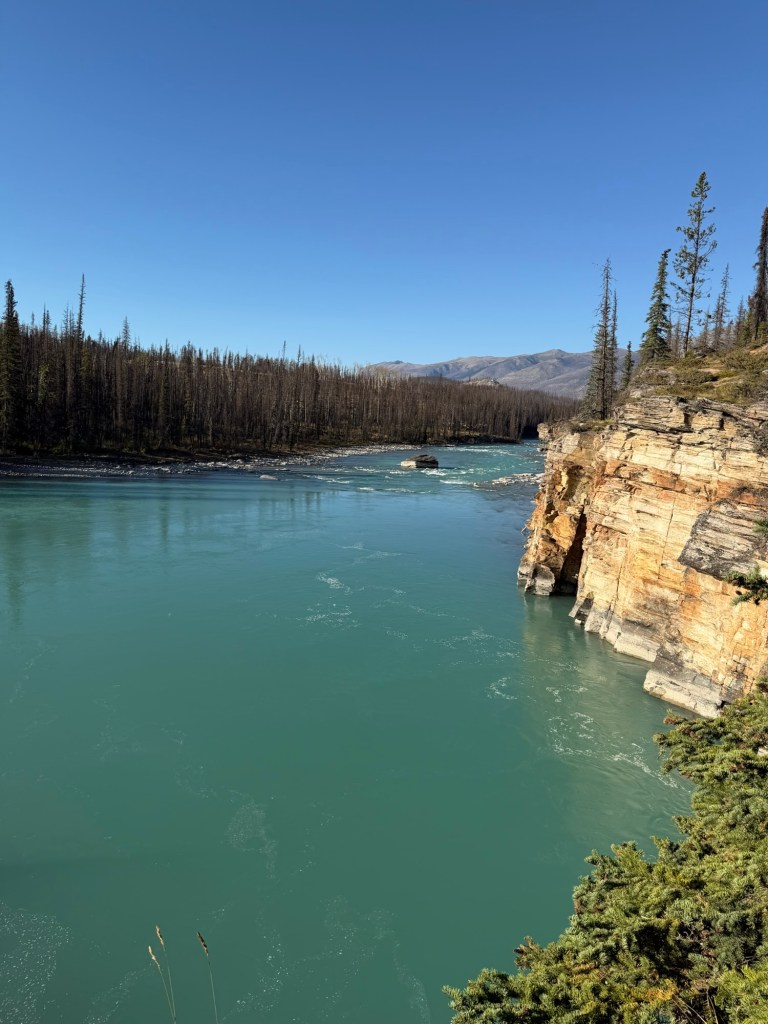
Our first stop was this incredible, roaring waterfall. The sheer volume of water forcing its way through the narrow limestone canyon was amazing to see. There are multiple paved viewpoints and bridges offering different angles of the falls, making it a very enjoyable picnic spot where you can sit back and listen to the thunder of the water.
Sunwapta falls
Next up was Sunwapta Falls, a slightly smaller but equally picturesque stop. The falls drop around a tiny island of pine trees before plunging into a deep canyon. It was a peaceful, relaxing spot to end our sightseeing for the day.
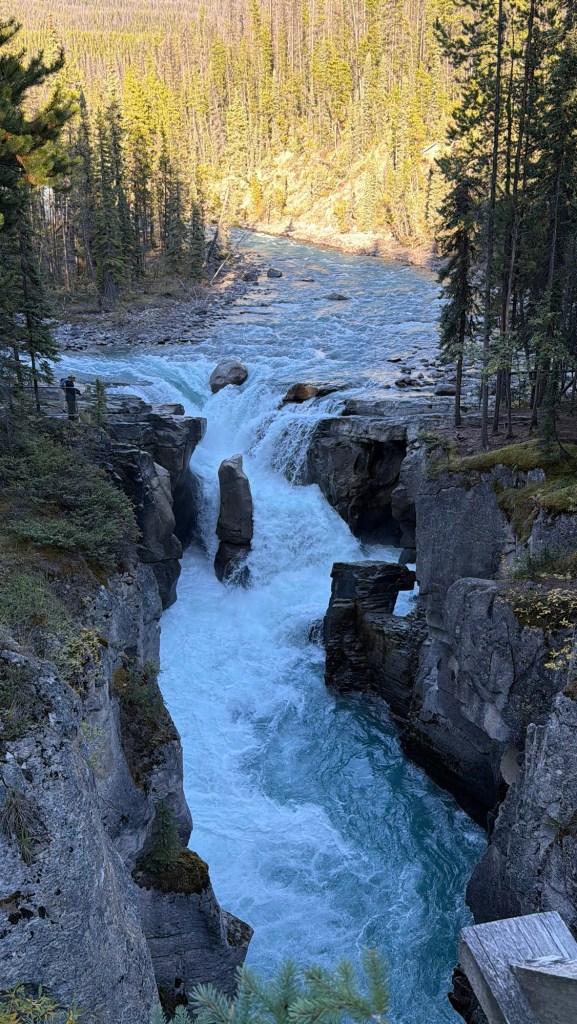
On the way back to Jasper, we spotted a moose and a dozen cars around to photograph it 😉
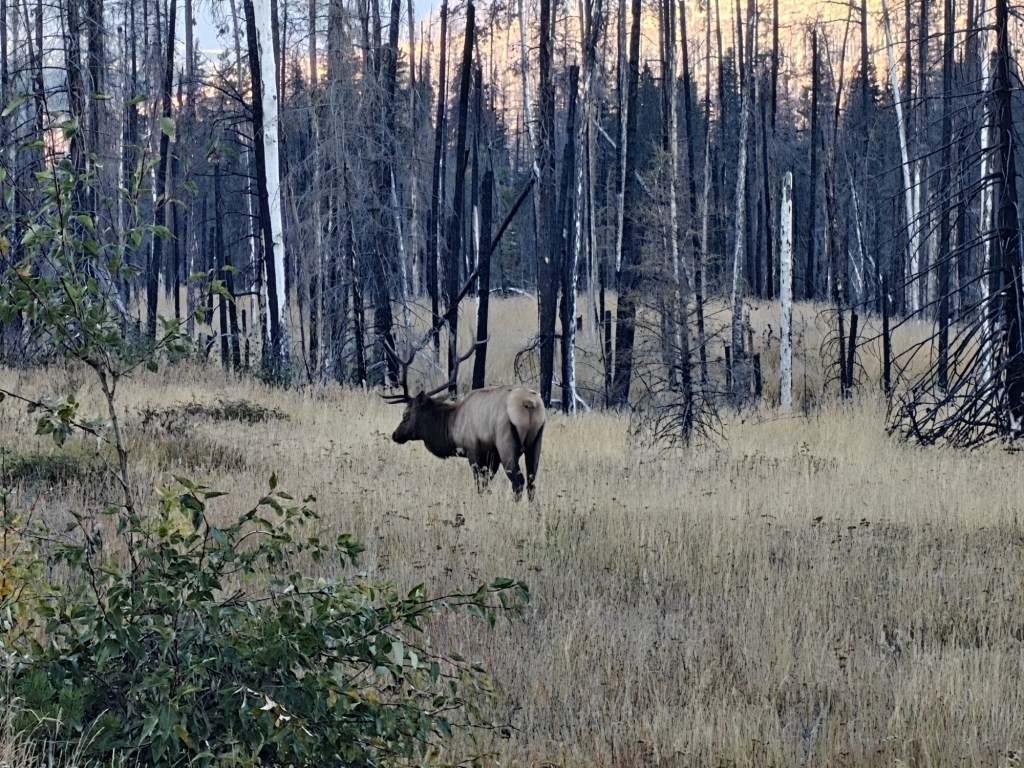
Overall, it was the perfect relaxing day just as we planned.
Day 7: Jasper to Calgary via the Icefields Parkway
Today we made our return journey down the Icefields Parkway from Jasper to Calgary, and what a difference a few days made! The skies cleared to a bright, beautiful sunny day, allowing us to see the entire route in a whole new light. Even more surprising was how much the fall colors had shifted over just two days—golden hues were popping out across the valley, giving the whole drive a completely different vibe.
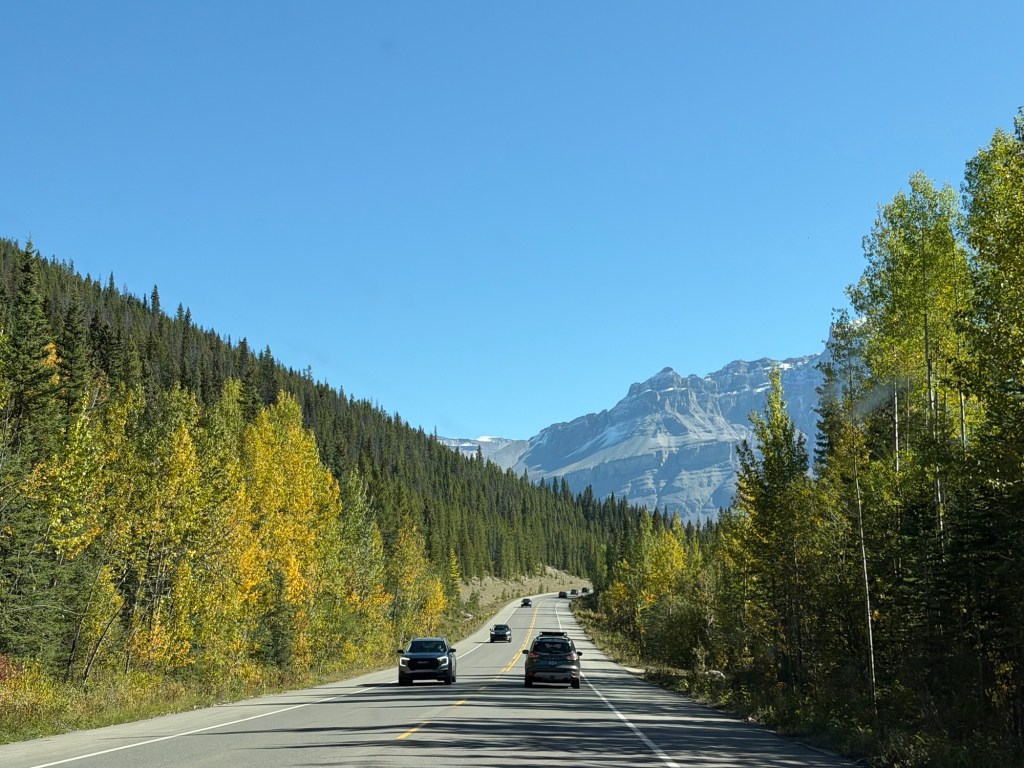
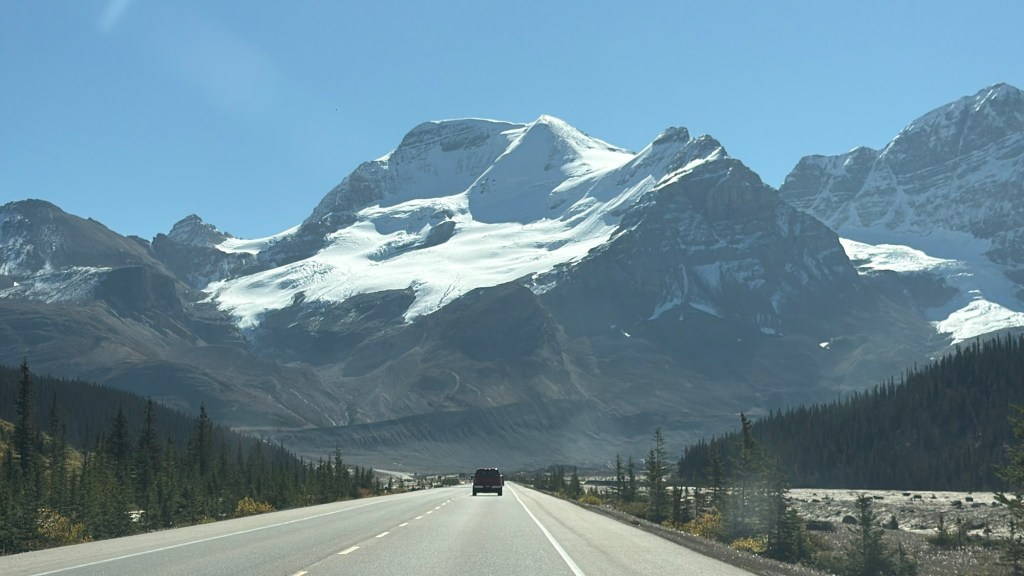
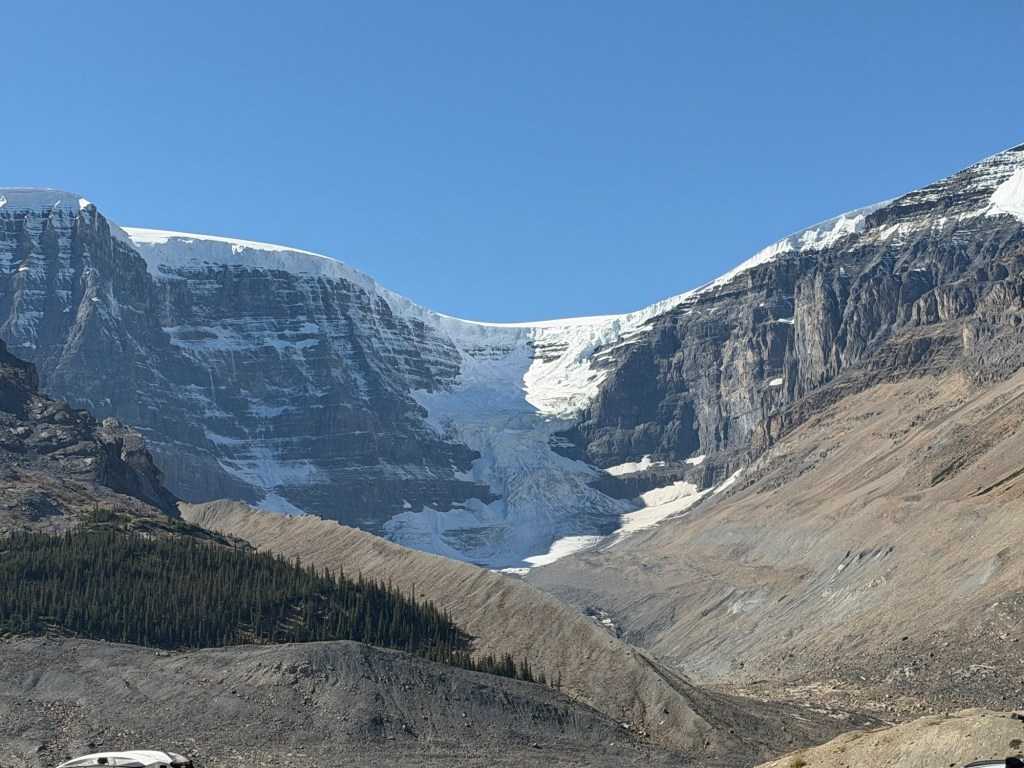
Our first stop was back at the Columbia Icefields, where we took our time enjoying the area around the Athabasca Glacier under clear blue skies.
Waterfowl lake
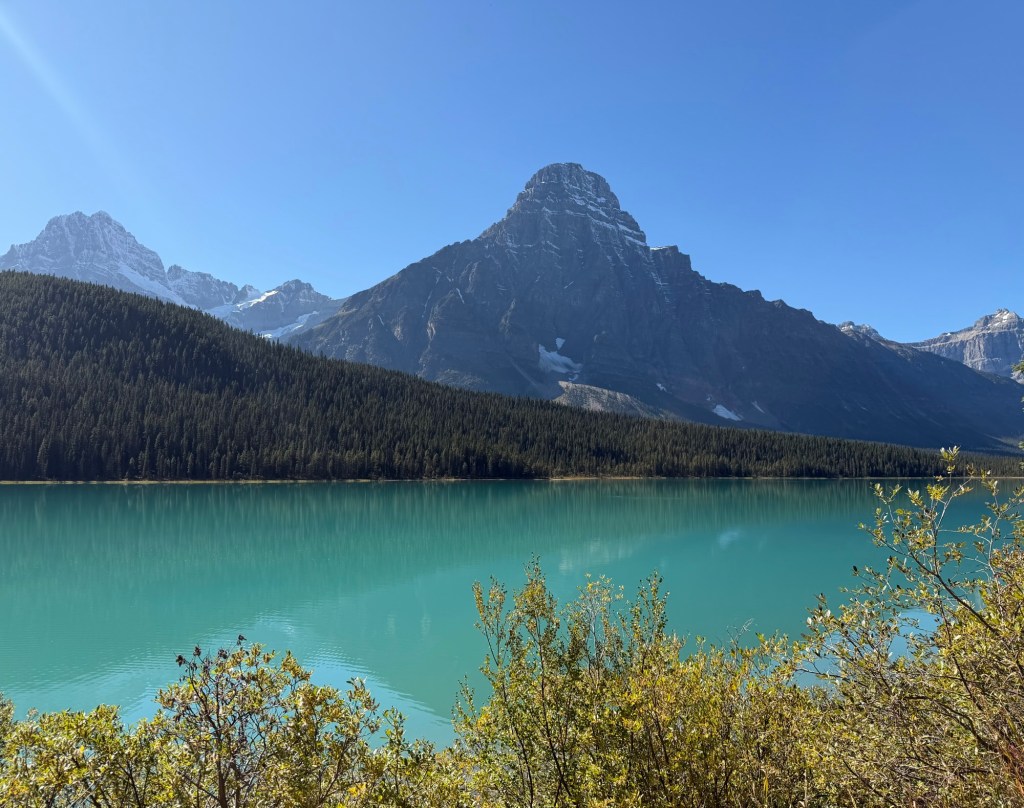
Continuing south, we made a quick, peaceful stop at Waterfowl Lake to soak in the mountain reflections on the water.
Peyto Lake viewpoint
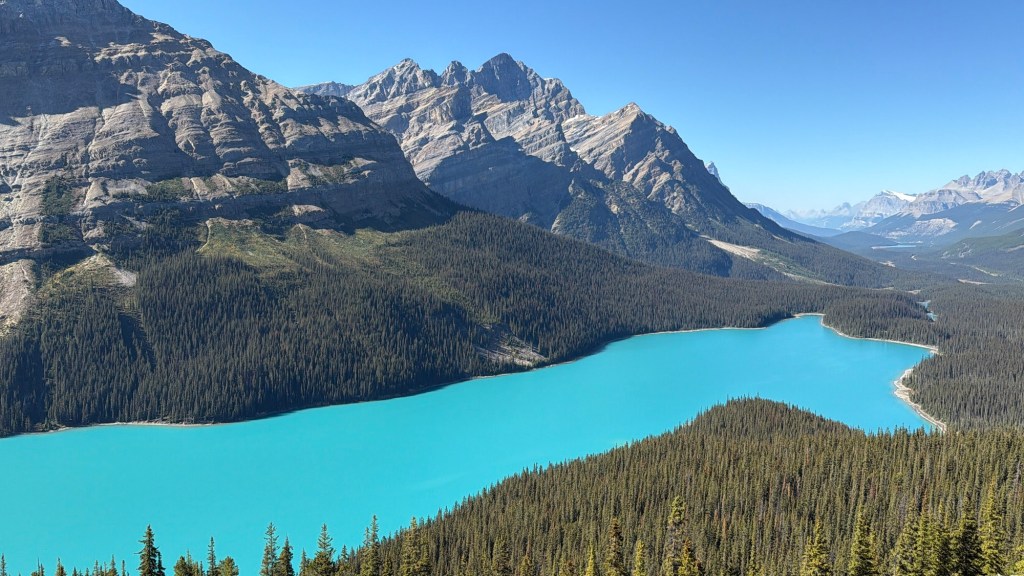
Next came the highlight of our drive back: returning to Peyto Lake. Doing the trail walk under full sunlight gave us the complete, clear view we’d missed on our cloudy first attempt. The turquoise water was insanely vibrant, the glacier was fully visible, and the iconic wolf shape of the lake stood out crisp and clear against the pine forest.
Afterwards, we drove straight to our hotel in Calgary, saying our final goodbyes to the mountains after an incredible week.
Day 8: Calgary to San Francisco
As we boarded our flight from Calgary, we found ourselves looking out the window, quietly taking in the full arc of our journey. This trip far exceeded all our expectations in every possible way—from standing in awe before the turquoise waters of Lake Louise and Moraine Lake to walking on ancient ice at the Athabasca Glacier, and from the quiet magic of Spirit Island to seeing the strength of Jasper rebuilding after the fires. Watching our little one experience these wild landscapes and vibrant lakes for the first time made every single moment feel like a cherished family milestone. We’re heading home with full hearts, so many stories to tell, and a quiet promise to ourselves: the Rockies have a way of calling you back, and we know this won’t be our last time exploring these mountains.